Category: Halacha

This section of Shul Chronicles focuses on practical and historical issues in Halacha, including family law, minhag, contemporary halachic debate, and communal practice.

  • Birthdays in Halacha & Jewish Tradition

    Birthdays in Halacha & Jewish Tradition

    Part 1

          This week I had two early events on Sunday. They were the exact same event, celebrated by two different people, in two different areas of town. A former president of the shul was having a 75th birthday party near Long Island, and, a noted askan was having his 75th birthday party at one of his business propeerties. It is a product of our wonderful times that both of these men are full of vigor and still in their prime,  b’chasdei Hashem!

           Sitting at these events, I began to have a thought every rav would have: ‘What if they ask me to speak?’ What does one say, as a rav, on a birthday?

          Then, just three days later, it was my own birthday, and I was asked by many to give them a beracha.

         All of this led me to consider the sources for such an occasion.

    1. Birthdays: A History

          It is often cited that the first reference to birthdays in the Torah is found in the fortieth perek of sefer Bereishis. Yosef tells his co-captives that his dream interpretations will be realized in three days’ time (pasuk 19). Immediately following this the Torah states, “Behold, on the third day, it was Pharoah’s birthday, making a feast for all who served him, among them, releasing the sar hamashkim and the sar ha’ophim” (pasuk 20).

         Rashi there shares that the term the Torah uses is the most proper pronunciation for a birthday:‘hu’ledes’. This is the verb cognate titled hofal, a passive verb in the causative form. This is because a birthday has two conditions met: the passivity of the event, and the fact that people were there to make it possible/easier, such as one’s mother, midwives, a doctor, etc.

        However, some wish to prove from the fact that this practice of celebrating a birthday is found Pharoah as evidence that it is not a Jewish concept (see, e.g. Otzar Kol Minhagei Yeshurin 14. He also testifies that for this reason Rav Yitzchak Elchonon even refused to be honored in Kovno at a celebration marking his fiftieth year in rabbanus).

         According to this view, what would be the reason behind the Torah’s negative view for such commemorations? The Aderes (Nefesh Dovid), explains that to observe such a day may be seen as an act of conceit and vanity, as one is essentially asserting that one’s birth has been vital to the world, that their very existence is reason to rejoice. Unless one is a tzadik, this should not be done.

    I would posit a simple proof to this argument from chazal (Eiruvin 13b) where the gemara concludes that it would have been better had Man not been created.

         However, many others make the opposing argument, in defense of birthdays and their celebrations. For one, the midrash Socher Tov on the very pesukim quoted above records the custom of Jews celebrating the day of their birth. The present Sadigur rebbe expresses surprise that some would argue that we should avoid these events simply because reshaim in the Torah happened to also embrace them. After all, do we not find in the Yerushalmi (Moed Katan, 1:7) that the very notion of sheva berachos was first learned from Lavan?! (See his words in Mesilos, 5747) 

        Even the idea that Pharoah is the lone mention of birthdays, and their celebrations, is challenged. Rav Efraim Greenblatt brings a multitude of evidence that this is not the case at all (shu’t Rivevos Efraim 4:240 #7, bottom of first column). Some examples he brings: Chazal share the birthday of Moshe, Yitzchak -expressing the koach of such a day in both cases (e.g. Megilla 13b and Nazir 14a, and Peskita 6:25 where we are taught how Hashem saved the construction of the mishkan for the period of Yitzchak’s birth, etc.)

         He also quotes the Ksav Sofer who made a shehechiyanu on his fiftieth birthday (shu’t Ksav Sofer 145).

        Rav Greenblatt does end, however, with a potential caveat: “We see then that it is worthy for gedolim to celebrate their birthdays”.

        There are more sources for the idea of gedolim commemoration their birthdays. According to some, we read Rus on Shavuos as it is Dovid hamelech’s birthday (Rema 490:9), and chazal share that Rav Yosef made a celebration for the rabanan when he turned sixty (Moed Katan 28a).

          Some prove from this latter source that birthdays must be something akin to kodosh, as another gemara teaches that a talmud chacham mustn’t benefit from a seudas hareshus (Pesachim 49, with shu’t Beis Yisroel 32).

    Then again, these are all sources concerning gedolim.

        Perhaps the most famous source for birthdays being a special day comes from a Yerushalmi (Rosh Hashana 3:8). Chazal there teach that reason for Amalek’s power against klal Yisroel was borne from the fact that the generals only sent the soldiers whose birthday was that same day, saying, ‘Not easily is a soldier killed on his birthday’. It was for this reason, in the end of parshas Beshalach, that Moshe had to lift his arms, as he was manipulating or thrawting the powerful mazalos aiding those on their birthday! (See also Yalkut, Chabakuk, 564).

        The Netziv alludes to this idea when he states, “On the anniversary of one’s creation, one is disposed to become strengthened (Emek Davar, Shmos 12:2).

         Next week, iy”H, we will bring more sources, as well as special segulos some bring for one’s birthday.

    II. Happy Birthday?

          When I was a young boy, I became sensitive to the fact that adults do not look forward to their birthdays. Worse, it seemed, they dreaded its arrival, an effect which was a mystery to me. But, as I got older, I began to appreciate this uneasiness as a wicked brew of regret, anxiety, and the ever-clearer realization that this life is but a cholom ya’ufa passing dream. My wife, on the other hand, has never allowed for such negative impulses to mar the simcha of another year lived, saying, “One should feel only hakaros hatov on a birthday. I’ve never had that feeling of apprehension as I get older”.

       Neverthelss, there may be substantiation to my side. The pasuk in Iyov states ‘ya’avod yom ivaled bo -would the day of my birth be obliterated’ (3:3). Following Rashi’s translation, as we have, Metzudos Dovid explains that Iyov was requesting that his birthday be dark and dreary, passing without notice, observance or pageantry.

         However, this likely has little connection to modern adverse reaction to birthdays, as Iyov’s blunt remark was due to the nonpareil wretchedness he was then experiencing.

          The Malbim takes Iyov’s comments about his birthday -and birthdays in general -even further, positing that Iyov was attributing the literal day of his birth for his presnt torment, musing that its very mazal/horoscope was the cause which had triggered all the bitterness that had befallen him. Such a view may be proof to the view that Iyov was not a Jew (see Bava Basra 15b). This is because we members of klal yisreol were assured ‘ein mazal l’Yisroel’; meaning that although mazalos/horoscopes are a powerful entity, klal Yisroel has the power to rise above it(Shabbos 156b with Ritva and the Ran to Moed Kattan 28a; see shu’t HaRashba 1:148). So, the fact that Iyov would attribute his agony to his birth-mazal would mean that either the Malbim held like Rav Chanina who argued (ibid.) yesh mazal l’Yisroel – even yidden fall under the jurisdiction of mazalos –, or, that Iyov was not a Jew. In fact, Rashi also mentions Iyov’s gentile pedigree, explaining that when Yehoshua and Kalev sought to placate a panicked nation after the spies’ return, they remarked to the nation that they had nothing to fear, as the one virtuous member of Cannan, in whose zechus they may have been protected, had deceased -Iyov. (Iyov had just died according to this interpretation; see Bamidbar 14:9 with Rashi).

         Consequently, for us today, both because we are yidden, and, because we trust that our mazal can change in just one shemoneh esreh (quote in the name of the Steipler), we need not -we should not -be depressed on our respective birthdays no matter our present circumstance(s).

    III. Birthday Berachos

        Interestingly, the Chida in his commentary to Iyov (Chomas Anuch) uses this same pasuk as proof to: “…the idea the mekubalim say that on one’s birthday one’s mazal is at its strongest and healthiest of the year”.

    The Ben Ish Chai finds a source to this idea in the famous gemara refarding an eighteen-year-old Rav Elazar ben Arzayeh whose beard turned white as a confirmation to his worthiness. He explains that such a ness could take place for him because it was also Rav Elazar’s birthday (Ben Yohiyaduh, Berachos 28b).

        The Magen Avraham makes a similarly observation. The Yalkut (to Chavakuk, #564) references a chazal found in the Yerushalmi which we quoted last week – that Amalek took advantage of this birthday mazal among their soldiers. In his commentary there, he explains that this would also explain a very famous mesorah (found in Rosh Hashana 11a) that it is a positive presage and a zechus for a one to die on their birthday, hinting to their tzidkus. He explains this chazal based on the power of birthdays: for one’s demise to take place when one’s mazal is at its peak must then, ergo, mean this was a zechusfor that person (Zayis Reanen see also Yaaros Devash 1:17 and Yom HaHoledes U’Mashma’aso, p. 9).

         All the above may help us understand the minhag Chabad and some sefardim -which is now prevalent with many others as well – to give out berachos on one’s birthday. Perhaps this is due to the fact that one’s mazal is robust and therefore their koach beracha is strong as well. Evidence to this can be found in the writings of Rav Elya Lopian where he posits that the the teffila of someone on their birthday had tremendous power. He finds an allusion to this from a pasuk in Tehillim (2:7) ‘…bni atah, ani hayom yiladtichaon this day you (Dovid) became my son; on this day I have begotten you’. Rav Wachtvogel, zt’l, the mashgiach of Lakewood, is quoted as urging the recital of Tehillim on one’s birthday, specifically 13 and 103 (Leket Reshimos, teffila, p. 217)

         Interestingly, while I have been unable to find a source for one to give out berachos, I did find a source that others hsuld give to the birthday celebrant a beracha. Rav Yisroel Lipshutz (d. 1860) wrote in his tzavah (ethical will; #6) “Behold I command each of my sons and daughters to write to their sibling on their birthdays transmitting a beracha of ‘mazaltov”.

    IV. Birthday Cakes and More

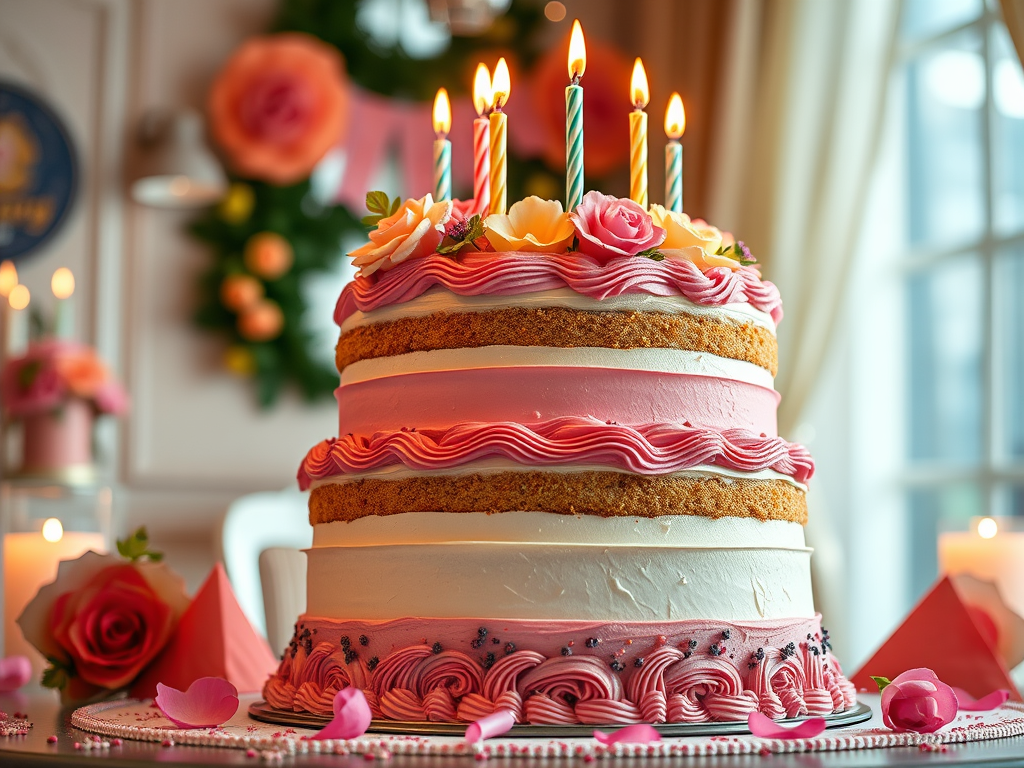
    Reb Moshe Freidman of Toronto shared with me that Rav Chaim Berlin used to send a fancy birthday cake every year to the Rav Shmuel Salant.
    The local newspaper ‘Chavatzelet’ reported on February 1909:

    “On the 2nd of shevat Rav Shmuel Salant celebrated his 93d birthday.
    Gedolei Yerushalyim and dignitaries assembled in his house. One of the Gedolim said Chidushei Torah. Rav Chaim Berlin  (shlita) [zt”l] sent, as he usually did, a decorated fancy birthday cake with flowers & ornaments It was inscribed with cream the following words, ‘ki orech yamim ushnos chaim tovim v’shalom rav yosifu….’ (The gematria of the entire beracha is 5669 [1909])”.

         This is a fascinating testimony for a number of reasons. For one, the year before this event, the Aderes, Eliyahu David Rabinowitz-Teomim, was niftar. He was brought in to take the mantle of the leadership in Yerushalaim from the aging Rav Shmuel Salant. Sadly, the Aderes predecesased him (passing at just over sixty yuears of age). Secondly, the Aderes wrote harshly against birthday celbrations. Writing in his sefer Nefesh Dovid “How angry it makes me when people wish to celebrate the date of my birth and who wish to to then give me berachos…” going on to list some of the concerns we mentioned last week.

         Thirdly, is the fact that a cake was given to Rav Shmuel Salant. While a minority argue that certain elemts of birthday celbrations may fall under the rubric of chukas goyim, a cake, it would seem, would not. Indeed, cakes are something we make for all special occasions, from yom tov to having company.

    V. Blowing Out Candles

    The Kolbo (siman 118), written in the 13th century is  the first to mention a concern in blowing out a flame.

    Perhaps a more ancient source comes from Otzar Hamidrashim (pirkei rabbeinu hakodesh). This concern is again repeated by the Reishis Chochma and the Ben Ish Chei, among other more    recent poskim and tzadikim.

    Based on the earliest sources mentioned, blowing out a candle can lead to a very specific tragedy (nefeilah).

    Some suggest that the concern is due to the fact that  the sound one makes when blowing is identical to a name of a specific malach.

    Still others suggest that this concern is due to the fact that one’s neshama is compared to       a ner/candle. This last reason perhaps comes with certain leniencies: the concern would only be true for a candle and not other types of flames. I have since seen in Hegyonei Haparsha, Devarim, p. 763 where the author argues                       a similar position.

    Rav Chaim Kinievsky (Derech Sicha p.282) gives a more  practical reason  for  the  concern  of not blowing out candles: candles used to be made from forbidden cheilev (animal fats) and there was a concern of getting too close to the forbidden substance when extuishing.

          Many bring an ancient custom of blowing out candles through overly pronouncing the first constanants of the words ‘Pesach’ or ‘Purim’! At the very least, we can see that this concern is a real one that is supported up until our generation, even in the classic poskim such as Rabbi Ephraim Greenblatt (Shu’t Rivvevos Ephriam 54:35) and Rav Yosef Chaim Sonnenfled (Shu’t Salmas Chaim, Page 213, siman 499 in the Bernstein ed.) and the Steipler Gaon (Orchos Rabbeinu; Cf. see Yabia Omer 9:95cf. Shu’t Noda Beyhudah, even haezer #79).

    Perhaps we will return to birthdays in another post, in good health, iy”H!

  • The Weeks of ‘Shovavim’: Their History and Minhag

    The weeks known as ‘Shovavim’ are shrouded in mystery and confusion. Here, we delve into its history and practices.

    Part 1

    As fall turns to winter, we commence the period known as ‘shovavim.’

    There is a perk in rabbanus. Questions like “What is the source for ‘Zos Chanukah?”, or, “Where do we find that Hoshanah Rabbah is the final day of judgment, as it is not found in chazal?” can’t be ignored or procrastinated year-after-year.

    Rather, when such inquiries are brought to the rav’s attention by eager bochurim or balla battim they are anticipating a proper answer. This then provokes the rav to investigate matters he may have otherwise not looked into, at least not with the same verve (those particular questions above were the focus of another post).

    Shovavim is just one more example.

    I.K., a member of our shul, once showed me a sefer he had purchased in Israel on the subject of these days. After perusing its contents, he was quickly disappointed to discover that it did not provide any of these weeks’ background or history (its focus was mussar and self-improvement).

    Frustrated, he asked if I could share the background, source, and reason(s) for these days. What follows should be a zechus aliyas neshama for his granddaughter, Nava Tova.

    _________________

    I. The Meaning of the Term & Word ‘Shovavim

    As most are aware, shovavim is an acronym for the parshios read on these weeks: shmos, v’ayra, bo, b’shalach, yisro, and mishpatim.

    However, it is critical to stress that ‘shovavim‘ is an ‘acronym’, and not an ‘initialization‘.

    An initialization is when the term formed by the initial letters will not only create an arbitrary and otherwise meaningless title, but one that is not pronounced as a word, rather by its letters, as in, lahavdil, F.B.I., (we say ‘F.B.I.’ and not ‘fibi’).

    An acronym, however, is when we pronounce those starting letters, as they combine to form a new term – either symbolic or nonsensical. An example of a nonsensical acronym would be ‘OPEC’, which is pronounced, carries no meaning, and stands for Organization of the Petroleum Exporting Countries. An example of a symbolic acronym is D.A.R.E., for Drug Abuse Resistance Education.

    Shovavim is not only an acronym, but a symbolic one at that, whose name is a borrowing from a pasuk (yirmiyahu 3:22): shuvu banim shovavim.…’

    This term ‘shovavim‘ has the root meaning of ‘to rebel’ or ‘to make mischief/letzanus.’

    This term is used -both in the pasuk and during these weeks -as an allusion to the flaws, fragility, and faults that are the natural consequence of being human – and, consequently, our desperate need to focus and galvanize ourselves to turn to Hashem and away from this instability found inside of us.

    In IV. below we will see an alternate name for these weeks.

    II. Shovavim Minhagim

    While some have the minhag to fast and/or say selichos (each Thursday) during these weeks, more prominently, we are encouraged to principally focus on inyanie kedusha and tahara, in both our learning and in action. This lofty objective is often fortified through special shiurim focusing on taharas hamishpacha and other related matters.

    III. Why Now?

    The sifrei machshava point out the catalyst for this specific emphasis at this precise time. Once Chanukah ends, we have a few months without yomim tovim. This is, in fact, our longest ‘dry spell’ of the year. Once Purim ends, we have Pesach, sefirah, Shavuos, in short order. After this we soon begin to mourn for our current galus, culminating in Tisha B’av. Soon after (on the 15th of av, which is the gematria of kesiva v’chasima tova, Bnei Yisaschar), we begin to prepare for the new year. And the cycle continues.

    Based on this (see hakadama to the seferYimei Shovavim‘, by Rav Mordechai Gross, yeshivas Ponivezh), these two months leave us feeling stranded in the physical domain. We therefore wish to construct a path allowing shomayim v’aratz to touch (see Bava Basra 74a). We achieve this by taking the chomer/physicality of this world and allowing kedusha to enter. We learn this from the primary focus of bris milah -modifying a basic chomer of aretz into a dvar kodosh. Dovid hamelech alluded to this in Tehillim (12),lamnatzeach al hashminis (the 8th),’ stating that even from places and times seemingly devoid of kedusha, we can elicit kedusha (menachos 43).

    [Early 20th century chassideshe sefarim point out that the concept of ‘nedarim’ -of creating a forbidden or holier status of an otherwise physical object -is predicated on the fact that every element of physicality has within it some kedusha. It is up to us to discover it]

    The Chida offers an additional reason why these weeks were chosen as a time of dveykus. “Any person who is in-touch with his heart knows to return during this period, as these days are mesugal (special/set aside/treasured)…[this is due] to our laining of galus mitzraim (shmos, v’ayra), then reading of our redemption from there (bo, beshalach), and, then, our receiving of the Torah (yisro)…great sparks of kedusha are then flowing, allowing us to atone…as the Ari’zal states, this period ending with parshas mishpatim is alluded to by the words there, ‘When a man acquires an eved ivri…’” (Chadrei Vatein, vayechi, 14; see also his Pnei Dovid, shmos, 12)

    The allusion he is referencing seem to be the following: during these weeks we follow the trajectory of am yisroel in the parshios: We open with a nation/us mired in culture and galus, then we perform acts that lead to our (personal) ruchniyos redemption, all culminating in a rehabilitated private kabalas haTorah so that we may then say, ‘It is as if a new eved Hashem was born!”

    IV. Provenance

    The earliest source for this special period dates to theTerumas Hadeshen (d. 1460. Brought in his name in the Leket Yosher, p. 116 in the Freyman ed.).

    Interestingly, while many observe these days’ special focus each-and-every year, when one looks at some of the original sources for these weeks, it may only have functioned during leap years.

    In fact, according to many (see Mateh Moshe), the entire purpose of these days is due to the fact that during a leap year these days take place at the greatest distance between the fasts of bahab (the special fast days following the shalosh regalim, and brought in Shulchan Aruch; why these fasts are largely avoided is a discussion for another time) demanding some way to recoonecnt to Hashem (see Shaarei Teshuva and Be’er Heitiv to 685).

    In fact, both the Mishnah Berrura (ibid. # 18) and the Magen Avarham (ibid, very end of siman), as well as the source cited above, not only mention this minhag exclusively in relation to a leap year, but they inform us that we have its name wrong! It should be called not ‘shovivim,’ but rather ‘shovivim ta’t,’ adding terumah and tetzaveh into the equation! Nevertheless, the minhag seems to be keep shovivim even in a regular year, and shovivim ta’t only during leap years (as also alluded to in the teachings of the Ariz”l).

    V. Yearly?

    As most are aware, the divisions we now call weekly ‘parshios’ were only adopted by all of klal yisroel –along with a yearly Simchas Torah –about 800 years ago. Though, as opposed to the perakim, these weekly divisions were selected by our chachamim. Until that time, there were many communities that would complete the Torah only once every three years or so. (See Megillah 29b and Sofrim 16:10, with Rambam, hil. tefilla 13:1).

    Remarkably, still in the year 1170, there were two shuls in Egypt –one that leined what we know today as the parshios of the week, and the other that read at a third of that pace (Masoas Binyamin M’Toledo, Adler ed., p. 63).

    This member asked me, “Rabbi, if shovavim is a recently revealed ancient secret, wouldn’t these make parshios take-up eighteen weeks and not six? More, wouldn’t these eighteen weeks themselves only arise but once every three years?!”

    It was a great question.

    There is evidence, however, and some indeed posit, that our present-day parsha divisions were always the suitable method and that they were taught from Moshe or Ezra (see Ohr Zarua, hilchos Shabbos, siman 45, Meiri, Kiryas Sefer, maamer 5, perek 1, and Tanchuma, Ki Sisa 3, with Aruch Hashulchan, siman 282:2; see also sefer ‘Toldos Simchas Torah’ [Mosod Rav Kook] at length).

    I did some digging and, to my great satisfaction, I found his question asked in a sefer.

    A few years ago (5781), Rav Reuven Melech Schwartz in eretz yisroel published a two-volume encyclopedia on the days of shovavim (‘Yemei Shovavim‘).

    He seeks to prove from the Pnei Yehoshua (ibid. 31b) as well as from the sources brought above that the triannual completion of the Torah was an aberration, always seen as the ‘lesser’ choice,and never fully accepted. This was due to many reasons, including, al pi kabala, concerns for shovavim.

    A few years ago, I wrote about making up missed parshios due to Covid shul closings. On that note, he also mentions another, similar, question: Would the lack of our public laining of the parshios of shovavim – of our public reflection of being mired in tumah, redemption, and our ultimate kabalas haTorah – sully the objective of these days? He is unsure (ibid. krach 1, perak 1, anaf 4 and 5).

    VI. Fasting?

    We will conclude with one additional minhag performed by during the weeks of shovavim:

    The Magen Avraham brings the minhag to fast each Thrusday of shovavim, especially in a leap year (siman 685, very end). This was also the practice of Rav Moshe Isserlin (Terumas HaDeshen, above). Rav Yitzchok Trynaou (14th century) also mentions this practice in his sefer HaMinhagim (purim, 10).

    Why specifically Thursday?

    We can suggest the following explanation.:

    We know that Moshe ascended har sinai to receive the second luchos on a Thursday, and descended on a Monday, Yom Kippur (Tachuma, vayera #16, to 19:24). It is, in fact, it is for this reason that we lain on those two days each week (see Tosfos, Bava Kama 82a s.v. ‘kdei’).

    Perhaps then since – according to the Chida above – shovavim is to replicate the journey of bnei yisroel from the impurity of mitzraim through our growth and metamorphosis at nesinas haTorah, we choose each Thursday -representing Moshe’s and our ascendency to har sinai -as our central day of recompence.

    May these weeks bring us all a tikkun!


  • Kibbud Av V’Eim vs……

    Kibbud Av V’Eim vs……

    A Levaya vs. A Mother’s Need

    One Demonstrative Case of the Complexities of Kibbud Av V’Eim

    Dear Rabbi Taub,

     I don’t know if you answer emails…I learn in eretz Yisroel as part of a halacha Kollel that works toward semicha. I’ve been reading you since before I was bar mitzvah! I wonder if you can take the reader inside the journey from shailah to psak.

    Thanks!

        Yoeli

               While there are wonderful sefarim and talmidie chachachim who can break down the method of psak, I think this request is an interesting one for all readers, even those not studying toward semicha.

         Perhaps we can return to this subject from time-to-time, as the reader will be surprised to learn that rarely is any shailah run-in-the-mill. Often, there is something unique involved.

           To give the reader a sense of what I mean, here is a shailah I received this week. I will share the exact wording of the text (permission was granted):

       “Rabbi, I have a question. My mother goes to a program Friday morning, and, when I can, I drive her there…X’s levaya is the same time tomorrow. If I don’t take my mother, then there will be someone else who will. Which mitzvah trumps the other? I can’t do both…”. (See Rema to orach chaim 38:8 regarding the ‘I can’t do both’)

        The first thing to point out is that as a rav you learn a lot about people and their priorities by the shailos they ask. It is not so much that he was wise enough to ask this shailah, but in answering him I learnt he visits his mother every single day after work. He is a grandfather himself, and his mother is close to 100 years old! Even after fifty-plus years of kibbud, its significance has not waned, and more, he wishes to do everything al pi haTorah. What a lesson in and of itself!

         Rav Chaim Kinievsky shared how he was once visiting his grandmother when she softly commented, “I was surprised Rav Yeshaya’la didn’t visit today”. She was referring to her son – and Rav Chaim’s uncle – the Chazon Ish. Rav Chaim later mentioned this comment to his uncle. The Chazon Ish was feeling ill that today, but upon hearing this, he quickly grabbed his hat and jacket and ran to visit. It turned out that he would visit his mother every day! He once shared that the only segula to become a gadol is the mitzvah of kibbud av v’eim! (See Rav Chaim on Bereishis, Artscroll). V’havta l’reyacha is a hard enough mitzvah, and the addition of kibbud and yira for parents is an addition even on top of that!

           My father and his wonderful wife Malka live in eretz yisroel, and with the time difference I often forgive myself if I get busy on an erev Shabbos, or, more often due to teaching, and miss calling before his Shabbos. But that is a horrible error, unconscionable, and a true sin. We all must vastly improve in this domain. They are not our rayim, they are our parents! In addition, aside for simple seichel and normalcy, halacha demands that step parents also have the extra obligation of kibbud (Shulchan Aruch, yoreh deah, 240:21).  

      Before I explain the psak, l’aniyas daati, I wish to share one more matter about this mitzvah. There is a famous question: Why do parents love their children more so than the children seem to love their parents?  After all, it is the child who receives life and comfort from them! The classic, and well-known, answer to this question is that the word for love is ahavah, which comes from the Aramaic term meaning ‘I will give”. Meaning, it’s not the receiver who ends up loving the giver more, rather the giver who does!

         But several years ago, I saw another approach to this phenomenon. Many of our kochos comes from the avos (see Ruach Chaim to avos), and many of our middos received their initial charge through Adam. Adam had everything we have, save for one thing: Adam and Chava never had parents! So that, from the dawn on man we have constantly struggled with this mitzvah.

         Now, back to her shailah. The Shulchan Aruch rules as follows: “If one’s father says ‘Bring me some water’ but one also has a passing mitzvah in front of them (a mitzvah that could not be done at a later time) like burial or a levaya, if no one else can do those passing mitzvos, then one should do them, and push kibbud to the side” (240:12).

         Let’s leave aside for now if this is a case where others at funeral would be enough to demand he maintains kibbud eim in this case. Let us assume that his being at the funeral would be important. A rav never simply applies even an explicit Shulchan Aruch to a case without further thought. For, when the Shulchan Aruch uses the term ‘levaya’, to what does he refer? To going to hespeidim? No! Rather, to the mitzvah of escorting a body on its way to burial. The rav would have to ask if he was planning to stay for that, otherwise, he must discover some other passing mitzva involved in this case. According to some poskim (Netziv), even if one walks the body, yet doesn’t see it, then there is no mitzvah of levaya. While this view is not what we follow, when measuring mitzvah against another mitzvah, this must be taken into consideration by the rav. The reader should note that Chofetz Chaim (Ahavas Chesed, 3) already bemoaned those who go to a ‘levaya’ and then leave without doing the real mitzvah of levaya.

         But there is still another mitzvah here. Hespeidim. The question is, however, is attending a hesped a mitzvah. The Rambam rules that although a dereabanan, hespeidim are a fulfillment of v’ahavta l’rayacha komocha (hil. Avel ch. 14).

         But, do the attendees, as well, fulfil a mitzvah by being there? Chazal debate (Sanhedrin 46b) if the purose of hespeidim is for the living or the dead. We rule like the latter. It would seem, then, that attendees show kavod  by being there. I would marshal proof to this from another chazal that teaches that one city should not hold hespeidim for two different people at the same time (semachos 11). The implication being that we wish to maximize attendance. See also the gemara (berachos 19a) and the Shulchan Aruch (orach chaim 72:3) regarding other mitzvos that will be prevented due to a hesped alone.

           For a number of reasons that we do not have the space to go into, he went to his mother instead.

        What we see from this one case is that no two shailos are identical…and, that people should be asking for kibbud av v’eim questions!

  • Kaddish For Two?

    Kaddish For Two?

    The Efficacy of One Zechus for Two People
    &
    More than One Reciting Kaddish at One Time
    &
    Yisgadel vs Yiskadeish

    Over the past few years, when I have yartzeit for my mother a’h, I share with the reader common shailos that arise on this ominous day, and questions rabbonim receive having to do with these related topics.

    1. Kaddish for More Than One Person?

    I receive this shailah at least a couple of times a year. Let me give a classic example. Say someone puts out a mishnayos chart by a shiva. The goal is to complete all of mishnayos by the shloshim. They then see that several mesechtos are not taken; these are usually the most difficult to learn. They will then often ask me if someone who is already learning said mesechta for another niftar can also have in mind this one.

        This may also occur in terms of kaddish. Say an avel is ill and cant make it to shul one day. Should he ask someone to say kaddish who is already saying it, or, ask someone who is not.

       Simply put, can one action benefit two neshamos with one act?

    The Magen Avraham takes an extreme view in this, in that even for a mother and a father this would not be of value -say an overlapping year of aveilus, or if they have the same yartzeit. The Chofetz Chaim (Biur Halacha siman 132) and others explain that we do not pasken like this, and indeed, with parents, one zechus does affect both. Rav Yaakov Kamanetzky writes the same (Emes L’Yaakov siman 386, note 224).

        Rav Shlomo Kluger posits that this is only true by two connected people. However, when it comes to two separate people, then one zechus can’t benefit both of them (shut HaEleph L’Cha Shlomo, oh’c 68).

        Neverthells, Rav Chaim Kinievsky wrote to Rav Taplin (Taarich Yisroel, p. 514) that in cases of need one can rely on one zechus for more than one neshama.

         Rav Aahron Levine brings from Rav Ahron Kotler and Rav Scheinberg that they both l’chatchila allowed a double (or even more) zechus through one action, so long as the family for whom one is saying it is aware that you are ‘double dipping’ (Kol Bo L’Yartzeit, volume 2). This latter psak is echoed by Rav Moshe Feinstein, although he still recommends only one kaddish is said for each niftar at a time, thus dividing them throughout the day (Igros Moshe, y’d 1, 254).

         So, in the end, if the two meisim are not connected, it is best to avoid, however, if it is a case of need then certainly it should be done.

    1. Kaddish One At A Time?

    Most are aware that ashkanazim had a minhag that only one person would ever say kaddish at a time. Most halachos about who has the right to the amud, etc. stem from this history. Many ask when we changed to the way we have today, where everyone says kaddish together. This is unclear. We know that already in Brisk, under Rav Chaim, kaddish was said by more than one person at a time (Avodos V’hanhagos M’Beis Brisk, 2:54). The Chasam Sofer also wrote that if there is a fear that someone will forcefully start a kaddish before the rightful person has the ability to start, or the like, then a shul should institute everyone saying ot together, so as to avoid machlokos (shu”t Chasam Sofer oh’c 159).

        But this change was not solely so as to avoid machlokos. The Maharitz Chiyos discusses another concern. At times, there are people who are embarrassed in that they are unable to recite the words of kaddish. He records shuls in his time (19th century) where the chazan would be surrounded by all the aveilim and he would recite kaddish with them repeating word by word. This was a similar concern mentioned in the mishneh (Bikkurim 3:9) of a concern people will not bring their bikkurim out of the shame in being unable to read.

         On this note, an interesting question arises. Must each person saying kaddish say it loud enough so that if he would have been saying it alone everyone could hear him? Like the Maharitz Chiyus mentions, we have all seen people saying kaddish in a whisper along with everyone else. Perhaps they are shy, or are insecure in the reading skills. Is this ok?

        The Ben Ish Chei states explicitly that so long as others can be heard, one may say it along with them in a low voice (shu”t Rav Poalim 2:14). Rav Shlomo Zalman Aurbach syays the same (Halichos Shlomo, teffila, p. 230).

       It is of interest to note that some poskim were strongly against the minhag of saying kaddish together, for a number of reasons. Some even urged that those saying it should not stand near each other. However, some poskim bring proof from chazal that such a practice dates far back. The Yerushalmi states ‘hischilu’ (they began; Taanis 4:1). The meforshim explain that it refers to kaddish. From the plural we may infer that they would say it as a group (Yesodei Yeshurin p. 242).

    1. Yisgadel or Yisgadal?

    The exact nusach and pronounciation of kaddish deserves its own column, but for now let us focus on this most famous of questions. The opeoing terms come from Yechezkel 38:23, “v’higadalti v’hiskadashti…”. The Chofetz Chaim writes that since it comes from a verse, this part of kaddish should keep the Hebrew dikduk and be yisgadeil v’yisgadeish. The Aruch HaShulchan, Vilna Gaon and Baal HaTanya agree.

         However, others, such as the Yaavetz, defend the patach (yisgadal…) for kaddish is, after all, an Aramaic teffila. Why then should we use Hebrew grammar for the opening words?

           On this note, the Rashba already points out that kaddish is a mixture of both Hebrew and Aramaic (shu”t Rashba 5:54, see there as to why).

        May the Great Day arrive when kiddush shem shomayim will be fulfilled not merely with words but with our and His actions.

  • Uman & Leaving One’s Wife/Family for Yom Tov

    Uman & Leaving One’s Wife/Family for Yom Tov

    Being With One’s Family vs Chesadim, Mitzvos, & Zechusim

    October, 2022 

    PART 1

    Dear Rabbi Taub,

    Your columns often address both halachah and hashkafah. My husband and I have been discussing an issue that touches on both. I wonder if you can discuss this issue in your “Shul Chronicles” column. Perhaps there are sources you can cite, or at least make readers aware that they are not alone. Also, as a rav, maybe you have had to answer this question in the past.

    My son’s rebbi asked that he come back to yeshivah for Simchas Torah. We do not live in the New York-New Jersey area, so we don’t see our son very often as it is. I don’t know what to do. On the one hand, I want my son to enjoy his friends and yeshivah on Yom Tov, but on the other hand, I want him to be home with his family. I understand that in Europe they used to go away for years at a time. But in this case, he will already be home for the first days of Yom Tov, and to leave doesn’t seem right to me.

    I should point out that our area is filled with bnei Torah, and there is no negativity here on Simchas Torah. In fact, if anything, I am concerned about smoking and other things on Simchas Torah in the town where his yeshivah is.

    When my son saw me hesitate, he called his rebbi, who offered to pay for his ticket. I was crestfallen! For one thing, this wasn’t a monetary issue. But in any case, if the rebbi was told I was not sure, why didn’t he call me directly—or better yet, teach his talmid a lesson in proper kibbud? But to go behind my back and offer to pay? This doesn’t seem right at all.

    Am I out of line? What is the right approach on this issue? This is my oldest son, and I want a proper derech going forward with his brothers as well.

    Sincerely,

    A Desperate Mother

    I have four daughters and a son, bli ayin hara. My son is in second grade, and I have not dealt with this issue on a personal level, but I have dealt with it in the case of husbands and wives.

    In fact, several years ago, Rabbi Shais Taub and I had a wonderful exchange about a similar issue regarding a Litvish husband who wanted to go to his rosh yeshivah for Yom Tov, but his wife was against the idea.

    This week I will use the case of a husband as a jumping-off point, and next week I will return to the case of a child.

    It goes without saying that it is a well-established custom, especially among chasidim, for a husband to leave his family to be with his rebbi for Yom Tov. The Divrei Malkiel (d. 1910) writes of the importance of such a visit, stating that kevod talmidei chachamim is compared to the kavod we have for the Shechinah (2:75, beginning).

    However, the Noda BiYehudah and other Litvish poskim differ.

    I was delighted when I found my 2014 email to Rabbi Taub, and here is a synopsis of what I wrote:

    The Gemara (Sotah 17a) teaches us in the name of Rabi Akiva that a home with shalom bayis is worthy of the Shechinah’s presence. This is a critical first step, for according to the Aruch Laneir, the reason we visit our rebbeim is in order to replace our visit to the Makom HaShechinah on Yom Tov now that we can no longer go to the Beis Hamikdash. Therefore, to cause the loss of the Shechinah by damaging shalom bayis for the purpose of giving kavod to a rebbi, which is only compared to the Shechinah, seems specious at best.

    Of course, I am speaking about a case where the wife doesn’t want her husband to go, and the husband is not from a community where that is the custom, so she had no knowledge of such a concept when she got married.

    One person challenged me based on a gemara in Shabbos 152a that states,  “Rebbe said to his student, Rav Shimon bar Chalafta, ‘Why did you not visit me on Yom Tov?’” But the student answered, “Had I visited you, peace in the home would have been sullied.”

    The Gemara (Sukkah 27b) quotes a braisa that discusses the issue of leaving one’s wife on Yom Tov: “Rabbi Ila’i went on Yom Tov to visit his rebbi, Rabbi Eliezer, in the city of Lod. [Upon seeing his student, Rabbi Eliezer] said to him, ‘Ila’i! Why are you not among those who rest properly on Yom Tov?’ This is because Rabbi Eliezer held that one should not leave his home on Yom Tov [even to visit teachers], for it is written, ‘[On the festivals] you rejoice with your household’ (Devarim 14:26).” Rashi explains that his teacher was reprimanding him for not staying home and celebrating Yom Tov with his wife.

    However, the Gemara then seeks to find support for Rabbi Ila’i’s decision to leave his wife, closing the discussion by saying, “It is allowed when he returns that evening, and not allowed when he must also stay away from home overnight.” (Regarding whether women too have such a mitzvah,see Mishnah Brurah and Magen Avraham siman 301, as well as Maharatz Chayus on Rosh Hashanah 16, and Chanukas HaTorah, likutim,#200, which explains that women went during the year and men went on Yom Tov in order to avoid pritzus.)

    The main source for the Litvish approach comes from shu”t Noda BiYehudah (#94), which states that the obligation to visit a teacher on Yom Tov (but not overnight) only applies when the Beis Hamikdash is standing. Proof of this is the fact that although the Shulchan Aruch omits this law, Rambam includes it (chap. 5, Hilchos Talmud Torah). In contrast to the Shulchan Aruch, Rambam cites all halachos, including those that will once again be applicable only when Moshiach comes.

    To be clear, all agree that it is a mitzvah to visit one’s rebbi, regardless of the time of year, although not a chiyuv (see Rambam ibid., and Shulchan Aruch 554:12 with Magen Avraham). And some poskim say that visiting a rebbi on Yom Tov actually is a special chiyuv, even today (see Magen Avraham 301:7 and Rav Shternbuch).

    What about visiting the kever of a rebbe? The Shevet Sofer (shu”t, Orach Chaim, 18) says that some people are allowed to leave their wives to go to Uman for Yom Tov. He offers a novel idea, suggesting that in our time, when we don’t have the Beis Hamikdash, the level of obligation in the mitzvah of simchas Yom Tov is weakened, and one can therefore leave his wife on Yom Tov if he must do so for a living, or even to visit the kever of a rebbe. (See Tosafos on Mo’ed Katan 14b, stating that today, without the shalmei chagigah,the mitzvahof simchas Yom Tov is only mid’Rabbanan. However, the Rambam seems to disagree; see Emek Davar in the name of Rav Chaim Soloveitchik.)

    Of course, both approaches can find support in the Gemara quoted earlier. Rav Eliezer in the Gemarain Sukkah was likely Rav Eliezer ben Horkanus, who lived both during and after Bayis Sheini, thus enabling each side to argue a different position.

    It would seem from all of this that chasidim who have the custom to leave their wives on Yom Tov, and whose wives knew about this when they married, may—and perhaps must—continue this practice.

    However, a man married to someone who was unfamiliar with such a minhag when they married must ask a sh’eilah before leaving his family overnight on Yom Tov—unless, of course, he has specific and sincere reshus.

    The case of a child returning to yeshivah for Simchas Torah will be discussed next week, be”H.

    Part 2

    Last week I shared a question from a mother who was torn about wanting her 16-year-old son to stay home for Simchas Torah rather than going back to yeshivah as she hadn’t seen him for some time. She also felt wounded when she expressed her concern, and in response, the rebbi told her son that he would pay for the ticket, assuming it was a financial matter; in her view, he went behind her back rather than addressing her directly.

    I discussed some of the major sources for the halachos involved in visiting one’s rebbi during Yom Tov, especially when that person will be missed by his family.

    A Few More Sources

    Before moving on to the case at hand, I’d like to share a few additional sources.   

    The great Litvish posek Rav Yosef Shaul Nathanson (d. 1875, Shu”t Sho’el U’meishiv 3:464), says that since one is already at home with his family and fulfilling the mitzvahof “v’samachta b’chagecha,” he should not nullify this positive act with another.

    Rav Shlomo Kluger (d. 1869, Shu”t Shenos Chaim 334) and others disagree, stating that the halachic requirement to visit one’s rebbi during Yom Tovis still applicable today (see Rav Elyashiv’s Sefer He’aros on Sukkah 10b). Some even posit that the main requirement is in our time (see the Chida, Simchas Haregel on Sukkah 27b).

    Of course, everyone agrees that there is a general mitzvah to visit one’s rebbi regardless of the time of year, although perhaps it is not a chiyuv (see Shu”t Tzitz Eliezer 17:41).

    I myself spent countless Simchas Torahs in yeshivah. Even when I attended high school locally, I used to drive to Cleveland with chaveirim for the Yomim Nora’im to daven in Telshe Yeshiva with Rav Gifter. And I would hope that when my son is of age, iy”H, he will want to be with his rebbeim on Simchas Torah.

    The Empty Shul

    When I was a rav in Buffalo, the shul used to bring in boys from YU’s beis midrash program to liven up the ruach on Simchas Torah. One year, one of the young men commented that some of his friends stayed home and went to his own shul in New Jersey to bring some enthusiasmto the dancing there. I noted the irony; if all the boys stayed home, many of those shuls would be supplied with the ruach they needed!

    In fact, the mother who wrote to me bemoaned the fact that there were no bachurim in her shul on Simchas Torah.She said the dancing was very shvach, and worse, the younger kids missed out on the opportunity to see and learn from their older brothers’ enthusiasm and love for Torah (see hakdamah to Shu”t Chasam Sofer, Yoreh Dei’ah, and his comments there on Bereishis 18:17-19 regarding sacrificing one’s aliyah for the aliyah of others).

    However, this issue is perhaps one left for the rav of the shul, possibly in concert with the pertinent roshei yeshivah.

    Second Home

    When I was 18 years old, I had a medical episode and thought my lung had collapsed. After a series of tests, I was waiting in the hospital at midnight for the results when Rav Meir Stern, my rosh yeshivah, came in. It was frightening enough to see him there, but what he said next changed my hashkafas hachaim. “I spoke to the doctors. They feel you should go home,” he told me.

    My mind raced. Was my condition so serious that I had to go back to Canada? And would my insurance cover this?

    “To Toronto?” I asked weakly.

    He explained, “Moshe, the doctors feel it was a false alarm. But Toronto? I said home. That means your yeshivah!”

    In order to thrive, a yeshivah bachur must view the beis midrash as his home, or at least his second home.

    This mother’s desire to spend Yom Tov with her son is understandable, of course, since she sees him so seldom, but the answer depends on individual circumstances. As parents, we must balance our personal wants with the needs of our children, and as children, we must measure our own wishes against the need for kibbud av va’eim.

    Parents are sometimes “victims” of their success. They spend large sums of money on chinuch, and they should rejoice when their children view yeshivah as being “home” for Yom Tov. But every case is unique, and the boy’s rosh yeshivah should be consulted.

    A Parent-Rebbi Partnership   

    Allow me to highlight what I feel is the most crucial message in this mother’s letter.    

    Why is our mesorah to begin a child’s study of Gemara with the perek of “eilu metzios,” which discusses the halachos of hashavas aveidah, returning a lost item? Why not make the Gemaracome alive with subjects that are far more relatable, like maseches Brachos? The students would learn about davening, tefillah, brachos and many other relevant halachos.

    Over the years I have heard many explanations for why we teach “eilu metzios” first. Rav Moshe Feinstein offers the “secret” behind this mesorah, and his answer not only changed the way I teach, it addresses the issue in this mother’s letter (see Reb Moshe, pp. 121-122).

    We have been through many stages of galus. There were times when there were many children in yeshivah whose parents were not so serious about Yiddishkeit. If the boys learned about zmanei tefillah or brachos but their parents didn’t keep those halachos, not only would their learning go out the window, but they would reason that Chazal say things that are not to be taken seriously, chas v’shalom. Instead, we introduce them to Chazal using cases that, although relatable, would not necessarily come up at home.

    Not only is this an example of trusting the logic of our mesorah,but it should serve to remind teachers of an important yesod. Short of a serious halachah or hashkafah issue,we should never force a child to choose between his rebbi and his parents. He should never have to struggle with divided loyalty.

    This is especially true in our day. Rav Yaakov Kamenetzky refused to sit at the head of the table when he visited his children for Shabbos or Yom Tov. He explained that in our generation, a parent’s role is paramount, and a child must always see his father and mother as unimpeachable in their function. “I will not be in the home every day to guide your children,” he explained to his children. “We therefore mustn’t sully your status as leaders in their eyes.”

    Perhaps an eleventh-grade rebbi will become a lifetime mentor of this mother’s bachur,or perhaps the bachur will soon become attached to another rebbi or rosh yeshivah,but his parents will remain a constant.

    Today, baruch Hashem, most parents are products of a yeshivah education. Their sons will need their guidance throughout life, and aside from special situations, we must consider the importance of this need in comparison to a short-term gain. 

    And although I do not know the rebbi’s side of the story, I think we can all agree that if we hear from the bachur that his mother said no, the last thing he should do is collaborate with her son behind her back on a plan to circumvent her ratzon.

    For her part, the mother must not share her disapproval of the rebbi’s course of actionwith her son. We must always nourish holy relationships and never try to stifle them.

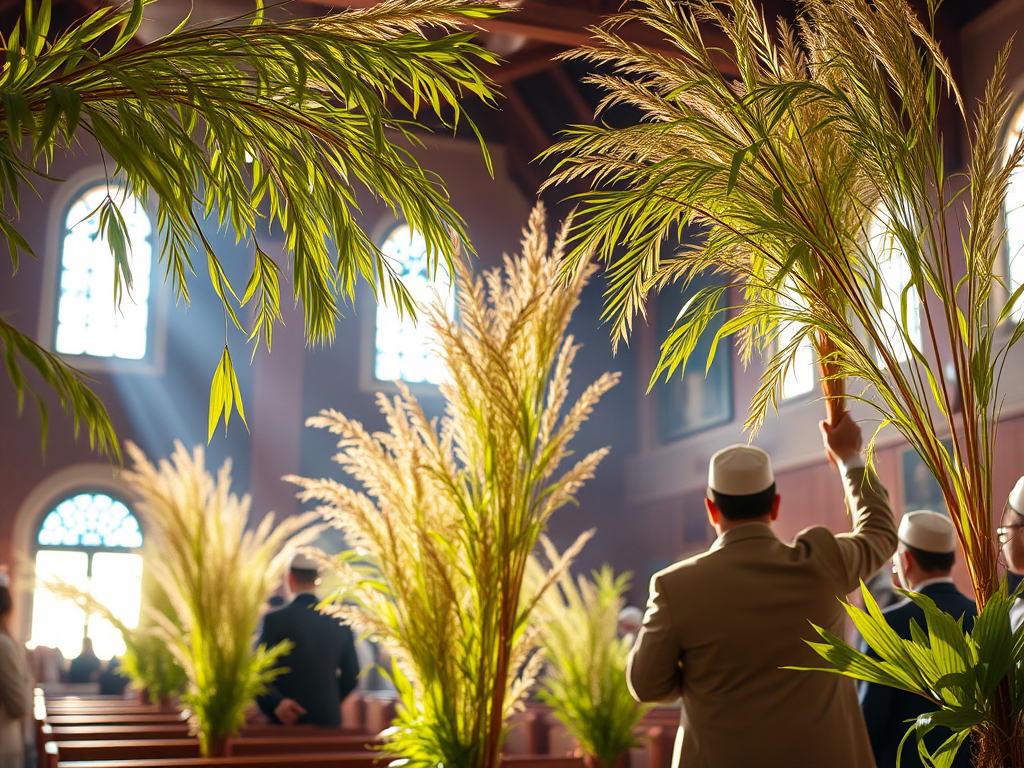
  • When During Davening To Do Hoshanos

    When During Davening To Do Hoshanos

    See also:
    ‘Hoshanos: Understanding the Hoshana Chart & Daily Order Found in the Siddur’

    Sukkos 5783

    There are certain questions a rav always receives at certain times of the year. For instance, I am writing this article on Tzom Gedaliah, and I was reminded again this year that the most common sh’eilah a rav receives on Rosh Hashanah is “Rabbi, I am so tired! Is there any heter to lie down this afternoon?”

    On Sukkos, every year without fail, I will be asked a series of questions regarding Hoshanos. It is not that the daled minim, hilchos Yom Tov, and the sukkah don’t carry their own sh’eilos, but rather that certain very specific aspects of the Hoshanos are mysterious to many people.

    The Story of Hoshanos

    When to say Hoshanos is always the first question I am asked. It is rare that such a universal element of the siddur is recited at different points in the tefillah depending on the shul where one davens. In fact, sometimes it can change in that same shul, depending on which day of Sukkos one davens there!

    To explain this phenomenon, a little background would be apt. Hoshanos were recited in the Beis Hamikdash on all seven days of Sukkos, culminating in seven circuits around the Mizbei’ach on Hoshana Rabbah. They were done with aravos by the kohanim, as only they can walk around the Mizbei’ach (see Bi’ur HaGra 660, who asks why even Yisraelim do it nowadays).

    The Ohr Zarua (315) contends, amazingly, that in the time of the Beis Hamikdash, even Yisraelim were allowed to circle the Mizbei’ach because of the holiness of this act!

    Eventually, Jews living outside of Yerushalayim implemented a similar practice in their shuls, mirroring what was done at the Mizbei’ach. After the Churban, we adopted this practice in order to recall the days when we had a Mikdash.

    When to Do Hoshanos

    It seems that there are three historical minhagim regarding when to recite Hoshanos. The first is cited by the Tur (siman 660) in the name of Rav Saadia Gaon. Hoshanos was said right after krias haTorah. Oddly, and as the Tur himself points out, although this makes the most sense, it was not the accepted practice anywhere then, and it is not today either. The reason this seems to be the best time for Hoshanos is because the Torah is already out for leining, and taking a Torah out for any reason other than leining is something we typically avoid.

    The second opinion comes from the Bach and others. They argue that since Hoshanos in the Mikdash were recited after that day’s Mussaf offering, we should say them after we daven Mussaf.

    The third approach is to say Hoshanos after Hallel. Various reasons are offered, but Rav Moshe Feinstein (Orach Chaim 3:99) posits that perhaps once one is already holding his daled minim for Hallel, putting them down until after Mussaf may appear to be an example of the principle of ein maavirim al hamitzvos—not passing over a mitzvah that is in front of you. However, reciting Hoshanos then leads to the question of whether the Torah should be returned to the aron before taking it out again immediately for leining.

    While shuls choose either the second or third option, many change the practice during Yom Tov. On Yom Tovthey will do Hoshanos after Mussaf; on Chol Hamoed (save for Hoshana Rabbah) they will do it following Hallel. The Chazon Ish has a similar minhag (Dinim 22:17).

    It is likely that this is often done for baalei batim who have a heter to work on Chol Hamoed and may have to leave early. This way they will already have said Hoshanos.

    What’s With This Order?

    “Rabbi, can you explain the Hoshanos? Why does the order change depending on which day Sukkos falls out?”

    I should first point out that, as in the case of Selichos, there are many minhagim about what is recited and when. Sephardic, German and Chabad kehillos have their own systems. What follows is a brief explanation of the nusach found in the most influential compendium of hilchos tefillah in our time—the ArtScroll siddur. There are several special Hoshanos that are said on specific days, and they change depending on when Sukkos falls each year.

    The Machatzitz Hashekel (d. 1806; siman 663:4) writes, “I have not found reasons for our ordering of the Hoshanos. But the Levush explains…” What follows is based on his words (as well as on Magen Avraham, Pri Megadim, and Mishnah Brurah ad loc #6).

    Before we continue, I should point out two constants: The first day of Chol Hamoed Sukkos will always fall on the same day as Yom Kippur, and Sukkos can only begin on a Monday, Tuesday, Thursday or Shabbos.

    The Hoshana E’eroch Shu’i is the one we want to say first as it alludes to our fasting and teshuvah on Yom Kippur. However, because such supplication should be avoided on Shabbos or Yom Tov, it is postponed to the first day of Chol Hamoed, which is appropriate in any case as it is always the same day of the week as Yom Kippur of that year.

    So then, by default, we must choose which Hoshana should always be the first one. L’maan Amitach is chosen as it describes the characteristics of the Ribbono Shel Olam. Even Shesiyah follows as it focuses on the Beis Hamikdash, which is commemorated by this minhag.

    On Shabbos, we always say Om Netzurah as the laws of Shabbos are explicated in it. Should Shabbos be the first day of Sukkos, it is recited then. The next day we go straight to the traits of Hashem with L’maan Amitach and maintain the Yom Kippur reference for the first day of Chol Hamoed with E’eroch Shu’i. On the second day of Chol Hamoed, we go back to the skipped Even Shesiyah.

    Because Adon Hamoshiyah references our need for rain, we obviously save it for the last day (before Hoshana Rabbah) so as not to disturb our time in the sukkah. However, when Sukkos begins on a Monday, the penultimate day of Chol Hamoed will fall on Shabbos. This forces us to say Om Netzurah and skip Adon Hamoshiyah entirely that year.

    To conclude, it always bothered me why, in the time of the Beis Hamikdash, they would do Hoshanos and say, “Hoshia na!” I understand why we say it today, but during that time—especially during Bayis Rishon—hadn’t they already arrived at their salvation?

    I think the explanation is that we tend to forget that, as we said during V’chol Maaminim during the Yomim Nora’im, “vadai shemo”—the only certainty comes from Hashem. So whether we have all that we need or desire more, both are given by Hashem. We have to daven not just for what we want, but also for what we have, praying that Hashem will maintains it for us.

    May Hashem grant us all of our wants, and preserve and sustain for us all the gifts that He has already bequeathed to us.

    Ah gut kvittel!l

  • The Efficacy of a Kohen Visiting/Davening ‘Near’ a Cemetery

    The Efficacy of a Kohen Visiting/Davening ‘Near’ a Cemetery

    &
    Joie de Vivre Within The Final ‘Kshanim’ HaTovos Of The Year

    Erev Yom Kippur, 5782

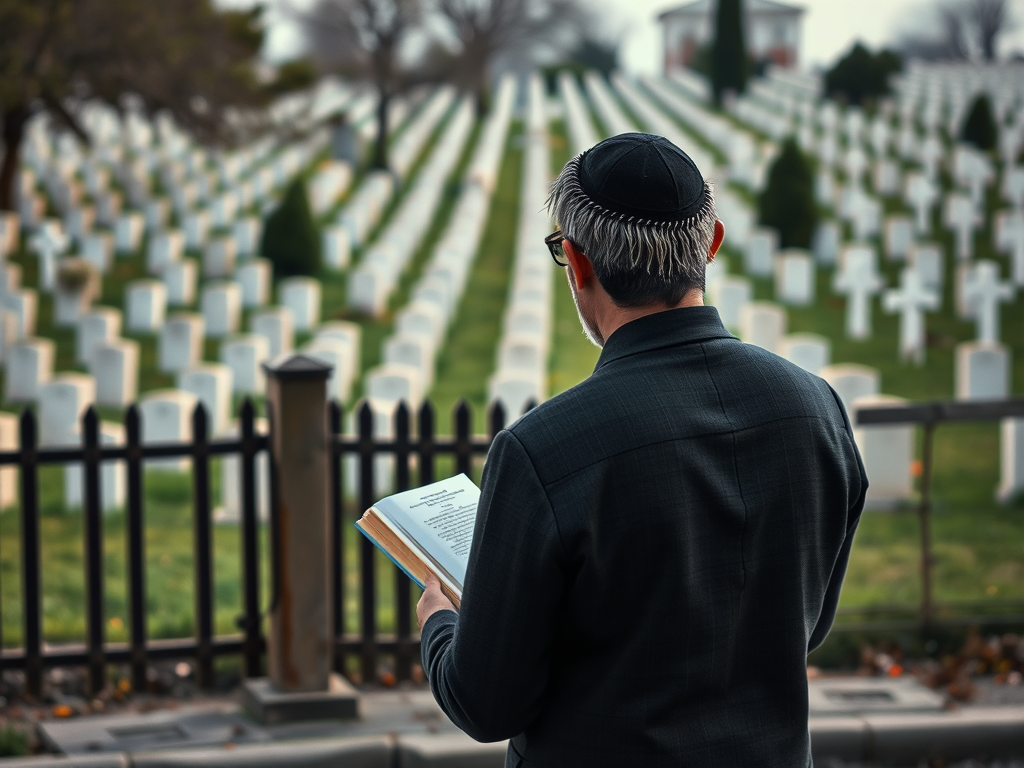
         A recent visit to Toronto allowed me to visit the cemetery before Rosh Hashana. There is where my brother-in-law is buried and where my mother and her parents lay. My mother is buried near the end of a long section, close to the gate. Because we are kohanim, this allows us to stand nearby and daven. The brushes have grown significantly since I’ve been there last, and I had to climb the fence to get a better view of the matzeiva (see shu’t Tzitz Eliezar 15:40, et al).

       While a cemetery is never a place where ones feels at ease, as a kohein who is rarely near such a place, I was quite out of sorts. What and how to be mispallel at a cemetery is an enormous discussion in and of itself, and we will discuss this fascinating topic after the yomim tovim, be’H. I managed to navigate my teffilos appropriately, and then looked out into the vast dark and quiet and the sea of matzeivos that lay before me.

    The following three thoughts came to mind, and I share them here.

    1. Seeing is Believing

          My first thought was one that would come naturally to any child: did my mother know I was there? I do not mean to get into the larger nistar discussion of the awareness of the deceased regarding the lives of their living loved ones; chazal discuss this. Rather, whatever gain there may be in such a visit, do I -standing at a distance from her kever -facilitate it?

          In the sefer shu’t Duda’ai Hasadeh #21 (d. 1916, erev Rosh Hashana) he discusses this. First, as to the nistar, he proves from a story recorded in the Zohar (acharei mos, 71) that, yes, a niftar is aware of the presence of even a kohein standing at a distance, and, that such knowledge gives the neshama nachas ruach (we would be remiss not to point out that the Gra strongly discouraged the visitation of his mother’s kever).

        He then shares a critical point that is found in the Maaver Yuvuk (Imrei Noam, 40, at end). The minhag of placing a matzeiva with a description of the niftar upon a burial spot serves to awaken those visiting. So, whether one is able to be up close or a kohein at a distance, simply being reminded of the life of a loved one -or a tzadik -will awaken within them the power to harness their yetzer hatov and unleash their internal kedusha.

        This always seemed to me to be the simple explanation as to why Kalev travelled all the way to Chevron to maaros hamachpeleh. Why not just daven directly to Hashem? Or, why not ask Moshe for a beracha (after all, Moshe gave Yehoshua a name change which helped in protecting him)?

       I believe Kalev went to be close to Avraham -who had to fend off Terech and the influence of his youth; Yitzchak-who had to battle with Eisav; Yaakov-who had to overwhelm Eisav; the imahos-who had to protect themselves and their children at great cost. Can there be greater chizuk in defeating the influences of the meraglim than reminding oneself of others under similar pressures and who come out victorious?

    1. A Frightening Sermon

    When researching the early rabbanim of America, I often come across interesting material that hasn’t yet found a home in a column. One example is the very first Yom Kippur in Buffalo, New York in 1847. It was contemporaneously reported:

    It was on the Day of Atonement that Rev. Itzig Slatsky stood in the synagogue in his white linen robe and white cap. Toward dusk…the congregation could no longer read without lights…they sent for a non-Israelite to light their hall. He, on entering the synagogue, seeing Mr. Slatsky with his pallid face and his long white beard, in full keeping with white attire…was seized with terror -ran out as quickly as he could -and reaching the stairs, fell headlong down the whole flight, causing quite a sensation by his precipitate exit

    (See The First Rabbi, p. 406)

    Standing in the dark cemetery, another event, from five years earlier, came to my mind.

         Erev Rosh Hashana of 1842 Rav Rice, the first musmach in America, decided that the best place to give mussar to this orphaned populace was at a levaya, surrounded by kevarim.

     “I must describe the religious observance at it exits” he begins. He then goes on to describe himself like a doctor who vacillates between revealing the truth and thereby risking panic, or, hiding it so as the patient can be at peace. His choice becomes crystal clear when he admonishes:

    “How foolish you are! If you would but open your eyes and look upon these graves hereabout and realize the transitoriness of life on earth…”

       Eleven days later, on Yom Kippur, he completed his words. “You have forgotten the grace of Gd that brought you here…the very fact that are synagogue is closed from one Shabbos to the next is the clearest evidence of your irresponsible behaviors in this land…one thinks that here he is no longer in the presence of Hashem, and that in this land human destiny lies only in the accumulation in vast riches…”

       Perhaps, one of the reasons for the minhag of visiting cemeteries during these days is due to the fact that noting opens one’s heart to the foundational truths, to seeing error, like being faced with the one truth from which no one escapes.

    1. Life vs. LIFE

          In 1780 the world was first introduced to the Chassidic machshava with the publication of Toldos Yaakov Yosef.

        Rav Yaakov Yosef of Polnoye was a dedicated student of the Baal Shem Tov and recorded the teachings of his master in this volume.

        In the section on hallel, he details a question from the holy Baal Shem Tov. “Lo Emus, Ki Echyeh –I shall not die, because I shall live”.

    What is the point of this redundant prayer? Either just ask for life, or request that one should not die!

         The Baal Shem Tov explained that the word ‘ki’ has many functions. One of these is ‘Because’, and yet another is ‘When’.

       This teffila is not meant to be translated ‘I shall not die, because I shall live’ rather, “I shall not be dead when/while still alive”!

       In other words, it is describing those who are Dead-Men-Walking.

         How many of us go through life not appreciating all that we have? How many of wake up dreading the day ahead? Questioning what others have while ignoring the bounty of our own lives?

           Rav Steinman once met with Rav Shach this time of year and asked why in u’nesanah tokef –when we describe some agonizing methods of departure from this world –we also mention ‘mi yichyeh?’.

        “Why are people prone to crying at those words? Is not that the very thing we are all asking for?”

         He answered his own question, and Rav Schach concurred. We are asking ourselves, ‘Will we be able to enjoy all that Hashem did grant us?” Who is alive but not vivaciously taking for granted every moment, every gift?! (Divrei Siach, 196)

       A cemetery reminds us that not only are we alive, but we must take advantage of every moment, and be thankful for this gift.

        My eldest daughter drove me to the airport to leave for Toronto. I asked her, “What is the last teffila we say each year?” She responded croecctly, “mincha, erev Rosh Hashana. I then shared that it always bothered me at we say then, in shemoneh esreh, ‘uvareich shenuseinu kashanim hatovos -Hashem should bless this year like the best years’, “We only have seven minutes left!” I asked, “What are we supposed to have in mind?”

         She thought for a moment, and the said, “Perhaps at this point we are not asking about the future. Perhaps we are asking Hashem to help us be able look back at this past year and see all of the positive He gave us, and we had accomplished. To appreciate what we do have”

       A great answer!

    Gmar Chasima Tova!

  • Can One Make An ‘Early Yom Tov’?

    Can One Make An ‘Early Yom Tov’?

    April, 2022

     Yomim tovim carry many misconceptions.

           For instance, people often declare “It’s yom tov, one is allowed to carry!”.

    Not quite.

    Without an eruv, an unneeded tissue in one’s pocket, for example, would be a biblical violation of hotazah on yom tov (see siman 518)! (see post on the topic of carrying on yom tov)

         Another popular misconception – hopefully by now largely busted -is regarding lowering flames. The Shulchan Aruch rules that kibuy -the melacha of putting out a fire -is not one of the few allowed on yom tov. In fact, he states there, that even if one’s house is burning one is not allowed to put out the fire if no one is at risk (see siman 514)! Of course, that case is academic in nature because there is always a fear today of spread and danger to life, but the point is made. While the Rema does offer some allowance when it comes to burning food, this is complex and a rav should be consulted (especialy regarding gas stovetops where some are more permissive in certain cases).

         But the misconception that I hear most often relates to yom tov starting times. “One can’t make an early yom tov” is a common refrain.

    Is that true?

    While it may be true that in practice people do not make early yomim tovim, is this due to halacha or convenience?   

    I. Early Shabbos vs. EARLY Shabbos   

          The reader should first understand that taking on Shabbos early is not simply an expedient tool, it is a requirement, as the Gemara teaches us by Yom Kippur (from vayikra 23:32) that one must except Yom Kippur early, i.e. tosefes yom hakippurim.

    In fact, many rule that just like the demand to take on an early Yom Kippur, the demand that we take on Shabbos early is also a biblical obligation (Shulchan Aruch sima 261 with Magen Avraham)!

    The earliest one may accept Shabbos/Yom Kippur is from plag hamincha. Depending on the season, this can be anywhere from forty minutes before shekia to two hours.  (For simplicity, ‘shekia’ refers to the moment the entire ball of the sun falls completely below the horizon; how perspective/altitude effects this is beyond our discussion.)

    This halacha may seem confusing at first, causing some to wonder, “What then is “An Early Shabbos?”

    What we colloquially title “An Early Shabbos” is simply fulfilling this early Shabbos requirement, and doing so as early as halachicly feasable (This way, especially in the summertime, not only does one thereby fulfill their obligation of accepting Shabbos early, but they can also keep the kids up for the seudah!

    Ia. 18 Minutes

    The minhag of lighting Shabbos candles eighteen-to-twenty minutes before shekia (in America) was largely created so as to be as an easy method to fulfill this ‘early acceptance halacha‘ each week.


    III. To Review Thus Far

    • Before every Shabbos (and Yom Kippur,) halacha demands an ‘early’ acceptance of at least a couple of minutes before shekiah)
    • If a woman misses the listed ‘lighting time’ (if that time is indeed eighteen-minutes before shekiah), she still can/must light until shekiah
    • In such a case, she should light up until about two minutes before shekiah
    • If it’s too close to shekia, she may have missed the mitzvah of an early acceptance for that Shabbos
    • In such a case, she should use the last remaining minute or two before shekia to light just one candle. For, in a minute or so, shekiah will ‘force’ the start of Shabbos upon her -whether she accepted it or not -and she therefore must minimize the risk of performing the melacha of havara after shekia .
    • This latter case is a reminder that in cases of great need ONE CANDLE is enough for hadlaka (Note how the beracha is always in the singular: “…ner shel shabbos“)

    IV. Early Yom Tov?

    What about Yom Tov? Does halacha demand its early acceptance as well?

    Yes!

    Even before seeing sources, logic would dictate that it would.

    For example, some beautifully explain that the reason we are to take on Shabbos early is because Shabbos is “zecher l’yitzias mitzraim” (luchos shniyos), therfore, just as Hashem took us out of slavery early so too do we accept this day’s kedusha early [instead the four-hundred years told to Avraham, He took us out of Mitzraim after only two-hundred-and-ten years] (see Yiyteiv Panim vol. 2, Shabbos hagadol, os 2; cf. Rambam 30:2).

       Wouldn’t this logic doubly apply to Pesach -and many other festivals- that come(s) specifically to recall and reanimate that very exodus event?

        And indeed such is the halacha: just like Shabbos, one must add (tosefes) to yom tov by accepting it early (Yoma 81a).

    Chazal further state, “Anytime the Torah demands ‘rest’ [from the melachos] one must add time from the mundane day going into the holy day” (Rosh Hashana 9b).

         In fact, some sefarim lament how this halacha remains unknown to many.

    The sefer Lechem Hapanim writes how so many are seen shopping in frum stores right up to mere minutes before shekia, thinking that yom tov is different than Shabbos in this regard, concluding, “…may Hashem atone for them and may they be careful going forward” (siman 103:1).

    V. An early EARLY Yom Tov?

         But what about a true Early Yom Tov, an hour-and-a-half before sundown, like we often do for summer Shabbosim? Why don’t we do that for yomim tovim?

          Interestingly, the Shulchan Aruch HaRav and the Mishneh Berrura both allude to the fact that for many years we would indeed make yom tov during the daytime -like a Summer Shabbos – (494:2 and 472:4, respectively). However, in our time we tend not to.

    Let’s go through each yom tov and explain why.

    • Rosh Hashana: While one must accept it early like all yomim tovim (Magen Avraham 581:10), there is a debate just how early this can be. Many poskim urge to only add a little (20-30 minutes) to be yozei tosefes, but not to make what we would call an early Rosh Hashana. This is so as not to add time to our din (Maharil, siman 33)! And even the little time we must take on, it should only be regarding the prohibition of melacha, and not the full kedushas hayom (Moadim V’zmanaim 7:233; cf. Tosfos to Kesubos 47a with Rav Elchanan in Kovetz Shiurim to Pesachim 99b). Some disagree, arguing that Rosh Hashana is a day when the imahos and Yosef were remembered, etc. we therefore should make an early yom tov, especially when the first day is a Shabbos (Shu’t Shoel U’Meishiv 4:3;125). The minhag is to follow the first view.
    • Yom Kippur: As mentioned, making Yom Kippur early is a requirement. Indeed, kol nidrei always starts before sundown. Why then don’t we make a truly ‘early’ Yom Kippur, say seventy minutes before sundown? Well, in fact, the Mateh Efraim mentions those that made Yom Kippur at plag (about an hour and a half early!), but says we no longer do this. The reason we do not make it too early is obvious: it will extend a fast on people thereby potentially effecting their teshuva. Some point to the concern of eliminating the mitzvah of eating on the ninth! The Chofetz Chaim, however, says that this is of no concern and one can indeed make it as early as an early Shabbos (siman 608:2).
    • Sukkos: Rav Yosef Karo in his Beis Yosef teaches us that while one can technically make an ‘early Sukkos’, one should at least not perform kiddush/eat until it is night. Some posit that the reason for this is due to the language of the pasuk regarding Pesach -from which many of Sukkos’ laws are derived -where it says ‘evening’ (Mishneh Berrura 639:25; cf. Rav Chaim Soloveitchik in Divrei Yechezkal 45:5). While some poskim still allow for an early maariv like we do on a Summer Shabbos -and some even allow kiddush to also be made during daylight, so long as the bread itself waits till night (Magen Avraham 639:11) -because of the complications of waiting, it’s just not worth it to many.
    • Shemini Atzeres: While the standard tosefes is required (e.g., 18 minutes) making it too early can cause problems. By eating early on Shemini Atzeres one is thereby ending their mitzvah of sukkah! Not only should one wish to extend this mitzvah (see Derashos Chasam Sofer, sukkos, 48b in old editions), but one will also run into the problem of a beracha. For, but because it’s still light outside, should one make the beracha of leishiev because it’s still technically the last day of Sukkos, or, should they omit it because they already accepted Shemini Atzeres (see, e.g. Mishneh Berrura 688:7)? So, while one can theoretically make an early Shemini Atzeres and then wait till it’s dark to eat their seudah (Shu’t Rivevos Efraim, et al), this would be confusing and inconvenient to many.
    • Shavuos: Famously, the Shlah records an ancient tradition not to eat before nighttime on Shavuos. This is because the Torah never records the date of this yom tov, rather we are to count seven complete (temimos) weeks, and until nighttime it’s not the completion of the forty-nine days (Shlah, beg, of mesechta shavuos). The Taz and many others add to this to not even daven maariv before nighttime (see also Mishneh Berrura 494:1). Nevertheless, one would still need the tosefes of eighteen minutes or so.
    •   Pesach: The halacha is that one can’t make kiddush on Pesach until it is dark. This is because the korban was only eaten at night, and the matzah need be eaten at a time that would have been appropriate for the korban, and kiddush must be at a time for matzah -talk about a chad gadya (we emulated the wording found in the Mishneh Berrura 472:4)! Furthermore, for those that say hallel in shul, many posit that they couldn’t say it if taken on early and still light outside (Dayan Weiss, as brought in Kovetz Zichron Yehoshua 2:p.191; cf. the Klausenberger rebbe in Shu’t Divrei Yatziv 2:207 who allowed such hallel to be said early). For these reasons -unless in cases of great need -we do not make a truly early Pesach. But, once again, the eighteen minutes early would still be required.
    • Last Days of Pesach: Finally – a yom tov for which there is no source or reason not to make a truly early yom tov, where we could eat the first meal in daylight! So why don’t shuls take advantage of this?

         I’m not sure. I would surmise it’s because one would risk confusing this specific set of yom tov days with allowing it also for others.

          I hope this helps unravel an often misunderstood and unappreciated part of our year-to-year halachos.

         Wishing everyone a chag kosher v’sameach!

  • Navigating Pesach: Balancing Halacha and Joy

    Navigating Pesach: Balancing Halacha and Joy

    Chumros Are Not Always Right!

    “A PERSON IS OBLIGATED [BY TORAH LAW]1 TO BE HAPPY AND IN GOOD SPIRITS ON THE YOMIM TOVIM; THE HUSBAND, HIS WIFE, AND THEIR CHILDREN…”

    – SHULCHAN ARUCH ORACH CHAIM 529:2-

    April, 2022

    Unfortunately, in spite of the above requirement, not only do many women not enjoy Pesach, but they often dread its arrival.  The sad irony is that chazal teach that Pesach and the geulah it comes to celebrate are owed specifically to the Jewish women and their merits (Sota 11b).

    Rabbanim have seen all too often the joy of Pesach sullied, the anticipation for this yom tov frustrated by unnecessary behavior done in the name of halacha.

    We must put Pesach chumros in perspective.

    There was a famous frum psychologist in Monsey who used to write to the Steipler Gaon regarding interesting cases. Many of those published letters discuss people with certain compulsive disorders hiding behind stringency in halacha. Of course, I am not suggesting a comparison, but it’s a useful metaphor that while there is room and even great importance for certain chumros, if left unchecked Pesach could be abused for unwarranted self-harm.

             It should be said at the outset that there are various wonderful chumros relating to Pesach, as well as innumerable minhagim, all of which must all be observed in their respective homes. We all know the words of the Arizal that he or she who is careful about even a trifle of chometz will be protected from sin throughout the year (See Baer Heitev, siman 447:1; See also Zohar, parshas ki seitei as brought in Kaf HaChaim).

    What follows are a few rules of chumros that one must keep in mind:

    Chumros do not exist in a vacuum bound by no rules whereby they can potentially metastasize into adversities that are unrecognizable even to their creators. Chumros too are restricted by halacha. In fact, we need to be machmir regarding chumros, to learn when chumros are unnecessary and, sometimes, even forbidden.

    In addition, by confusing chumros with real halacha we can create an atmosphere where what has to be done is eclipsed by what one desires to be done, leading to unhealthy consequences. In the words of the Netziv, “…we run away from the fox but into the mouth of a lion.”4

    What follows is meant as informational; all final ruling must come from one’s own personal rav (See introduction of Rav Yosef Karo to his Kesef Mishna and his Beis Yoseph. See also Maharal, Nesivos Olam, Nesiv HaTorah 15).

       RULES RELATING TO CHUMROS

    1. A chumrah must have a source – All chumros – aside for one’s familial/ group’s minhagim – must have a source, a singular opinion, for instance, found in the poskim, and it certainly cannot go against a ruling of chazal. A stringency made up out of whole cloth is not acceptable unless it is a specific tradition (by tradition, we don’t mean “well, I did it last year”).6, 7  
    2. A chumrah cannot conflict with a clear halacha If a newly decided-upon chumrah would be in direct conflict with a clear halacha it must be abandoned. Examples abound, and halacha is vast, so a rav should always be consulted. In my view,  this includes taking on a new chumra that could severely harm one’s simchas Yom Tov and/or shalom bayis.8
    3. Chumros relating to medicine in pill form –When Rav Moshe Feinstein, Chazon Ish, Ksav Sofer, etc. were asked about pill-form medications that was known to contain chometz, they all allowed it on Pesach. This is because a pill is not edible to a dog (and is in fact produced to be that way) which the Torah itself allows. While we can’t be stricter than the Torah (baal tosif), there is a minority view (the Rosh) who posits that there would still be a rabbinical concern when such permissible chometz is actually consumed, and not just in one’s home (achshivei). Yet, even if one wished to follow this minority/rabbinic concern, the poskim explain that it would only be in effect when such indelible chometz is eaten, not when swallowed whole. While some kedoshim wish to still be machmir, one should not be machmir and refrain without speaking to a rav. That’s the only shailah they should ask about pills -if they are allowed to be machmir! Personally, I am trying to say every word of pesukei d’zimra, and work on my middos, before assuming a chumrah on a derabbanan that can impact one’s very health, and that the poskim do not reccomend.
    4. Taking on a chumrah for someone else – One cannot take on a chumrah for someone else – or for one’s wife (see Igros Moshe eh’e 2:12 at end, et al., that a husband cannot be machmir against the basic din when it affects only his wife).

          If a husband desires to take on chumros  -especially when it comes to cleaning for Pesach – that are new and not a part of standard practice in their family, he is more than welcome to do so, and his wife should show him where the cleaning supplies are kept. Yes, we must be vigilant, machmir even, when it comes to the laws of Pesach, but never at the expense of others.

    • A wife foregoing her family minhagim for her husband – the concept that a wife forgoes her family customs so as to follow the minhagim of her husband is not as simple – or as ancient – as many assume. There are times when she would not, could not. This topic was explored several years ago here, and one should speak to their rav.
    • Cleaning for Pesach
    • If one fears there may be chametz behind a large appliance or shelf space (e.g. a bookshelf) that cannot be moved without great effort (e.g. unscrewing panels, or very tricky lifting) there is no need to remove it, especially if any chametz there would be inedible (Shulchan Aruch HaRav, some understand his words as applying to even large pieces of chametz).
    •  While it is praiseworthy to clean seforim / books of tiny crumbs, it is not an obligation (Rav Shlomo Zalman Auerbach, et al.). Nevertheless one should not bring unchecked seforim to the table where a crumb could fall into food (Rav Moshe Feinstein). Pockets of clothing, however, must be checked (Rema).
    • All areas of one’s home and property (e.g. car) must be cleaned of chametz, save for an area where one is certain no chametz has entered. In homes where young children are present, even such spaces must be checked unless the children have no way of entering.
    • All areas that are to be sold/rented to a non-Jew for Pesach need not be checked or cleaned for chametz (Rav Shlomo Zalman Auerbach; cf. Mishnah Berurah 436:32). Nevertheless, any such chametz must be out of view over Pesach (behind a mechitzah / barrier of at least 38 inches high). Regarding one who is selling their entire home, speak to a rav.

    Deracheha darchei noam -the Torah and its laws are pleasant. We must never forget that. As chazal teach, just as one gets schar for doing, they sometimes also get schar from pulling back (Kiddushin 57a).

        Wishing everyone a chometz-free and anxious-free home this Pesach!

  • Impact of Permanent Daylight Savings on Halacha

    Impact of Permanent Daylight Savings on Halacha

    March, 2022

    A classic and well-known Jewish joke:

     “There is a zoology course at a distinguished university in which the students were requested to write a term paper on the subject of elephants. The French student writes a paper with the predictable title, “On the Food Habits of the Elephant”; the German student submits a teutonically comprehensive “Introduction to the Bibliographic Sources for the Study of the Elephant”; the American student submits a paper on the topic of “Breeding Bigger and Better Elephants”; and, finally, the Jewish student chooses as his theme —what else?—“The Elephant and the Jewish Question.” (Santer, Johns Hopkins University  Press).

             While my next sentence may sound like the above joke’s continuation, I wish to discuss ‘Daylight Savings Time and the Jewish Problem’.

            The issue of Daylight Savings Time has always been discussed, debated and even experimented with.  I am a contrarian. Put me in front of a chavrusah and have him say a pshat that I’ve always thought of myself and, suddenly, I will see its flaws.

         I never really thought deeply into Daylight Savings Time, save for every November when I would have a flash-of-a-thought, “Why don’t they just keep the time-gain of an hour of sunlight?”

         But then, the other week, I heard on the news that the Senate voted unanimously to make Daylight Savings Time permanent. It was only then when, all of a sudden, I was awakened to the many issues it would cause for bnei Torah.

        The bill was titled ‘The Sunshine Protection Act’. It is an odd name, as if they were Yehoshua who can, by fiat, decree the sun stay in the sky longer. In fact, Senator Marco Rubio, who introduced this bill, made sure to explain on his website that, “This bill does not…change the amount of hours of sunlight, etc.”!

        According to this law -which still must be voted on by congress and then signed by the president -in 2023 we will change the clock one last time, leaving DST in place for good.

          In truth, this is not the first change relating to DST. Let us go back in history for a moment.

        DST was enacted in the United States following Germany’s 1916 effort to conserve fuel during World War I. Initially, it was authorized for only half of the year, but in 2005 Congress extended DST to eight months, leaving only four months of standard time. The United States has also gone through periods where we have had year-round DST, including in 1942-1945 and 1974-1975.

         Those brief changes, obviously, didn’t last.  In the Fall of 1974, a poll was commissioned where opposition to DST outran support by a 53% to 41% margin. The reason was as clear as day -or as dark as night! -people didn’t want to send their kids off to school, or go to work, in the pitch black.

         Funny enough, polling hasn’t gotten much better, with over seventy percent in favor of keeping the status quo (CNN, March 14th 2021, ‘Americans Don’t Like Changing the Clocks, But Can’t Agree on a Solution’).

         The reader may be wondering what the problem may be for us. After all, Chanukah licht would be at around 6pm instead of 5pm, allowing for more fathers to be home to light on time! In addition, even during the winter, most shuls would be able to expect ballabattim to have returned from work so that everyone can make a unified mincha and maariv each and every night of the year. So what’s the issue?

          The issue is davening in the mornings!

          Right now, the goal of ST and DST is to have it so that the sun will be rising as most people get up in the morning. Sunrise changes within a two-hour window throughout the year.

        So, dear reader, follow me into the future:

          Let us fast-forward to March 12th, 2023, the first day of our new permanent DST. In New York City, sunrise, or neitz hachama, will be at 7:12am.  From there it will get earlier, reaching its nadir around June 15th, at 5:24am. By November 4th, 2023 – the morning before we would have switched back to ST -sunrise will be at 7:29am.

         Now, would laws stay the same, the next day would be a 6:30am sunrise, but if we stick with DST, it will be at 7:30am.

        The time for sunrise will keep moving up from there, reaching its zenith in the beginning of January 2024, when sunrise will be as late as 7:20am, even at ST…and 8:20am if we keep DST!!!

          It goes without saying -leaving halacha to the side for a moment -that our challenge of getting our young boys and girls out of bed in the morning will only be greatly increased because of this, and, that safety in bussing will also be pushed to its brink.

         Yet, it will be the halachic and societal changes that will be the most noticeable. Most insignificantly, no Shabbos of the year will end before, around, 6:30pm, but let’s go back to those sunrise mornings.

       Chazal teach that the ideal time to daven is netz (Berachos 30a). But when is the earliest one may daven? While the gemara does allow for an earlier (and certainly, later) time, it is unclear when that is.

        The Rambam rules that one could, bdieved, daven at alos, or ‘dawn’ (hil. teffila 3:7).

         The Rosh gives a later bdieved staring time, when the eastern sky is illuminated (Berachos 4:1).

         Rabbeinu Yeruchem gives, still, a later time than that: when one can recognize a friend at four amos distance (nesiv 3:3; see Beis Yosef to siman 89).

       We rule that one should never daven before the time of the Rosh, unless one has no other option.

         Now, to be sure, when alos/dawn is exactly is a debate with close to ten opinions. But let us take the most lenient view. Say one wishes to daven at alos (already a great leniency), and takes the view that this is 90 minutes before netz (another lenient indulgence) -even then the earliest minyan would still be after 7am! And this is only if our poskim sanction such a broad halachic allowance. They may instead urge that, like with mincha, people find minyanim near their offices at a more lichatchila time. We cannot overstate how troubling this would all be to the chinuch of our children. Part of yiddeshkeit is the witnessing of thousands coming to and from shul each morning.

          In addition, yeshivos and chedarim will have to have learning start much later -as certainly they would never sanction a chinuch of a bdieved. Imagine the amount of bitul Torah this will cause!

            Gevalt!

         Rabbi David Warshaw, the president of the National Council of Young Israel recently lamented –“Since Covid, shuls need stability now more than ever. This new law will take our shuls five steps back!”

        So, what do we do?

    I am not sure. The first step, of course, is to inform.

        I hope this column will be a good start.