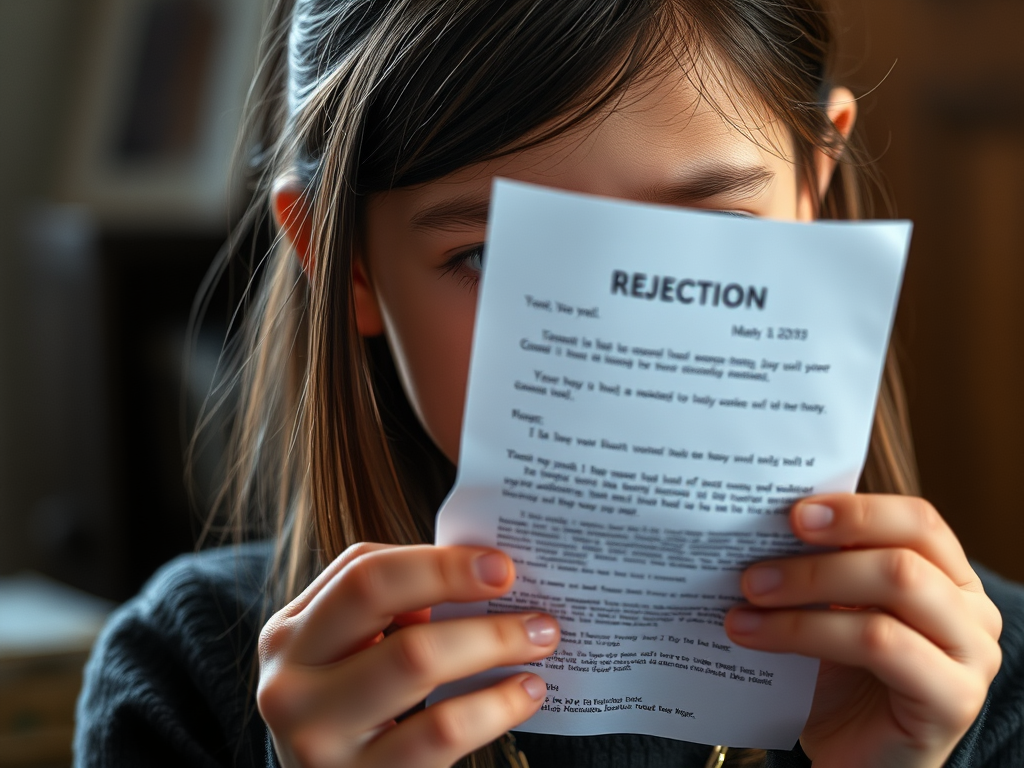
It Has Become More Common For ‘Normal’ Children From ‘Average’ Homes To Be Rejected From Their Local Torah Centers and Bais Yaakovs. Have We Honestly Assessed the Risk/Reward of the Current System — For the Children and For the Klal? Does Mesorah Offer Guidance? Of Course It Does.
By Rabbi Moshe Taub | Ami Magazine, September 2023 (abridged)
I. Another September
– “When something needs to be said, silence becomes a lie.”
September carries the scent of new backpacks for most families. But there’s a parallel ‘September Universe’ — where supplies go un-ordered, and fresh tears replace new school styles.
So many children — Hashem yerachem! — are rejected from elementary school after elementary school, from their local Bais Yaakovs. Some find placement before the year begins, but only after severe, irrevocable disenchantment with the klal, her Torah, and its leadership, R”l.
II. The Birth of Bais Yaakov
In Fall 1917, with twenty-five students and a two-room apartment, Sara Schenirer opened the first Bais Yaakov. Fifteen years later, over forty thousand girls were enrolled in umbrella Bais Yaakovs in Poland alone.
The irony is that Bais Yaakov was founded to pull bnos Yisroel lacking a full chinuch at home off the ‘streets.’ Now those very girls — most desirous of direction — are often locked out, forced back onto the streets. If rudderlessness was dangerous in the 1920s, allowing it today is quasi-infanticide.[1]
• Even if 99% of modern rejections are warranted, bitul b’rov doesn’t apply to pikuach nefesh. We will still answer for every one of that 1% of neshamos thrown to today’s wolves.
III. The Common Excuses — And What We Are Not Discussing
Before this discussion is derailed:
• Yes, each yeshiva must weed out certain students.
• Yes, competition and tuition are real factors.
• Yes, some students genuinely fit better elsewhere.
• No, we are not discussing children who refuse a school’s rules.
• No, we are not discussing seminary or beis medrash admission.
• Yes, Lakewood and Brooklyn face unique challenges unrelated to what follows.
We are discussing the average, normally-challenged children of acheinu beis Yisroel — and whether our mesorah ever sanctioned what’s being done to them.
IV. A Sea Change
Over twenty years, American chinuch has undergone a paradigm shift. Gone is the era of the American rabbi convincing a newly frum or growing family to send a boy to yeshiva, a girl to Beis Yaakov — and with it, many future gedolim.
The Netziv, at a seudas hodah for his newest sefer, recalled overhearing his parents as a child: his father comforted his mother, “Not everyone is destined to be a talmid chacham. He can still become a simple shoemaker.”
He posed a thought experiment:
“Imagine if I hadn’t overheard my parents that night. I would have become Naftilka the shoemaker — frum, a good husband, a giver of tzedaka. But at my din, Hashem would ask: Netziv! Where are your sheilos v’teshuvos, your commentary to the Sheiltot, your peirushim on the Torah? I would answer: Who is this ‘Netziv’? I was shomer Torah u’mitzvos…”
Will we not be tasked with presenting the erased gedolim — and sefarim — stolen from our kehillos?[2]
A personal story: a present-day gadol b’Torah in Eretz Yisroel attended a co-ed elementary school, majority not shomer Shabbos. He wished to attend Ner Yisroel Toronto for 9th grade and spent the summer learning with my older brothers. The yeshiva had conditions, but his past wasn’t one of them. He became an incomparable masmid, married into Torah royalty, and now has talmidim worldwide.
Could that happen today?
V. The Response
Some object, arguing, won’t we also be judged for failing to protect our children from bad influences? Is every wild-child destined to become a Netziv?
However, severely troubled or harmful children aren’t this monograph’s focus and shouldn’t scapegoat what we’re discussing: the “sin” of being average, or not yet connected to one’s studies — children who need mechanchim more than others.
Walking into a local girls’ high school recently to give a talk, I saw anxious parents waiting with their daughters for interviews. Two mothers were reciting Tehillim. Zu Torah v’zu schorah?
VI. R.I.P. Communal Schools?
One cause for this shift is the death of the communal day school. Places like Lakewood and the Five Towns grew rapidly, demanding new schools — which bred distinctions, then competition, then more schools. With each iteration: Who is now oirev for the city’s children? What are the rules of acceptance? Should any kehilla exist without at least one communal mesorah day school?
Large towns now resemble the proverbial island of ten Jewish men who never missed a minyan — until an eleventh arrived. After that, no one had a secure minyan; each depended on the other. That sense of personal achrayos was lost.
VII. A Bnei Brak Miracle
A now-famous video shows Rav Steinman incredulous at mechanchim seeking his haskama to reject elementary school children. After dismissing their arguments, they played their trump card: the mother is “open-minded,” re-married.
Rav Steinman: “So she shouldn’t have remarried? Not want the best cheder for her kids?”
They added that chashuveh, frummer parents were concerned the family wasn’t their “type.”
Rav Steinman banged the table: “There is always that person… It’s coming from their gayvah.”
Mechanchim: “But these are bnei Torah, talmidei chachamim…”
Rav Steinman, louder: “Yes. Especially from such people! It’s all gayvah… Gayvah! Gayvah! Gayvah!”
He recalled his cheder in Brisk, where children of Communist and Bund Party members sat beside the Brisker Rav’s children — and some of the simplest children became leading roshei yeshiva. “Did Rav Dovid Soloveitchik turn out ok?”
I spent two years learning under Rav Dovid Soloveitchik. He’d be aghast at what some balla batim do to our children today.
Summation of Our mesorah:
• If a school believes its chinuch carries the torch of mesorah, any parent/child who wants that mesorah — and will follow the rules — should be accepted, if on trial.
• In mid-size cities: a parent sincerely seeking a Torah U’Mesorah day school, willing to follow the rules, should be accepted immediately, if on trial.
• This is how it has always been. I know of no daas Torah demanding we abandon this winning strategy.
• “Just as I [Moshe] learned Torah for free, so too you must teach for free.” (Nedarim 37a)
• “Do not read it as engraved (charus) but as freedom for all (chierus).” (Avos 6:2)
• Chazal explain not every gadol’s son becomes a gadol — to remind the klal that Torah isn’t a yerusha; it can come from anyone. (Nedarim 81a)
• “Be careful lest you undervalue teaching Torah to the sons of paupers, as from them will Torah spring.” (Nedarim 81a; Rashi: because these children are humble)
• The Chasam Sofer, on “negative influences” from less-privileged students: we’re discussing the Heavenly Torah, whose zechus protects. (Chiddushei Chasam Sofer, Nedarim ad loc.)
• “Anyone who teaches Torah to the son of an am ha’aretz — even if Hashem issued a harsh decree, He may nullify it for his sake.” (Bava Metziah 85a).
VIII. The Reality of ‘Rejection Letters’
“Helplessly seeing my young child go through this is more excruciating than my disease.”
— A dying mother to my wife. She passed before finding comfort. Her daughter — a tznius Beis Yaakov girl with perfect grades and middos — was rejected because her parents were ill.
Whatever one feels about this monograph’s suggestions, one thing is certain: twelve-year-old girls should never receive a “rejection” letter from their community. Calling it “not a communal school” won’t soften a child’s reaction and a possible aversion to Torah thus caused. The die is cast by then.
If such letters must be sent, local rabbanim must work with schools to secure placement first. Every January, every yeshiva should partner with local mechanchim, askanim, and rabbanim toward that end. Many Bais Yaakovs already do this for seminary placement — staff work tirelessly by mid-year in 12th grade to place every girl, purely to avoid shame. Apply that same effort here.[3]
It boggles the mind, that the same Torah that invented a law of ridding the army from its strongest men -of marriage and new house age -just to save the embarrassment of the baalei aveira (Sota 44), is now being ‘protected’ on the backs of the tears of little boys and girls.
IX. Not Just the Child
This fallout spreads. Parents feel ostracized by their community, leaders, even friends.
“My parents haven’t talked to me since we became frum. All that sacrifice, for what? To be told I’m not a real bas Sarah imeinu? So my daughter winds up on the very streets I ran from?”
Some parents changed shuls or moved cities over this — painfully leaving the already-humiliated children feeling responsible for their parents’ shame.
As my wife observed: we have groups for every issue affecting our youth. But the child who is neither brilliant nor severely troubled has no advocate, no club. Who can blame such a child for aligning with someone, anyone? That’s more likely the result of rejection than proof it was warranted.
Chazal teach the only way to verify a questionable letter in a Sefer Torah is through an “average child” (Mishnah Berurah 143:25) — perhaps hinting that it’s often the average child who carries Torah’s future.[4]. Hameivin yavin.
X. Advocacy
“It was behind closed doors. It was quiet — under the table.”
— Mrs. Jenine Shwekey and Mrs. Chaya Bender, founders of The Special Children’s Center, on a not-too-distant past when such needs were hidden from view.
Our grandchildren, iy”H, will be shocked this issue was ever hidden. Before any mechanech invokes the “heter” to opt out of being a communal Bais Yaakov, read this diary entry, shared with the girl’s permission:
…By 8th grade I was applying to high school. January 11 was acceptance-letter night. I expected the best day of my life. 6:01 PM: “Wait listed.” Then again: “Wait listed.” Again: “Wait listed.” School X — the one that mattered most: not accepted. I ran to my room and skipped dinner. The next day was worse — I walked in with shame, while everyone else who’d applied got in. Why doesn’t anyone want me? Am I that unlikeable?
Whenever helping a family through this, I first investigate -speaking to teachers, looking at report cards. I’ve worked with B and A students alike, all with good middos. So why the “no”?
A rav’s exchange with a principal, re: a “C” student:
“She’s not academically up to par, though she’s sincere and frum.”
“Don’t you tell your 12th graders not to attend college?” “Yes, what’s that got to do with it?”“And to marry a yungerman, become a ballabusta, have bitachon rather than worry about parnassa?”
“Yes, of course.”
“Beautiful — so you’ll reject a thirteen-year-old over academics?!”
Another case: a Beis Yaakov alumna, living in a shelter for abused women, called me. Her twelve-year-old had stellar grades, exemplary middos, was popular — and her local Beis Yaakov still refused her. I offered to cover therapy and tuition, and begged the school president, a real-estate developer worried the girl might one day display emotional needs, “like a ben sorrer,” the school wasn’t equipped for.
I responded: could there be a better role model for your students? And to claim concern for her mental health while sealing her into another existential rejection?
Worse, I was the only one who called her teachers and her therapist. Those who called me an interloper hadn’t.
XI. ‘Communal’ Opt Out
No person or group may unilaterally declare a school no longer “communal” without presenting both sides to daas Torah.
When Rav Chaim Volozhiner founded the first modern yeshiva independent of the local community: (A) it wasn’t for girls — our mesorah never sent girls away from home for school; (B) it wasn’t for elementary schools; (C) most crucially, Rav Chaim waited for — and delayed the yeshiva over — the Gra’s haskama.
Chazal (Nedarim 81a) teach that not every gadol’s son becomes a gadol so connected families don’t “lord over their kehilla” -Mar Zutra says they’d call ordinary people donkeys. Rashi notes it’s natural for such people (myself included, perhaps) to breed condescension.
I’ll close with something a rebbe recently shared: his 8th-grade daughter begged him not to quit his parsha shiur until after her entrance exam. Whether her fear was warranted is beside the point – is that the message, and the chinuch, we are giving our children?!
XII. Reasons vs. Solutions
Yagati b’anchasi, aschcha b’chol Layla mitasi, b’dimusi arsi amseh // I am spent from sighing; nightly, I soak my bed with tears. — Daily Tachanun
The most common reasons given for rejecting an otherwise worthy 12-13-year-old girl are:
• Space
• Not a frum enough home
• Lack of resources for an emotional issue at home
• Competition with other schools
• Grades
• Middos/Tznius/Hashkafa
Space:
No school short an algebra teacher would say, “we’ll start without algebra.” Torah chinuch matters more — “no solution” isn’t accepted there either.
Chazal (Sanhedrin 20) teach that six people pushing a tallis toward each other can cover all six; it fails only when each grabs for himself. Rav Moshe Feinstein similarly taught in Darash Moshe: do right by yeshivos, and money and space follow.
Isn’t this what we teach our girls — marry a learning boy, trust b’bitachon, don’t obsess over space and money? I can’t reconcile that with our actions here.
More: many large shuls sit empty all week, near schools, while we’re talking twenty to thirty rejected girls per school. If space were the real concern, where are the parlor meetings warning, “We may have a space issue next year”? Chazal (Bava Basra 21a) remind us klal Yisroel invented the classroom and the communal duty to educate every city’s children.
Home Environment:
A girl who’s proven she can follow rules despite a hard home life benefits most from Bais Yaakov — and is a positive influence on girls from good homes who struggle too. Worse, voicing this concern to young girls creates a self-fulfilling prophecy and teaches them to resent their parents.
My mother-in-law, Mrs. Linda Levin, attended a modern Orthodox high school – her single mother didn’t cover her hair, and there was a TV in every room. On graduation day, she nervously explained her background to Rebbetzin Vichna Kaplan, founder of the American Beis Yaakov movement, and was accepted immediately for her earnest desire to learn. She became a mechaneches to thousands.
Rav Nota Greenblatt was stunned by the one-directional worry:
“They’re afraid the bad girls will influence the good ones? When will the good girls influence the bad ones? Keep the mevakshos away, and it never happens!”
Rav Aaron Levine once shared his bechina for Telshe Cleveland in the late 1950s. He was asked whether Noach was a tzadik or rasha and, lacking much Jewish education, he answered, “I don’t know.” The rosh yeshiva smiled: “Exactly right — Rashi brings both opinions.” Doing right al pi daas Torah for the tekufa doesn’t harm the institution; Torah’s survival is itself a ness.
Grades and Tznius:
I agree! Only girls who agree, m’kaan u’l’habah, to follow a school’s rules should be accepted, sometimes on trial. Full stop. But dismissing a girl’s future out of hand over twelve-year-old mistakes? She’s a child! That such judgment falls around Elul is beyond ironic. We’re mechanchim — teach her, inspire her.
Competition:
Each city should have a vaad hachinuch of local rabbanim/roshei yeshiva. Come January, the private list of unplaced students goes to this group for placement — no reputation suffers if every yeshiva accepts the framework. We read of guards at the beis medrash door, of Hillel on the snow-covered roof, and are shocked such systems existed. Is today so different?
Rav Elya Svei taught that Rabbi Akiva’s students erred not by disrespecting each other, but by forgetting to respect each other’s potential. Teach them, don’t judge them. Inspire, don’t dismiss.
XIII. Conclusion
• If our local elementary schools and Bais Yaakovs aren’t oreivin for these girls, who is? This is not meant rhetorically.
• Can anyone claim hefker on local children by declaring the one local Bais Yaakov no longer “communal”? Also not rhetorical.
• No institution should carry this alone. Our mechanchim are among the holiest — this isn’t an attack on them.
I’ll close with what I share each Tisha B’av before our shul’s kinnah for churban Europe: beyond the six million, and beyond the Torah lost, who knows what cures for cancer went up in smoke in the crematoria — the death of Jewish potential buried on those grounds.
It forces me in life to focus not only on my mistakes, but on the fruits I’ve let be sullied along the way.
It’s what I think of every time an unfamiliar mother calls mid-day: this child may be the next gadol, or produce one. I must act as a member of Hatzalah.
And so should you.
May HKBH save us all from michshol.
Notes
[1] See the Chofetz Chaim’s description of Bais Yaakov’s founding and purpose in Likkutei Halachos, Sota, p. 21 (Zacks ed.), note 3.
[2] Sefarim teach (Rav Chaim Kanievsky, Derech Sicha) that our yom din tribunal includes gedolim from our time and place who understood our challenges. Lulei demistafina, I wonder if Hashem will also summon the “would-be” gedolim we’ve snuffed out.
[3] Years ago, at an Agudah Convention round-table, Rav Yaakov Weinberg of Ner Yisroel objected to camps running “Color War,” pitting children against each other — a daas yachid. Imagine his reaction to rejection letters sent to a newly-minted bas mitzvah.
[4] A related yesod from Rav Moshe Feinstein (new Artscroll Reb Moshe, pp. 121-122): our mesorah begins gemara with Bava Metzia, not Brachos, precisely so children aren’t forced to choose between rebbe and parents. Short of a serious halacha or hashkafa issue, a child must never face divided loyalty between the two.
Bonafides: While an unworthy messenger, my chinuch experience spans co-ed schools to top-tier yeshivos, out-of-town Jewish Community Day Schools to Chabad chederim, Yeshivas Novominsk and Yeshivas R’ Chaim Berlin, Shevach Bais Yaakov and Central Yeshiva University High School for Girls. Executive roles: Menahel at Telshe Yeshiva and YTT in Queens.

Leave a Reply