What to do by a mistaken Beracha
February, 2025
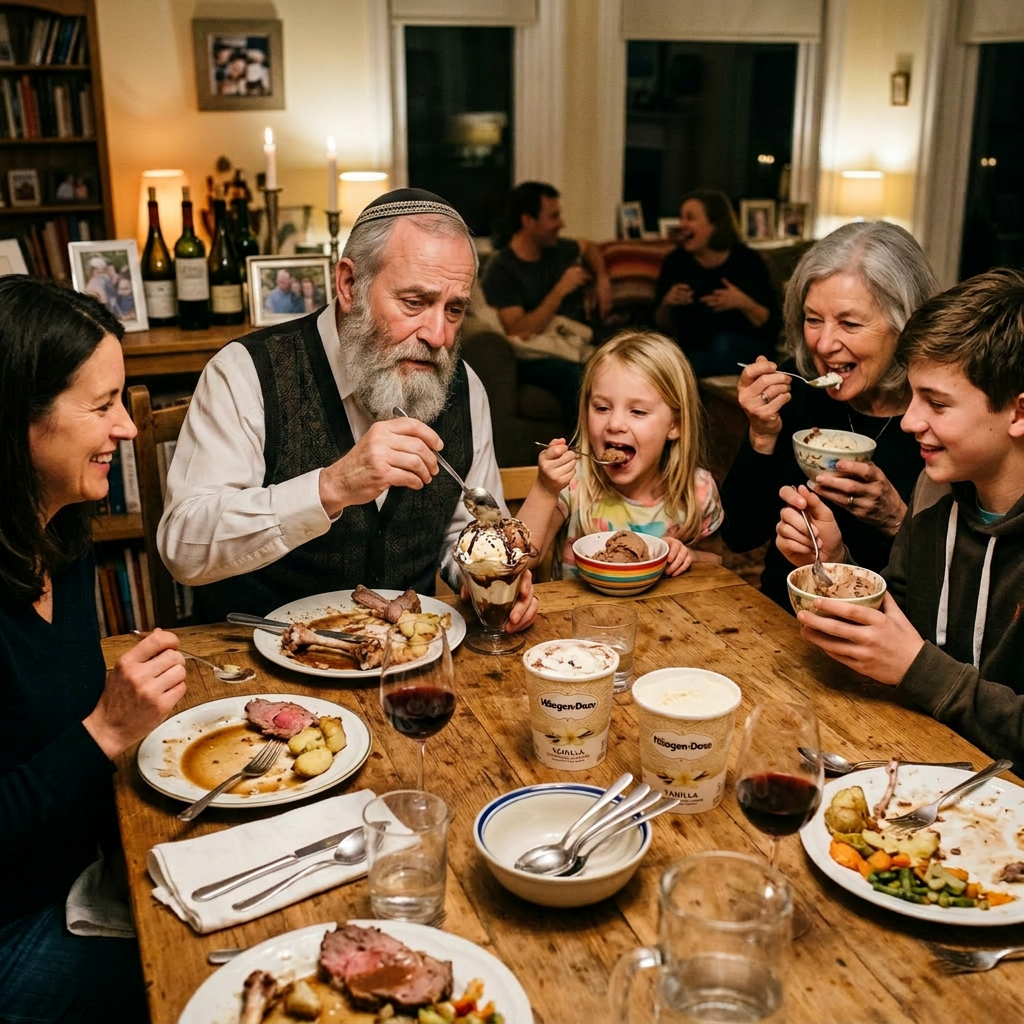
Imagine this: You finish a delicious schnitzel dinner and bentch. A few minutes later, you are hankering for something sweet to settle your stomach. You rummage in the fridge and cabinets—and then you notice freshly made cupcakes right next to the oven.
Excited, you lift one out of the tin and recite a heartfelt Mezonos. As you slowly bring the the hot dessert to your mouth, you hear someone say, “You’re gonna love these cupcakes. They’re made with real heavy cream.”
Oh, no! They’re milchig! You just ate schnitzel a few minutes ago—but you already made the brachah!
What do you do now?
A version of this story happened to a bachur in Cincinnati this week. Rabbi Shmuel Botnick, a well-known writer and a friend of mine, is the boy’s rebbi, and they called together to hear my thoughts.
I teased Rabbi Botnick, telling him that he was not just an anav (which he is) but that he wanted to share the responsibility for this psak with someone else (see beginning of Maseches Horayos).
Among the most challenging questions that rabbanim face are those regarding hilchos brachos. Over the years we’ve discussed a number of these sh’eilos, such as the real story behind Pringles and whether a Shehakol is the correct brachah to make on them.
Before we move on to the latest example, I’d like to share a story demonstrating that it is no exaggeration to describe brachos as one of the most challenging topics in halachah.
Rav Chaim Ozer Grodzinski (d. 1940) was known as a unique iluy among gedolim. Our rebbeim used to tell us that he was able to write two teshuvos at the same time, one with each hand, while he was on the phone answering a third sh’eilah.
During one of the first Agudah conventions, Rav Chaim Ozer was staying in a hotel under a pseudonym. He was exhausted after his long journey from Vilna and needed time and space to consider the many decisions facing the klal.
However, a determined young yeshivah bachur did not want to allow an opportunity to meet this gadol baTorah slip by, and he found out where Rav Chaim Ozer was staying.
The young man knocked on his door. Rav Chaim Ozer did not want to send him away, so he asked him to be brief.
“I’d like to discuss a sugya,” said the bachur.
“On what topic?”.
“Hilchos brachos.”
Rav Chaim Ozer paused, thought, and then responded, “I just had a very long journey. Please, choose another sugya...”
In the case of the milchig cupcake, we have several issues to deal with.
- What exactly is a brachah l’vatalah?
- How necessary is kavanah? In other words, may the person who made the Mezonos simply eat another Mezonos item that is pareve?
- What is the reason for waiting between meat and dairy?
- We need to compare the prohibitions in such a case so that we will know whether it is preferable to make a brachah l’vatalah or to eat thecupcake.
Chazal tell us that a brachah l’vatalah is a violation of one of the Aseres Hadibros—“Lo sisa Shem Hashem lashav, you shall not take Hashem’s name in vain” (Shemos 20:7; Brachos 33a). It would seem that this bachur has a simple choice—either eat the cupcake and violate the rabbinic rule to wait between meat and milk, or eat a little and avoid violating a Torah law by making a brachah l’vatalah.
It follows, therefore, that he should eat a little of the cupcake.
If only it were that simple!
The Rambam understands this gemara as affirming that a blessing in vain is a Torah violation (Hilchos Brachos 1:15, with Magen Avraham 215:6; see also Teshuvos HaRambam, Pe’er Hador, 105). However, many poskim disagree.
Tosfos explain that Chazal are not saying that a brachah l’vatalah actually violates the issur of using Hashem’s name in vain. Rather, it is a rabbinical concern that is simply supported by that pasuk.
The Chofetz Chaim explains this reasoning by reminding us that a brachah is, after all, a praise of Hashem. If one recites a brachah with Hashem’s name, saying, “Blessed are You, Hashem, for creating the fruits of the tree” without intending to eat any fruit, how can that be considered prohibited mid’Oraisa under Lo Sisa? It is a true statement of praise, perhaps no different from saying the Shem Hashem when singing zemiros on Shabbos, as some do.
Therefore, he and others explain that although such praise would be allowed on a Torah level, Chazal wanted to prevent other inappropriate uses of Hashem’s name by creating the special prohibition titled “brachah l’vatalah” (see Tosfos, Rosh Hashanah 33a, Mishnah Brurah 215:20, Chazon Ish, siman 137).
According to these shittos, the bachur had the choice of violating one of two d’Rabbanans—eating dairy after meat, or making a brachah l’vatalah.
But if these options are of equal weight, how does one decide?
The best option is not to eat the cupcake but to say, “Baruch shem kevod malchuso l’olam va’ed.” This is based on the rule “Shev v’al taaseh adif—an error of omission is better than an error of commission” (see shu”t Yabia Omer 2:5).
For example, the Mishnah Brurah rules that if on Yom Tov one makes a brachah on an item and then realizes that it is muktzah, he should not eat it (515:5). It would seem that the same applies here.
You may think that we have come to a conclusion…but we are not even close, because all of this information was given under the presumption that the halachah of waiting between meat and eating dairy is d’Rabbanan.
Is that true?
Chazal teach in the name of Rav Chisda that one must not eat dairy after meat (Chullin 105a). Some understand this to mean that one simply needs to wash out his mouth before eating dairy (Rabbeinu Tam, et al.); others explain that one must bentch and clear away the meat meal first (Rif, Ramban, et al.).
Chazal then give the view of Mar Ukvah, who required waiting “until the next meal” in order to have dairy after meat, and this is the view we follow. The question, then, is how long one must wait “until the next meal.”
The Rambam is the first to give us a period of six hours, writing, “One who ate meat should not eat dairy until the length of a meal passes, which is approximately six hours because of the meat between the teeth that cannot be removed by kinuach (literally, wiping, meaning consuming other foods)” (Hilchos Ma’achalos Asuros, 9:28; see Gra and Pleisi 89:3, with Shabbos 10a and Pesachim 12b).
The Rema disagrees with the Rambam, telling us that this d’Rabbanan guideline means that one may eat dairy only if he bentched and his mouth is clean. “The minhag that has become prevalent in these lands,” he says, “is to wait one hour…and there are those who are careful to wait six hours…and it is fitting to do so.”
Therefore, for the majority of Ashkenazim, who don’t following the Rambam, the bachur had a choice between violating a d’Rabbanan by making a blessing in vain (according to others, a d’Oraisa) and violating a halachic minhag.
This would seem to mean that he should have taken a small bite after his mistaken brachah.
That was my ruling, and I was soon able to find many poskim who agreed (Yabia Omer, ibid.; see Psakim V’teshuvos 89, notes 56-58; other say that this is only at least an hour after eating the meat—see shu”t Be’er Moshe 4:24; shu”t Teshuvos V’hanhagos, 2:289).
What about kavanah, his intention? Once he discovered his error, couldn’t he simply have eaten another Mezonos item in place of the milchig cupcake? According to many, the other food would have had to be in front of him at the time he made the brachah.
Others would permit this option even if he simply intended to eat the other Mezonos item or was being served another item or under another’s control (see Shulchan Aruch Harav 206:1 and Mishnah Brurah 206:26).
And we haven’t even discussed the idea of calling a rav to ask a sh’eilah after making a potentially mistaken brachah!
I think this case suffices as our yearly reminder that brachos are complex and that we must be as vigilant and mindful about what comes out of our mouths as we are about what goes in. ●

Leave a Reply