Tag: Minhag

  • Siddur Brackets & Mysteries

    Siddur Brackets & Mysteries

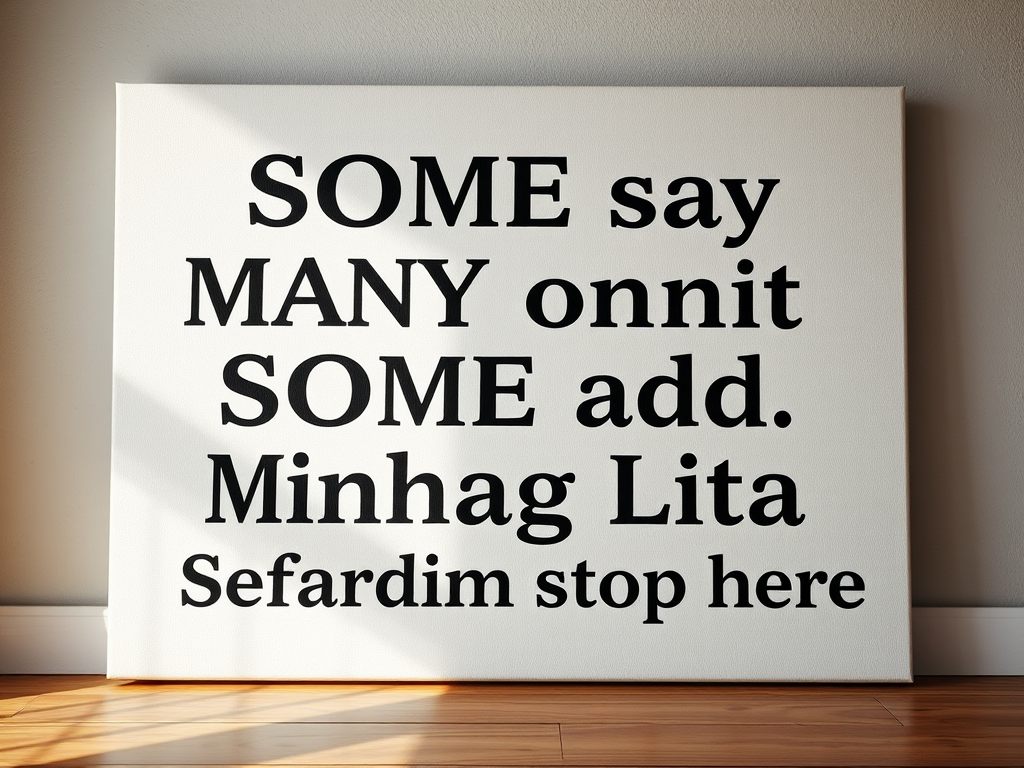
    The Secret ‘melech’ Rosh Chodesh Bracket

    Does the Chazan Say “Hashem Yimloch’ in Uva L’Tzion Out Loud?

    Does the Chazan Say Hashem S’fasei Out Loud?

    Is It Al Hanissim or V’al Hanissim?

    And much more…

    March, 2023

    Rabbi Moshe Taub

    For why we swicth Lcha Dodi’s niggun by Lo Seivoshi, see this link

    For other siddur mysteries, see this link

    The Secret Melech Rosh Chodesh Bracket

    Recently, at shalosh seudos, I challenged my shul members
    with a riddle:

    “What is a difference between the Yaaleh V’yavo
    we say in Shemoneh Esrei and the one we say in bentching?”

    Some predictable responses were given—for example, the
    fact that Yaaleh V’yavo is recited standing and the other sitting.
    Then I gave the answer I had in mind, as well as the story behind the question.
    That Erev Shabbos, the first day of Rosh Chodesh Adar I,
    someone approached me after davening to ask why the word
    “Melech” at the end of Yaaleh V’yavo is often in brackets, and
    why this occurs only in some siddurim.
    Odder still, some of the siddurim that place this word in
    brackets add a comment: “Some say to say this word on Rosh
    Hashanah.”
    What is this about?
    Chazal state, and the Shulchan Aruch rules, that since in the
    third brachah of bentching we must make mention of Malchus
    David, we therefore should not mention Malchus Shamayim as
    we can’t risk drawing any equivalence between the kingship of
    Hashem and that of a human being. This explains why in
    bentching we say “Avinu Ro’einu” (our Father, our Shepherd)
    and not “Avinu Malkeinu,” so that we do not mention Hashem’s
    kingship once the rulership of David is cited (siman 188:3; see
    Brachos 58).
    The Rema adds that this concern in bentching extends to the
    mention of Malchus Hashem at the end of Yaaleh V’yavo, so
    that the word “Melech” is omitted in the passage “Ki Kel Melech
    chanun v’rachum atah.” The Rema adds, however, that he
    doesn’t see many who observe this practice.
    A number of reasons are offered for why many people are
    not careful to omit the word “Melech” from bentching. The Chofetz Chaim supports this omission, but he explains at the
    same time that since Yaaleh V’yavo is considered its own
    separate tefillah, somewhat distinct from Birchas Hamazon, the
    concern about equating Malchus Shamayim with Malchus David
    is mitigated enough that we do not have to correct people.
    Others, such as the Kaf Hachaim, actually show support for
    the common practice of including the word “Melech.” Omitting
    it would give the appearance of reversing the praise that one
    has already offered in Shemoneh Esrei, chalilah.
    As for Rosh Hashanah, the Mateh Ephraim states that even
    those who follow the Rema and omit this word from bentching
    should include it on this day, because on Rosh Hashanah we
    celebrate Hashem’s malchus, and there is no fear that anyone
    will make a comparison to human sovereignty.
    Segulah Secret
    Speaking of siddurim and Rosh Chodesh, I was curious for
    the longest time about another oddity found in many siddurim.
    At the end of Hallel, many siddurim recommend that a verse
    be repeated: “V’Avraham zakein ba bayamim v’Hashem beirach
    es Avraham bakol, and Avraham was aged, advanced in days,
    and Hashem blessed him in all ways” (Bereishis 24:1).
    ArtScroll states, “On Rosh Chodesh many people recite the
    following verse after Hallel.” Its Hebrew siddur adds some
    context, stating, “This is a segulah for arichas yamim.”
    Where does this come from, and why is it specific to Rosh
    Chodesh?
    For many years I could not find the answer to this mystery.
    Recently, someone gave me a wonderful gift—the Mesivta
    edition of the siddur, which provides some sources for this
    minhag but makes it clear that they are rooted in Kabbalah.

    On a less profound level, many note that pasuk about
    Avraham Avinu is the only pasuk in Tanach that associates old
    age with blessing.
    However, it doesn’t draw a parallel to Rosh Chodesh.
    It is here that more mysterious elements enter. Mishnas
    Chasidim (Rosh Chodesh, perek 2) explains that this pasuk is an
    allusion to a particular malach. The siddur of the Baal HaTanya
    even says that one should think of this malach as stating the
    verse. This is because we typically do not say aloud the names
    of certain malachim, as we see in the special added tefillos
    found in Avinu Malkeinu and during tekias shofar (see Arizal,
    Shaar Hamitzvos, Shemos; Sefer Chasidim #205 and 469, and
    Mor U’ketziah on Tur, siman 299; see also Siddur Rabbeinu
    Hazakein, pp. 480-481).
    There are many other siddur bracket mysteries—for
    example, why we say “Adir Adireinu” only in Kedushah on some
    Yom Tov days; the significance of the bracketed words in the
    Friday-night Kiddush; and whether we say “Re’eh nah
    v’anyeinu” in Shemoneh Esrei or leave out the word “nah.”

    “Hashem S’Fasei’s” Whisper
    One of the uncertainties that first-time chazzanim encounter
    is whether the opening words of Shemoneh Esrei—“Hashem
    sefasei tiftach u’fi yagid tehilasecha” (Tehillim 51:17)—are to be
    recited aloud at the beginning of Chazaras Hashatz, quietly, or
    not at all. Although Chazal state that one must begin with these
    words (Brachos 4b and 9b), it is unclear how central that is.
    Before I moved to Queens, I never heard a chazzan say this
    verse aloud. But in my current shul there are members and
    previous rabbanim who studied under Rav Soloveitchik and said
    he held that the verse must be recited aloud at the start of the
    repetition.
    This question has significant ramifications beyond an aveil
    and a first-time chazzan.
    The Shulchan Aruch rules that this verse must be said by the
    chazzan (siman 111:2). However, many poskim assert that he
    meant it should be said quietly (Magen Avraham, Ba’er Heiteiv,
    and Shulchan Aruch Harav, inter alia). Others disagree with his
    premise and argue that the chazzan need not say it at all.
    The Chofetz Chaim wonders if this issue hinges upon
    another. If one forgets to say this verse at the beginning of his
    private Shemoneh Esrei, must he repeat the tefillah? If the verse
    is part and parcel of the tefillah, it would mean that not only
    must the chazzan say it, but so must the private mispallel.
    In the end, he argues that both can be true. The chazzan
    should say it, even if in a whisper; however, it is not an integral
    part of Shemoneh Esrei, and one who forgets to say it does not
    need to repeat Shemoneh Esrei (Biur Halachah, ad loc.).

    Several years ago, I was researching the matter of davening
    for Moshiach. I was astounded to find that Rav Moshe argues
    that, aside from whatever is part of our mesorah, tefillos for
    Moshiach must be avoided (Igros Moshe, Orach Chaim, chelek 5
    24:8; see page 84, second column, second paragraph). This
    matter came up as he was discussing the opening and closing
    verses of Shemoneh Esrei, “Hashem sefasai tiftach” and “Yehi
    l’ratzon” (see there for how they are connected to Moshiach).
    Arguing with the Chofetz Chaim, Rav Moshe says that one who
    forgets the opening verse must repeat Shemoneh Esrei!
    The Riddle of U’va L’Tzion
    If one looks into most siddurim, he will find that three
    pesukim are highlighted in U’va L’Tzion—“Kadosh,” “Baruch,”
    and “Yimloch.” Chazal say that this tefillah, which we call
    Kedushah d’Sidra, sustains the world (Sotah 49), and that is why
    we say the first two pesukim out loud as a tzibbur, introduced
    by the chazzan.
    However, many new chazzanim—and some experiences
    ones—are unsure whether the final line, “Yimloch,” should be
    introduced and recited out loud. Walk into any shul and you will
    notice that the first two are announced, but the third,
    “Yimloch,” often is not. And yes, it is highlighted in most
    siddurim.
    Some chazzanim do have the minhag to introduce
    “Yimloch,” so that it too is recited together (even though its
    introduction consists of Aramaic words which we typically only
    whisper), but most do not.
    The explanation behind this siddur mystery is wrapped in
    another enigma. We will explain this, along with a few other
    siddur mysteries, in our final installment below.

    Rav Dovid Kaplan, z”l, my rosh yeshivah in Nachalas Tzvi in
    Toronto, was a true original. His consummate dedication to
    Torah and mesorah was unmistakable and became ingrained in
    every bachur in his yeshivah.
    This passion came from his esteemed parents, the famed
    Rav Baruch and Rebbetzin Vichna Kaplan (née Eisen), who
    developed the Bais Yaakov movement in America. In the famous
    words of Rav Aharon Kotler, “If not for Rav Baruch and
    Rebbetzin Vichna Kaplan, who started a large-scale Bais Yaakov
    movement on these shores, there would be no true
    appreciation for a ben Torah, for an aspiring talmid chacham,
    for a life consecrated to Torah. There would be no willingness to
    forgo material comfort for the sake of talmud Torah. There
    would be no kollelim in America” (From A Living Mishnas Rav
    Aharon).
    The Brisker Rav himself had urged the Kaplans to move here
    (The Brisker Rav, Vol. 1, p. 225).
    Rav Dovid Kaplan was a captivating, often hilarious speaker
    whose shmuessen were unforgettable. He once told a story of a
    friend of his who went to visit an acquaintance in a prison in
    New York. The prison had Daf Yomi shiurim and daily minyanim,
    and after driving a long way to get there, his friend joined the
    minyan for Shacharis.
    Near the end of davening, he watched as one of the
    prisoners headed to the back table to take off his tefillin. The so
    he turned to this prisoner and said, “I understand why the
    Shulchan Aruch warns us not to end davening or leave shul
    before U’va L’Tzion [132:2] since many people are busy and are
    rushing to get to work. But where are you going?”
    My rosh yeshivah shared this memorable story to remind us
    of the power of regilus—our tendency to err and do aveiros not so much out of taivah as out of habit—and it also brings us back
    to where we left off last week.
    Over the past few weeks we have been discussing various
    mysteries of the siddur, concluding last week with an
    imponderable that contains many secrets. Many who daven
    before the amud are unsure if the line “Hashem yimloch” in
    U’va L’Tzion should be introduced and recited out loud just like
    the two lines of Kedushah that precede it.
    Most shuls do not introduce this line or say it aloud,
    although it is highlighted in most siddurim.
    For the answer to this issue, we have to dig a little deeper
    and understand the importance of U’va L’Tzion (also called
    Kedushah d’Sidra).
    In the tochachah in Sefer Devarim, Hashem alerts us to the
    reality of our present galus: “In the mornings you will say, ‘If it
    were only still evening!’ and in the evenings you will say, ‘If it
    were only still morning!’—because of what your heart will fear
    and your eyes see” (28:67).
    Chazal (Sotah 49) explain this pasuk as informing us that in
    galus nothing will be static; each day will bring a novel
    discomfort. The Gemara wonders how it is possible that a
    continual progression of pain like this won’t consume the world.
    It answers that the world would indeed be consumed if not for
    two zechusim—the merit of answering, “Amein yehei Shemei
    Rabbah” and our daily recital of U’va L’Tzion. Rashi explains that
    this tefillah contains both the pesukim of Kedushah and the
    targum, thereby enabling every single person, no matter how
    busy he is, to learn a little bit of Torah each day.
    Each morning we say the pesukim of Kedushah three
    times—in birchas Krias Shema, during Chazaras Hashatz, and in
    U’va L’Tzion. The Aruch Hashulchan (132:6) explains that this is
    the reason the chazzan introduces each line of the Kedushah in
    U’va L’Tzion, distinguishing it from the others.

    But if you look into most siddurim, you will find that three
    pesukim in this tefillah are highlighted: “Kadosh, kadosh,
    kadosh,” “baruch kevod” and “yimloch.” So why do so many
    people leave this last line of Kedushah out?
    The Avudraham (R. Dovid Avudraham, d. circa 1350), the
    most celebrated of our siddur commentators, points out a
    greater anomaly. The third line of any Kedushah is always
    “yimloch Hashem,” from Tehillim (146:10). Why, then, in U’va
    L’Tzion, do we exchange this verse for the similar “yimloch
    Hashem” that is in the Shiras Hayam in Beshalach (Shemos
    15:18)?
    This switch often goes unnoticed until it is pointed out, and
    it is not the only one. The Rokeach (Vol. 2, p. 441) and the Kol
    Bo (siman 8) observe that “yimloch” and even “Hashem
    yimloch” are completely left out of the Kedushah we say in
    birchas Krias Shema!
    As for the switch in U’va L’Tzion, the Avudraham explains as
    follows: The purpose of this tefillah is to recite pesukim with
    their proper targum. However, the books of Kesuvim—which
    contain the pasuk “yimloch Hashem” from Tehillim—do not
    have a classic mesorah targum. We therefore exchanged it for a
    verse with a similar theme.
    Because this change had to be made, many suggest that it be
    said quietly so as not to compare Toras Moshe to the rest of the
    pesukim in Nevi’im and Kesuvim (see, for example, Ba’er Heiteiv,
    siman 132:2).
    There is another reason some people say this verse quietly.
    Many poskim (but not all; see Arizal as brought in the Shaarei
    Teshuvah) rule that the targum of Kedushah in Aramaic must be
    said quietly. “Yimloch” is the only one that is introduced with
    Aramaic statements, making it questionable whether the
    chazzan should say them aloud so as to alert the tzibbur.

    Al Hannisim vs V’Al Hanissim?
    (For a more detailed discussion of this issue, see the post dedictaed to this subject).

    As Purim is drawing near, I’d like to conclude this mini-series
    on the siddur with a mystery about which everyone has
    wondered—do we say “al hanissim” or “v’al hanissim”?
    As I mentioned a few weeks ago, not always is adding letters
    or words in brackets in the siddur a way of fulfilling all views,
    and this case is no exception.
    For those who may think it makes little difference,
    remember that a single letter in Hebrew can make all the
    difference!
    In siddurim going all the way back to Rav Amram Gaon (d.
    875), through the Tur, and up to the Vilna Gaon (Maaseh Rav48), the vav is absent, and therefore, many argue that the original version should not be changed.
    Others, such as Rav Zalman Henna (d. 1746; see Shaarei
    Tefillah, siman 110) and the Aruch Hashulchan (siman 682),
    urge us to add the vav, which generally signifies a connection to
    what came previously.
    To confuse matters even more, some say that the vav is only
    needed in bentching but not in Shemoneh Esrei. In the latter, Al
    Hanissim does indeed follow the words before it well, and it
    also serves to conclude the hodaah (thanks) section. This is not
    the case in bentching, however, where the brachah of hodaah
    must still be said following Al Hanissim.
    Although Rav Henna is a famed grammarian, other
    medakdim, such as the Yaavetz (Bais Yaakov) and Rav Wolf
    Haddenheim (Safah Berurah), argue that the vav should always
    be omitted.
    Is this a case where the stringency is to say the vav or to
    omit it?
    If you do not have a clear minhag, the only answer is to ask
    your local rav! ●
  • Why We (still) Light the Menorah Indoors

    Why We (still) Light the Menorah Indoors

    December, 2023

    On Chanukah, unlike all other Yamim Tovim, there are no specific obligations throughout the day, such as matanos la’evyonim on Purim or a seudah on the Shalosh Regalim. There’s also no constant

    mitzvah like dwelling in the sukkah or refraining from chametz and no issur melachah like on Shavuos.1

    To this point, Rav Moshe Feinstein remarkably writes that outside the moment of lighting, one may not recite the berachah of Shehecheyanu during Chanukah because “these days of Chanukah have no greater kedushah than any day of the year…this, as opposed to, say, Yom Kippur, when we can say this berachah unconnected to a specific act because the day itself has special kedushah.”2It is therefore all the more peculiar that the one and only act unique to Chanukah—the lighting of the menorah—does not seem to be per- formed in the way initially designed. Let’s start at the beginning. The Gemara teaches:

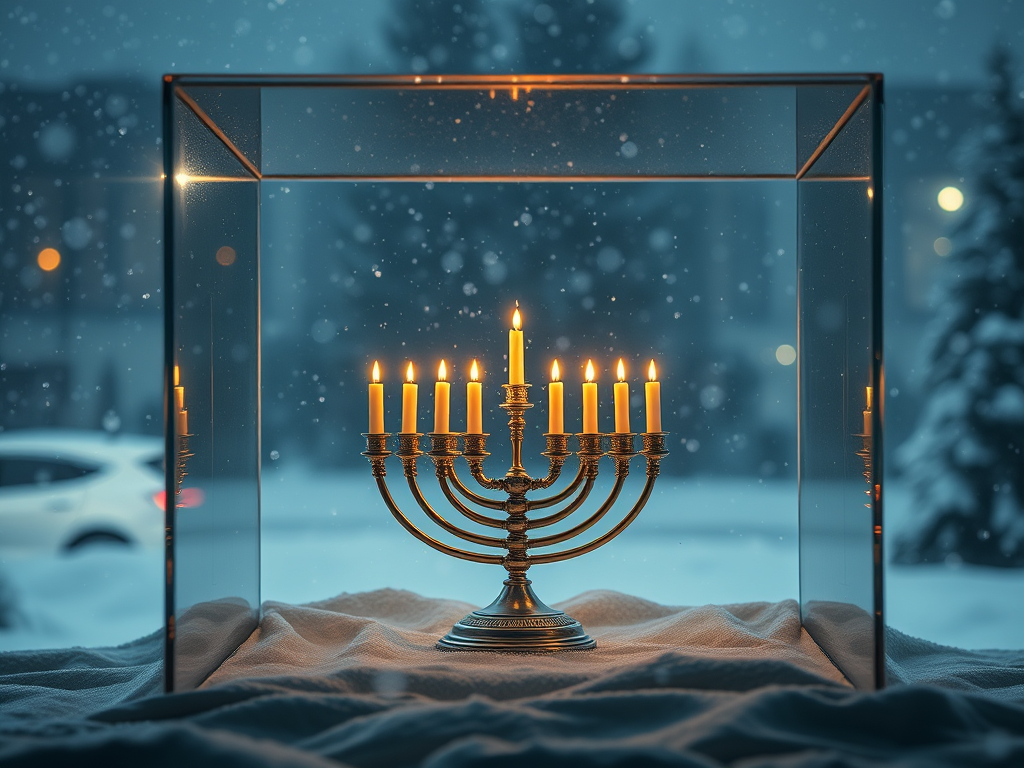
    The Chanukah menorah is to be positioned by one’s doorway from the outside. If one lives on an upper floor, he should place it in a window that is adjacent to the public domain. In times of danger, it should be placed on his table and that is enough.3

    This is also precisely how the Shulchan Aruch records the halachah,4 indicating that when not in times of danger, like in, arguably, today’s America, one must light outside. However, later the Rama makes it clear that already in his days the standard practice was still to light indoors.5 This is largely the accepted practice, at least among Ashkenazim living outside of Eretz Yisrael.6

    Most Gedolim and their adherents still follow or followed this practice of lighting indoors. Is this still due to danger? And if so, would someone living in, say, Lakewood, with only frum neighbors, still have this same allowance? I cannot think of many other clear halachos found in Chazal for which our practice seems to veer from its basic structure.

    Even more confounding is that in every other element of this mitzvah, we perform it mehadrin min ha’mehadrin, adding one extra candle for each night instead of the basic one per night and having others in the house light in addition to the father.7 Moreover, Chanukah was always set apart with this precise unique quality in that its pirsumei nisa was to be done outside and in public, as opposed to the “inside” pirsum ha’neis of Purim done in shul.8 Why, then, would we agree to take this distinctivenessaway? The Brisker Rav, for example, was very careful to light outside, considering that to be an essential part of the mitzvah.9 In fact, if ever he had to light inside due to a concern, he would relight outside if that risk went away; in this, he saw the din comparable to mitzvas sukkah.

    Rav Elyashiv, too, strongly opposed the idea that nowadays, in locations where it is safe, we must still light indoors. For, if this is no longer the halachah, “for whom was that clear law in the Shulchan Aruch written? Even the Rama does not comment at that place.”10 Nevertheless, most poskim do not seem to take this strict approach, with Rav Moshe Feinstein even stating that today “it is not possible to light outdoors.”11

    Why should this still hold true? Some early Rishonim mention this minhag of not lighting outdoors, yet they often also urge one to at least light inside the doorframe of their home, facing the street.12 Nevertheless, the basic halachah allows one to simply light anywhere visible in their home—on a dining room table, for instance. Many approaches have been offered throughout the centuries to this question.

    Already in the twelfth century, the minhag among many was to light indoors, causing the Ohr Zarua to wonder, being that there are no longer any dangers, why should we not light outside?13 And this was nine hundred years ago. While he does not provide an answer, a few decades later, the Sefer Ha’itur does, writing, “U’meiachar she’nahagu al hasakanah, nahagu.”14 Meaning, seemingly, that although there may no longer be a danger, once we accepted this practice of lighting indoors, we retained it.15

    The words of the holy Baal Ha’itur are difficult to fathom. To give an extreme example to make the point, would we say that someone who worked at a truck stop as a teenager when he received an allowance not to wear his yarmulke due to safety concerns, still need not wear one twenty years later as a doctor on Madison Ave? Chalilah! Rav Yerucham Olshin offers a way to understand this Sefer Ha’itur based on how Rav Meir Soloveitchik would quote his father, the Brisker Rav: “Once our leaders were mesaken a new din of lighting indoors due to danger, this new takanah stands even when its reason ceases to exist!”16

    The Rama’s statement was based on the view of Rabbeinu Yerucham, who explained that the reason we light indoors is not just due to a physical sakanah but a monetary one as well, as thieves may steal one’s menorah.17 This concern would certainly still stand today. However, this reasoning would lead to an obvious question: Who said one must light with an expensive menorah? If indeed this is the reason for our present-day minhag, why not then light with Coke bottles (cleaned and stripped) so as to perform this mitzvah in its proper location?

    One may be tempted to suggest that the Rama in Darkei Moshe was concerned for the view of the Raavad who posits that hiddur mitzvah (i.e., using a silver menorah) is a Torah law,18 which would then, indeed, require one to light indoors with a nice menorah instead of outside with a makeshift menorah. This is because the Torah law of beautification eclipses the Rabbinic placement of the menorah. However, this would be a stretch, for the very mitzvah one is beautifying is a Rabbinic one, so how could the commandment to beautify it be Biblical?19

    Many others give a more technical approach to our still lighting indoors. While a sakanah may no longer exist, most Jews moved to northern countries where the weather during Chanukah is cold, windy, and wet. The Ritva quotes his rebbi as telling him that if it is windyoutside, one should light indoors;20 and the Ritva extends this to many other weather-based concerns.

    Rav Amram Gaon states the same. This would explain why many of those outside Israel, who indeed light outdoors, purchase special glass containers to protect their lights from the elements. The reader should, however, note that not all poskim allow for such encasements.21

    The Shu”t Imrei Noam22 finds an answer to our question from Chanukah’s original source: Megillas Taanis, a sefer written by the Tanna Rabbi Chananyah ben Chizkiyah, delineating more than thirty special dates and events we are to celebrate.23

    Amazingly, it states there: “Should one fear from leitzim [ridiculers], then one may light by the door inside one’s home.” Meaning, aside from the issue of sakanah, wind, and robbers, there is another concern: scoffers.

    From the B’nei Yissaschar,24 it would seem that these leitzim were cynical Jews who would challenge the propriety of either a public display of love for Hashem and for His Torah or, perhaps, our very fight against the Hellenistic forces. And so we light indoors. This is quite different from a concern for other nations.25

    Rav Moshe Sternbuch offers another powerful approach: The fact that there have been times, like today, when we live in relative peace does not mean that we should abandon the protections needed by others today (e.g., Iran) or that we may need at some future time, lo alenu.26 He cites a number of proofs to such halachic thinking, and also reminds the reader of Rav Yisrael Salanter who, during a cholera outbreak on Yom Kippur, urged everyone to eat so that those sick would then certainly eat some- thing. We see from here that sometimes we all must sacrifice halachah’s

    “best practices” so that it can be preserved for everyone’s future.
    For example, the Chanukah following the pogrom of Simchas Torah 5784, I was asked by many people if they may light on their kitchen table instead of by the window. In galus, we should never act with certainty.

    A final approach is one that I have often suggested. In preparation for this chapter, I was delighted to discover that Rav Yeruchum Olshin suggests something similar.27, 28

    This approach requires some brief context. Rashi gives an example of what Chazal mean by a sakanah that allows or forces our lighting indoors: when the Persians did not allow anyone to light candles outside the Persian batei avodah zarah. The Bach expresses amazement at this example. That decree applied equally to non-Jews, so it could not have been describing a time of shmad (when Jews must risk their lives for any mitzvah or social value). How, then, can this be Rashi’s paradigm case? For such a severe situation, we would be halachically dissuaded from even lighting indoors.

    This Rashi also seems redundant. Do we even need an example of “a danger”? Why does Rashi feel he needs to share an example for some-

    thing that we can all sense? I would therefore suggest that this Rashi is seeking to provide us with something far deeper than a simple example. Chazal share that following the Churban Bayis Sheini, we nullified the celebratory days found in Megillas Taanis, as we can’t be celebrating every other week while mourning our exile.

    To this, the Gemara asks a stunning question: Why, then, do we still celebrate Chanukah? After all, Chanukah’s origin is found in this same text. The Gemara offers only one reason for keeping only Chanukah out of all the holidays in Megillas Taanis: the people have accepted Chanukah and its mitzvos.29

    Perhaps what the Gemara is suggesting is that along with remembering the neis of Chanukah during these days, we also recall the affection and sacrifice that Klal Yisrael had for this mitzvah. And, for this same reason, we light even when in danger, albeit indoors. Rav Olshin takes this idea even further: Because the menorah represents the light of Torah (which is perhaps why the klal did not wish to forgo these days), we are obligatedto risk our lives for it. All of this would explain why Rashi chose Persian times as the example of sakanah rather than examples from the times of the Gemara or in his own lifetime, for example, the Crusades of 1096 that he composed Selichos for. Our still lighting the menorah indoors today is a surreptitious memorial of such “indoor lighting sacrifice” in times of historic danger. We are also commemorating lighting the Chanukah candles indoors in times of danger, even though that original sakanah allows us to forfeit lighting completely.

    Our present lighting indoors represents not a leniency but a great act of stringency. Thus, our retaining the minhag of lighting indoors is not simply to avoid a danger that no longer exists; on the contrary, it is to recall such mesirus nefesh for this mitzvah in times of danger, when we lit inside even though we didn’t have to light at all.

    The Gemara states that because Jews have always risked their lives for milah, it will always be observed.30 Indeed, even today, the not-yet-frum, as well as the frum, largely perform brissim. Perhaps the similar sacrifice for our past Chanukah lighting in times of danger (even if indoors) is why Chanukah, too, is kept by so many of the non-observant today.31 According to Pew Research, while 56 percent of all American Jews own a Seder plate, 81 percent own a menorah!32

    The Minchas Elazar mentions that the B’nei Yissaschar had a glass encase- ment ready for when Mashiach will come and he can again light outside.33

    May we see that day soon.

    NOTES

    1. Note that even on Purim, in addition to its many other obligations, they initially wished to restrict all melachah; see Megillah 5b.
    2. Igros Moshe, Orach Chaim 5:43:2, confirmed firsthand with the original handwritten letter to Rav Levovitz, with whom I spoke. We should note that with this p’sak, Rav Moshe acknowledges that he disagrees with the Chafetz Chaim as recorded in Shaar Hatzion, siman 676:3. We should also point out that the Meiri to Shabbos 23b would seem to support the Chafetz Chaim. Meiri there records a view that if someone is without the ability to light a menorah, he may still make the She’asah Nissim and Shehecheyanu berachos during the days of Chanukah. Some readers may assume that having a Rishon say this would mean that Rav Moshe, had he been aware, would have acquiesced in his position. However, this is not so simple to suggest. For one, Meiri is simply recording what others have said, and perhaps even he disagreed. Second, just because one Rishon takes a view does not mean that other Rishonim would have consented. But number three is most crucial: Rav Moshe, in a separate teshuvah (coincidentally, also about something found in a newly discovered Meiri), makes clear that newly published Rishonim must be carefully considered before utilizing them for actual p’sak halachah. This is not due to these specific Rishonim themselves, of course, but rather to the lack of critical study of these manuscripts over generations, as well as uncertainty as to who the many copyists were for all these years.
    3. Shabbos 21b.
    4. Siman 671:5.
    5. Siman 672:2. On the oddity of the Rama waiting until here to make this comment and his initial silence, see Rav Elyashiv, below.
    6. Cf. Rav Ovadia Yosef in Chazon Ovadia, Chanukah, p. 37.
    7. See Shabbos 21b.
    8. See D’rashos Chasam Sofer, 5592, Chanukah; see also Rav Soloveitchik, as brought in V’Dibarta Bam, Chanukah, p. 113; Inside Chanukah, pp. 190–91.
    9. See Kuntres Chanukah U’Purim 3:3; Yerech L’Moadim p. 107; see, however, his views as brought by others below.
    10. Shu”t Kovetz Teshuvos 1:67, pp. 98–101.
    11. Igros Moshe, Orach Chaim, 4:125.
    12. The significance of a doorframe will be discussed below, in the chapter titled “Are Our Mezuzahs Kosher?,” page 134.
    13. Ohr Zaruah 133:2.
    14. Sefer Ha’itur, Aseres Hadibros, Chanukah 114:2.
    15. See also Shu”t Minchas Yitzchak 6:67.
    16. Kovetz Shulchan Melachim, Kislev, 5766; see Yerech L’Moadim, p. 112.
    17. See Darkei Moshe, siman 671:9.
    18. See Chidushei Anshei Shem to Berachos 38a.
    19. See, however, Orech L’Neir to the first Mishnah in Makkos; see also Shabbos 23a that lighting neir Chanukah is a fulfillment of the verse “lo sassur,” which may mean that while the lighting is Rabbinic in nature, its beautification can still be a Biblical fulfillment.
    20. Shabbos 21b.
    21. See, e.g., Aruch Hashulchan 671:24 as well as Moadim U’Zemanim, vol. 2, siman 140, n. 1; Cf. Shu”t Yaavetz 149, who allows, although does not urge, such encasements.
    22. Shu”t Imrei Noam 2:22.
    23. This sefer will be discussed at length in the chapters that begin on pages 50, 82, and 106.
    24. As brought in a footnote to Piskei Teshuvos, siman 671.
    25. This is not a concern of the past. Indeed, one of the most celebrated public intellectuals of the twentieth century, Christopher Hitchens (who was a Jew who found out about his Jewish background at the age of forty, when his mother was lying on her deathbed), once horribly wrote against, of all holidays, Chanukah, based on this very cynical outlook of fighting the Hellenists: Jewish orthodoxy possesses the interesting feature of naming and combating the idea of the apikoros or “Epicurean”—the intellectual renegade who prefers Athens to Jerusalem and the schools of philosophy to the grim old routines of the Torah…the Greek or Epicurean style had begun to gain immense ground among the Jews of Syria and Palestine. The Seleucid Empire, an inheritance of Alexander the Great—Alexander still being a popular name among Jews—had weaned many people away from the sacrifices, the circumcisions, the belief in a special relation- ship with G-d…I quote (from a contemporary rabbi), “Along with Greek science and military prowess came a whole culture that celebrated beauty both in art and in the human body, presented the world with the triumph of rational thought in the works of Plato and Aristotle, and rejoiced in the complexities of life presented in the theater of Aeschylus, Euripides, and Aristophanes.” But away with all that. Let us instead celebrate the Maccabean peasants who wanted to destroy Hellenism and restore what they actually call “old-time religion.” Thus, to celebrate Hanukkah is to celebrate the triumph of tribal Jewish backwardness. A celebrated atheist, Mr. Hitchens would often debate faith and challenge his interlocutors, asking what possible virtue would be lost without religion or what could be gained with it that would not already be obvious to him. Aside from the false premise of this question—as his present morals were so obviously relying on the remnants of religious culture from whose crumbs America and the Magna Carta were formed—the above paragraph regarding Chanukah best displays the nakedness of his challenge. I refer to the bias of seeing inherent honor in the “new” versus the old, of allowing the nebulous winds of time and the capriciousness behind how “the vogue” takes hold and the arbitrary nature of who is given the power to introduce it, and the mysterious sociological quirks behind which fashions capture a time or place. Absent the safety net of a moral identity, to be untethered to a constitution, is precisely what leads to his article—of judging virtue on modern dress rather than thoughtful design, believing righteousness is found in the avant-garde rather than antiquity, and in the assumption that the peasantry must be as poor on the inside as they are on the outside. All this is anathema to Yiddishkeit. Yet, its pull becomes alluring to those unmoored from it. Truth is neither “old time” or “new”; it is unaffected by “tribal” acceptance or “tribal” neglect. Virtue is unbothered by new styles or last year’s fashion. Rather, truth is and will always remain simply that: truth. Judged not by time, unchanged by those who fail to embrace its legitimacy, it endures unperturbed by physical phenomena and social cues. Emes is emes.
    26. Moadim U’Zemanim, vol. 2, siman 140, p. 79.
    27. Ibid., p. 543.
    28. We will quote his words below.
    29. As explained by Rashi ad loc.
    30. Shabbos 130a.
    31. See chapter below, “Why Is There No Yom Tov Sheni on Chanukah Outside of Israel,” where the Pri Chadash draws an additional milah-Chanukah connection.
    32. Pew Research Center, “Jewish Americans in 2020,” May 11, 2021, https://www.pewresearch. org/religion/2021/05/11/jewish-americans-in-2020/.
    33. Nemukei Orach Chaim.
  • Why Do We Stand For the Kallah (and Chosson) By Chuppah/Wedding?

    Why Do We Stand For the Kallah (and Chosson) By Chuppah/Wedding?

    & Other Wedding Imponderables

    June, 2025 –Ami Magazine

    1. Standing for the Kallah

       Recently, I was by a chuppah when everyone began to stand. The man to my left turned his head to see who was coming, krechtzed, and said, “It’s not the chosson, rather its his great-grandparents walking down”.

       This was an ironic reaction, as the Torah directs us to stand for such elderly people. Yet many feel this does not reach the levels of standing for a chosson and kallah! Such is the power minhag has on us.

        Why indeed is there a minhag to stand for a choson and kalla?

    When I’ve asked others this question, the typical response is that it is due to their status as a melech and malka.

       But if this is the case, wouldn’t we stand for them at all moments and not just the chuppah?

      Nevertheless, their kingship is indeed one of the reasons brought to explain why we greet the chosson with ‘baruch habah’ (Shulchan Ha’Ezer, 7:4).

      As for our standing, the Zohar states that its best if the guests stand for the entire ceremony (Tikunei Zohar, tikkun 10), which some commentators indeed explain as being indeed due to their kingly status (HaAleph Lchah Shlomo, 115). As to our question on this – why then do we only stand for them now? – because the chosson and kalla are standing at this moment, it would be unseemly for our king and queen to stand while we sit (Knesses HaGedolah, 2:2).

        However, this reasoning wouldn’t explain why we only stand as they are walking toward the chuppah. (Perhaps this is similar to how we must stand when the sefer Torah is in movement (while just ‘standing’ in the open aron may not require our standing -see shu”t Chasam Sofer and shu”t Igros Moshe)

        It seems, then, that this current minhag has another basis (as brought in Knesses HaGedolah, siman 265): We are showing honor to those on their way to perform a mitzvah.

       Far from a time to gawk, we are rather showing respect to those in the midst of acting toward the continuance of am yisroel.

      More, the Shiblei Haleket brings that the shechina arrives to a chuppah, and based on this the sefer Tivasheh Yehudah suggests we stand by His arrival.

        Interestingly, some explain the reason why then we don’t stand for the entire chuppah as being due to the chuppah having its own physical dimensions, thereby creating a separation between this ‘abode’ and everyone else. For this reason we only stand before the chosson or the kallah enter this ‘home’ (Shaarim Metzuyanim B’Halacha, 147:13, back notes).

    1. Round and Round

       The chosson is the first to arrive at the chuppah. This is to make clear the kallah’s intent and desire to enter into this particle man’s domain (Igra D’Pirka, ois 67, based on Zohar to bereishis p. 49a; see Nachalas Shiva Hachodash, p. 281, note 465 for other explanations).

      Once the kallah arrives under the chuppah, there is ancient minhag that she be directed around her chosson for a certain number of circles. This minhag is brought in many early sefarim, and may have its source in the Zohar (see ibid. p. 288, note 489).

         I often tell kallos that women have always been the roshei yeshiva of the home, and indeed, many sefarim explain that this is the prruopse of this minhag -by surrounding the husband, she is acting her part as the wall, the chomah, for him, blocking out all surrounding pulls (see ad loc. where the Belzer rebbe expands on this.

       Indeed, it was Sarah who begged that Yishmoel be thrown out, Rivkah who understood that it was Yaakov who was deserving of the berachos, Miriam who got Yocheved and Miriam back together, etc. This is not just to patronize, as it was Chava who caused Adam to sin. So that the kallah’s circling of her soon-to-be chosson is a gentle reminder that a women’s role in her marriage is one of the essential ingredients for the survival of our nation. It is, at times, the wife who pushes her husband to improve regarding minyan, to learn, to go to shiurim, to sing zemiros at the Shabbos table, etc.

       If some lose count of the circles, know that you are not alone! It is brought that Rav Tzvi Hirsch M’Ziditzchuv would count each circle in the same careful and precise manner as we would the kohein gadol’s sprinkles during his yom kippur service –“Achas! Achas vachas…”!

    Interestingly, while the number seven has much meaning -especially considering Yehoshua’s army’s seven circles around Yericho- some have the minhag that the kallah only encircles her chosson three times. Some suggest that this best represents marriage, as the verse ‘ki yikach ish ishah’ (the Torah source for marriage) is found three times (Siddur Derch Chaim), and to represent the three encampments of the midbar.

      This was the minhag of the Chasam Sofer (Minhagim v’Halichos Chasam Sofer, p. 384).

    1. Beracha/ Mitzvah

       We now arrived at the eirusin, the first half of marriage. One would think that this opens with the chosson’s declaration of ‘hares at’, and the kallah’s acceptance. Surprisingly, the wedding does not begin with this.

        Rather, the mesader will recite a beracha on wine, then make the special birchas eirusin, and only then, after the beracha is recited, call over the witnesses to inspect the ring etc. and only then to instruct the chosson to say ‘harei at’ (see Shulchan Aruch, 34:1).

       But if this is a beracha on the kiddushin we just observed and accepted upon them, then shouldn’t the chosson first effect marriage and the berachos said after?

       Also, why doesn’t the chosson make these berachos himself?

    Can he?

    Why do we make two hagafens under the chuppa? Cant we have in mind for the second one? Isn’t this an unneeded beracha;what we call in halacha, beracha sh’eino tzricha?

    Should we use the same kos –and its leftover wine – for both the eirusin and the nissuin?

      What is the purpose of bedekin?

    These and more, next week iy”H, as we delve into many more wedding questions many have had in their heads, yet that we can now delve into together.

    Why Do We (Often) Change Tunes/Niggun In the Middle of Lecha Dodi?

    The Meaning Behind Waving Hands Before Shabbos Candles

  • Explaining the Custom of Lighting One Shabbos Candle For Each Child

    Explaining the Custom of Lighting One Shabbos Candle For Each Child

    The Source For the Common Minhag of Lighting One Shabbos & Yom Tov Candle For Every Child

            I. One Is Enough?

    At a recent Shabbos sheva berachos, the female guests were in the hall preparing their candles for Shabbos as they awaited to greet the new and happy kallah. For many, the week of sheva berachos will be the first time they light neros Shabbos, and her close friends and family wished to witness the auspicious moment. When the kallah finally arrived, they all greeted her with jubilation.

          The kalla excitedly made her way to her table on which she and her chosson would be eating, and on which she was planning to light. “I need candles” she said, mostly to herself. The women scurried to bring their malkah her first two of what would, iy”H, be many future Shabbos candles. However, to their alarm, they discovered that there was only one sole candle remaining. One of them quickly darted to the front desk, but the clerk gently reminded her what year it was and explained they do not stock candles. Shabbos was inching closer and closer, so running to the store was no longer an option, and all the men were several blocks over at a local minyan.

           The cousin of the kallah, who will be graduating Shevach High School later this year,asked about the commotion and why the kallah looked so distruaght. When it was explained to her that she was not able to perform her first hadlaka as a wife, the niece made a quizzical face.

          “Why not?” the niece asked, clarifying that while it is urged to light at least two lights -one for shumer and one for zachor – the basic mitzvah is accomplished with just one (see  Rambam hil. shabbos 5:1 and Shulchan Aruch, siman 263:1). With no rav around, and just several minutes until Shabbos, the niece understood that she needed to somehow gain the confidence of this kallah, who was slightly dubious to this last claim. She eagerly turned to the kallah and said, “The beracha we make on this mitzvah is ‘lahadlik NER shel Shabbos’, in the singular! Obviously then the basic mitzvah is satisfied with one. It is so appropriate and such a zechus that your very first opportunity to perform this mitzvah you get to do so in its purest form”.    

          Now swayed -and relieved -the kallah jovially lit, made a beracha and davened before her first Shabbos candle.

           I only know this story because the young cousin of the kallah is a student of mine in 12th grade halacha.

    I am met with skepticism whenever I first teach this halacha, and always use the words of the beracha to prove the point.

          II. A Candle Per Child

    But this is just the beginning of misunderstanding when it comes to hadlakos neros.

    Over the years we have share many, such as why we wave our hands before the beracha, and, just a few weeks ago, where one may and may not light when in a hotel (both available on this site).

           However, like this story illustrates, the number of candles one needs to light has its own unique misconceptions.

          A great majority of women will say that they light candles for the number of children they have. So, if one has, say four children, they will light six candles – four for the children and two for shomur v’zachur.

         What may be surprising however, is that we are not sure where this custom comes from, when it began, or what the correlation between our candles and the number of children.

         The language of the halacha is, “One should be alacritous (toward the mitzvah) of having a nice/strong light/candle (for Shabbos). There are those who emphasis lighting two lights/candles corresponding to shomer v’zacher. Rema: one may add to this number and light three or four candles, and so is the custom…one may add any number emphasizing/corresponding to other matters, so long as one does not seek to light less (than two)” (Shulchan Aruch, siman 263:1).

          The Chofetz Chaim offers other customs, such as lighting seven neros-corresponding to the days of the week, or ten neros –corresponding to the aseres hadibros. The Vilna Gaon was known to light a very large number of neros (Maaseh Rav, 112), the Bnei Yisasschar would light 36 neros (Mamarei HaShabasos 3:8; see column regarding lechem mishneh where I explain this number), and some rabbanim of Yerushalaim would urge women to light twenty-six candles, corresponding to the shem Hashem (Rav Bengis, as quoted in shu’t Mishnas Yosef 4:33).

          The one opinion missing is the custom to light equivalent to one’s children!

          The earliest source of this latter-day minhag that I could find is the Likutei Maharich (d. 1922).

         The question remains: what is this based on, and, why did it spread as it did?

    Explanation #1

    I used to offer an explanation that I later found written by Rav Moshe Shternbuch (shu”t Teshuvos V’Hanhagos 2:157): By Chanukah, the gemara explains, the basic mitzvah is one ner on each night, like for Shabbos. However, the gemara then shares that one can perform this mitzvah in extra mehadrin ways, one of which is a ner for each member of the household!

    Perhaps, we can suggest that we applied this mehadrin of Chanukah to our weekly neros Shabbos.

          The only problem with this explanation is that this mehadrin by Chanukah is regarding the number of people presently in the house, whereas the minhag by Shabbos is for mothers to light a ner even for the child(ren) who has(have) moved out, away that Shabbos, or, R’l, has passed on.

         Explanation #2

    Others suggest that this minhag is based on another custom. The Rema brings the knas (fine) women accepted upon themselves that should one ever forget to light neros Shabbos then she must light an extra candle by Shabbos candles for the rest ofher life. (The conditions are rare, and if one ever forgets to light, before accepting upon herself this knas, a rav must be consulted).

    Since women would often forget -or be unprepared -to light after giving birth, they began to adopt adding an additional ner after each child was born -whether they deserved that k’nas or not (see, e.g. shu”t Mishneh Halachos 7:35).

          Explanation #3

    Others point to Megilas Esther for an explanation: in hilchos yom kippur (siman 610:4), the Elyah Rabbah (d. 1712) brings from an ancient targum to the megilla that for the lighting erev Yom Kippur the minhag was to light a ner for every person in the home.

         Explanation #3.1

    Based on this last explanation, we can posit an explanation as well for this minhag’s relatively recent proliferation:

         The Rema in hilchos yom kippur (ad loc.) records the minhag of lighting a ner neshama before Yom Kippur for one’s deceased parents. (The current minhag of lighting a ner neshama before any yom tov with yizkar is of recent and unknown origin).

          After the war, where so many lost their families, perhaps they would light a ner neshama for their children, hy’d, and explained to their more recent children that they are lighting for all of their brothers and sisters. Maybe this is what popularized and spread what was once a more dormant minhag.

       So many secrets in minhagei yisroel!

  • The Weeks of ‘Shovavim’: Their History and Minhag

    The weeks known as ‘Shovavim’ are shrouded in mystery and confusion. Here, we delve into its history and practices.

    Part 1

    As fall turns to winter, we commence the period known as ‘shovavim.’

    There is a perk in rabbanus. Questions like “What is the source for ‘Zos Chanukah?”, or, “Where do we find that Hoshanah Rabbah is the final day of judgment, as it is not found in chazal?” can’t be ignored or procrastinated year-after-year.

    Rather, when such inquiries are brought to the rav’s attention by eager bochurim or balla battim they are anticipating a proper answer. This then provokes the rav to investigate matters he may have otherwise not looked into, at least not with the same verve (those particular questions above were the focus of another post).

    Shovavim is just one more example.

    I.K., a member of our shul, once showed me a sefer he had purchased in Israel on the subject of these days. After perusing its contents, he was quickly disappointed to discover that it did not provide any of these weeks’ background or history (its focus was mussar and self-improvement).

    Frustrated, he asked if I could share the background, source, and reason(s) for these days. What follows should be a zechus aliyas neshama for his granddaughter, Nava Tova.

    _________________

    I. The Meaning of the Term & Word ‘Shovavim‘

    As most are aware, shovavim is an acronym for the parshios read on these weeks: shmos, v’ayra, bo, b’shalach, yisro, and mishpatim.

    However, it is critical to stress that ‘shovavim‘ is an ‘acronym’, and not an ‘initialization‘.

    An initialization is when the term formed by the initial letters will not only create an arbitrary and otherwise meaningless title, but one that is not pronounced as a word, rather by its letters, as in, lahavdil, F.B.I., (we say ‘F.B.I.’ and not ‘fibi’).

    An acronym, however, is when we pronounce those starting letters, as they combine to form a new term – either symbolic or nonsensical. An example of a nonsensical acronym would be ‘OPEC’, which is pronounced, carries no meaning, and stands for Organization of the Petroleum Exporting Countries. An example of a symbolic acronym is D.A.R.E., for Drug Abuse Resistance Education.

    Shovavim is not only an acronym, but a symbolic one at that, whose name is a borrowing from a pasuk (yirmiyahu 3:22): ‘shuvu banim shovavim.…’

    This term ‘shovavim‘ has the root meaning of ‘to rebel’ or ‘to make mischief/letzanus.’

    This term is used -both in the pasuk and during these weeks -as an allusion to the flaws, fragility, and faults that are the natural consequence of being human – and, consequently, our desperate need to focus and galvanize ourselves to turn to Hashem and away from this instability found inside of us.

    In IV. below we will see an alternate name for these weeks.

    II. Shovavim Minhagim

    While some have the minhag to fast and/or say selichos (each Thursday) during these weeks, more prominently, we are encouraged to principally focus on inyanie kedusha and tahara, in both our learning and in action. This lofty objective is often fortified through special shiurim focusing on taharas hamishpacha and other related matters.

    III. Why Now?

    The sifrei machshava point out the catalyst for this specific emphasis at this precise time. Once Chanukah ends, we have a few months without yomim tovim. This is, in fact, our longest ‘dry spell’ of the year. Once Purim ends, we have Pesach, sefirah, Shavuos, in short order. After this we soon begin to mourn for our current galus, culminating in Tisha B’av. Soon after (on the 15th of av, which is the gematria of kesiva v’chasima tova, Bnei Yisaschar), we begin to prepare for the new year. And the cycle continues.

    Based on this (see hakadama to the sefer ‘Yimei Shovavim‘, by Rav Mordechai Gross, yeshivas Ponivezh), these two months leave us feeling stranded in the physical domain. We therefore wish to construct a path allowing shomayim v’aratz to touch (see Bava Basra 74a). We achieve this by taking the chomer/physicality of this world and allowing kedusha to enter. We learn this from the primary focus of bris milah -modifying a basic chomer of aretz into a dvar kodosh. Dovid hamelech alluded to this in Tehillim (12), ‘lamnatzeach al hashminis (the 8th),’ stating that even from places and times seemingly devoid of kedusha, we can elicit kedusha (menachos 43).

    [Early 20th century chassideshe sefarim point out that the concept of ‘nedarim’ -of creating a forbidden or holier status of an otherwise physical object -is predicated on the fact that every element of physicality has within it some kedusha. It is up to us to discover it]

    The Chida offers an additional reason why these weeks were chosen as a time of dveykus. “Any person who is in-touch with his heart knows to return during this period, as these days are mesugal (special/set aside/treasured)…[this is due] to our laining of galus mitzraim (shmos, v’ayra), then reading of our redemption from there (bo, beshalach), and, then, our receiving of the Torah (yisro)…great sparks of kedusha are then flowing, allowing us to atone…as the Ari’zal states, this period ending with parshas mishpatim is alluded to by the words there, ‘When a man acquires an eved ivri…’” (Chadrei Vatein, vayechi, 14; see also his Pnei Dovid, shmos, 12)

    The allusion he is referencing seem to be the following: during these weeks we follow the trajectory of am yisroel in the parshios: We open with a nation/us mired in culture and galus, then we perform acts that lead to our (personal) ruchniyos redemption, all culminating in a rehabilitated private kabalas haTorah so that we may then say, ‘It is as if a new eved Hashem was born!”

    IV. Provenance

    The earliest source for this special period dates to theTerumas Hadeshen (d. 1460. Brought in his name in the Leket Yosher, p. 116 in the Freyman ed.).

    Interestingly, while many observe these days’ special focus each-and-every year, when one looks at some of the original sources for these weeks, it may only have functioned during leap years.

    In fact, according to many (see Mateh Moshe), the entire purpose of these days is due to the fact that during a leap year these days take place at the greatest distance between the fasts of bahab (the special fast days following the shalosh regalim, and brought in Shulchan Aruch; why these fasts are largely avoided is a discussion for another time) demanding some way to recoonecnt to Hashem (see Shaarei Teshuva and Be’er Heitiv to 685).

    In fact, both the Mishnah Berrura (ibid. # 18) and the Magen Avarham (ibid, very end of siman), as well as the source cited above, not only mention this minhag exclusively in relation to a leap year, but they inform us that we have its name wrong! It should be called not ‘shovivim,’ but rather ‘shovivim ta’t,’ adding terumah and tetzaveh into the equation! Nevertheless, the minhag seems to be keep shovivim even in a regular year, and shovivim ta’t only during leap years (as also alluded to in the teachings of the Ariz”l).

    V. Yearly?

    As most are aware, the divisions we now call weekly ‘parshios’ were only adopted by all of klal yisroel –along with a yearly Simchas Torah –about 800 years ago. Though, as opposed to the perakim, these weekly divisions were selected by our chachamim. Until that time, there were many communities that would complete the Torah only once every three years or so. (See Megillah 29b and Sofrim 16:10, with Rambam, hil. tefilla 13:1).

    Remarkably, still in the year 1170, there were two shuls in Egypt –one that leined what we know today as the parshios of the week, and the other that read at a third of that pace (Masoas Binyamin M’Toledo, Adler ed., p. 63).

    This member asked me, “Rabbi, if shovavim is a recently revealed ancient secret, wouldn’t these make parshios take-up eighteen weeks and not six? More, wouldn’t these eighteen weeks themselves only arise but once every three years?!”

    It was a great question.

    There is evidence, however, and some indeed posit, that our present-day parsha divisions were always the suitable method and that they were taught from Moshe or Ezra (see Ohr Zarua, hilchos Shabbos, siman 45, Meiri, Kiryas Sefer, maamer 5, perek 1, and Tanchuma, Ki Sisa 3, with Aruch Hashulchan, siman 282:2; see also sefer ‘Toldos Simchas Torah’ [Mosod Rav Kook] at length).

    I did some digging and, to my great satisfaction, I found his question asked in a sefer.

    A few years ago (5781), Rav Reuven Melech Schwartz in eretz yisroel published a two-volume encyclopedia on the days of shovavim (‘Yemei Shovavim‘).

    He seeks to prove from the Pnei Yehoshua (ibid. 31b) as well as from the sources brought above that the triannual completion of the Torah was an aberration, always seen as the ‘lesser’ choice,and never fully accepted. This was due to many reasons, including, al pi kabala, concerns for shovavim.

    A few years ago, I wrote about making up missed parshios due to Covid shul closings. On that note, he also mentions another, similar, question: Would the lack of our public laining of the parshios of shovavim – of our public reflection of being mired in tumah, redemption, and our ultimate kabalas haTorah – sully the objective of these days? He is unsure (ibid. krach 1, perak 1, anaf 4 and 5).

    VI. Fasting?

    We will conclude with one additional minhag performed by during the weeks of shovavim:

    The Magen Avraham brings the minhag to fast each Thrusday of shovavim, especially in a leap year (siman 685, very end). This was also the practice of Rav Moshe Isserlin (Terumas HaDeshen, above). Rav Yitzchok Trynaou (14th century) also mentions this practice in his sefer HaMinhagim (purim, 10).

    Why specifically Thursday?

    We can suggest the following explanation.:

    We know that Moshe ascended har sinai to receive the second luchos on a Thursday, and descended on a Monday, Yom Kippur (Tachuma, vayera #16, to 19:24). It is, in fact, it is for this reason that we lain on those two days each week (see Tosfos, Bava Kama 82a s.v. ‘kdei’).

    Perhaps then since – according to the Chida above – shovavim is to replicate the journey of bnei yisroel from the impurity of mitzraim through our growth and metamorphosis at nesinas haTorah, we choose each Thursday -representing Moshe’s and our ascendency to har sinai -as our central day of recompence.

    May these weeks bring us all a tikkun!


  • Kaddish For Two?

    Kaddish For Two?

    The Efficacy of One Zechus for Two People
    &
    More than One Reciting Kaddish at One Time
    &
    Yisgadel vs Yiskadeish

    Over the past few years, when I have yartzeit for my mother a’h, I share with the reader common shailos that arise on this ominous day, and questions rabbonim receive having to do with these related topics.

    1. Kaddish for More Than One Person?

    I receive this shailah at least a couple of times a year. Let me give a classic example. Say someone puts out a mishnayos chart by a shiva. The goal is to complete all of mishnayos by the shloshim. They then see that several mesechtos are not taken; these are usually the most difficult to learn. They will then often ask me if someone who is already learning said mesechta for another niftar can also have in mind this one.

        This may also occur in terms of kaddish. Say an avel is ill and cant make it to shul one day. Should he ask someone to say kaddish who is already saying it, or, ask someone who is not.

       Simply put, can one action benefit two neshamos with one act?

    The Magen Avraham takes an extreme view in this, in that even for a mother and a father this would not be of value -say an overlapping year of aveilus, or if they have the same yartzeit. The Chofetz Chaim (Biur Halacha siman 132) and others explain that we do not pasken like this, and indeed, with parents, one zechus does affect both. Rav Yaakov Kamanetzky writes the same (Emes L’Yaakov siman 386, note 224).

        Rav Shlomo Kluger posits that this is only true by two connected people. However, when it comes to two separate people, then one zechus can’t benefit both of them (shu”t HaEleph L’Cha Shlomo, oh’c 68).

        Neverthells, Rav Chaim Kinievsky wrote to Rav Taplin (Taarich Yisroel, p. 514) that in cases of need one can rely on one zechus for more than one neshama.

         Rav Aahron Levine brings from Rav Ahron Kotler and Rav Scheinberg that they both l’chatchila allowed a double (or even more) zechus through one action, so long as the family for whom one is saying it is aware that you are ‘double dipping’ (Kol Bo L’Yartzeit, volume 2). This latter psak is echoed by Rav Moshe Feinstein, although he still recommends only one kaddish is said for each niftar at a time, thus dividing them throughout the day (Igros Moshe, y’d 1, 254).

         So, in the end, if the two meisim are not connected, it is best to avoid, however, if it is a case of need then certainly it should be done.

    1. Kaddish One At A Time?

    Most are aware that ashkanazim had a minhag that only one person would ever say kaddish at a time. Most halachos about who has the right to the amud, etc. stem from this history. Many ask when we changed to the way we have today, where everyone says kaddish together. This is unclear. We know that already in Brisk, under Rav Chaim, kaddish was said by more than one person at a time (Avodos V’hanhagos M’Beis Brisk, 2:54). The Chasam Sofer also wrote that if there is a fear that someone will forcefully start a kaddish before the rightful person has the ability to start, or the like, then a shul should institute everyone saying ot together, so as to avoid machlokos (shu”t Chasam Sofer oh’c 159).

        But this change was not solely so as to avoid machlokos. The Maharitz Chiyos discusses another concern. At times, there are people who are embarrassed in that they are unable to recite the words of kaddish. He records shuls in his time (19th century) where the chazan would be surrounded by all the aveilim and he would recite kaddish with them repeating word by word. This was a similar concern mentioned in the mishneh (Bikkurim 3:9) of a concern people will not bring their bikkurim out of the shame in being unable to read.

         On this note, an interesting question arises. Must each person saying kaddish say it loud enough so that if he would have been saying it alone everyone could hear him? Like the Maharitz Chiyus mentions, we have all seen people saying kaddish in a whisper along with everyone else. Perhaps they are shy, or are insecure in the reading skills. Is this ok?

        The Ben Ish Chei states explicitly that so long as others can be heard, one may say it along with them in a low voice (shu”t Rav Poalim 2:14). Rav Shlomo Zalman Aurbach syays the same (Halichos Shlomo, teffila, p. 230).

       It is of interest to note that some poskim were strongly against the minhag of saying kaddish together, for a number of reasons. Some even urged that those saying it should not stand near each other. However, some poskim bring proof from chazal that such a practice dates far back. The Yerushalmi states ‘hischilu’ (they began; Taanis 4:1). The meforshim explain that it refers to kaddish. From the plural we may infer that they would say it as a group (Yesodei Yeshurin p. 242).

    1. Yisgadel or Yisgadal?

    The exact nusach and pronounciation of kaddish deserves its own column, but for now let us focus on this most famous of questions. The opeoing terms come from Yechezkel 38:23, “v’higadalti v’hiskadashti…”. The Chofetz Chaim writes that since it comes from a verse, this part of kaddish should keep the Hebrew dikduk and be yisgadeil v’yisgadeish. The Aruch HaShulchan, Vilna Gaon and Baal HaTanya agree.

         However, others, such as the Yaavetz, defend the patach (yisgadal…) for kaddish is, after all, an Aramaic teffila. Why then should we use Hebrew grammar for the opening words?

           On this note, the Rashba already points out that kaddish is a mixture of both Hebrew and Aramaic (shu”t Rashba 5:54, see there as to why).

        May the Great Day arrive when kiddush shem shomayim will be fulfilled not merely with words but with our and His actions.

  • The Meaning Behind Waving Hands Before Shabbos Candles

    The Meaning Behind Waving Hands Before Shabbos Candles

    Some Secrets of Ner Shabbos

    January, 2022

    Dear Rabbi Taub,

    “…Your column recently explained the reasons for braiding and the long shape of challah, as well why we call Shabbos lechem the odd term  ‘challah’. These are questions I always had! So, once ‘on the subject’, I was hoping you could help us understand some of the other strange minhagim we do on erev Shabbos kodesh. I always wondered about why my mother (and I!) waved her hands before making the beracha on candles Friday night…

    D.S.

    Lakewood, NJ”

       The above letter reminded me of a story. Years ago, I was asked by a cholev yisroel cheese manufacturer to help oversee the production of a cheese product at an Amish farm. It was an exhausting process, not the least of it being due to getting up at three-a.m. and driving through a blizzard in farm country. Having arrived, I parked my car and waited outside the dark building for someone to arrive. Not a few minutes later I heard the distinct sound of a horse and buggy, transporting me back to a myriad of baal shem tov stories!

         A young Amish farmer, Jedediah, alighted from his ‘vehicle’. He looked the part in every way, down to his overalls and blooming beard. He led me into the facility, and with that our work began.

        Knowing we would be spending the better part of twelve hours together, I began to schmooze with him a little. At first, these were innocuous questions, “Do you live near here?”, “How old are you?”, etc. But then I strated to direct my questions toward my curiosities about his way-of-life. “Isnt it freezing in the buggy?” “Do winter road conditions effect horses in the same way it does cars?” etc.

         Finally, I felt comfortable enough to ask my sapere aude query toward which I had been building.

        “Would it be ok for me to ask a more personal question about your way of life?” He said that would be fine.

          “I have always wondered: why indeed don’t the Amish use electricity and other modern and convenient marvels…”

         I am sure the reader too has always been curious about this. I was anxious for his explanation, yet could have never guessed his response. He looked at me blankly, paused and then smiled.

       “I don’t know” he sheepishly said. “It’s just how I was raised”

         At first this flabbergasted me. How is it possible to forgo central heating, cars and the light bulb, to live as we did one-hundred years ago, and at the same time never knowing why?! But then I realized how, lahavdil ad lanetzech, many of us are unaware as to why precisely we ourselves do not use electricity one day a week!

        Of course, there is an importance and beauty in performing tasks and mitzvos by way of mesorah alone, and sometimes even a danger in questioning the modes of the past. However, and at the same time, the navi warns us, “…and with [only] their lips do they show Me honor; but [with] their heart they draw far away from Me, and their fear of Me has become but only a command of people, which has been taught..” (Yeshayahu 29:13). In other words, even fear of Hashem could come from rote!

        For these reasons do we here delve into the secrets behind our more mysterious customs from time-to-time. Not simply because of the brilliance behind them, but also to bring individualistic meaning to our actions.

        So, why do some wave their hands by hadlakas neros? It begins with a halacha. All berachos we make fall into three distinct categories: shevach (praise, e.g. oseh maaseh bereishis), hanah (pleasure, e.g. borei pri haeitz), and mitzvos (e.g. al mitzvas teffilin).

         Each one of these three types carry with them their own set of rules. When it comes to berachos we make on a mitzvah, it must be said before the mitzvah is performed. This is known as over l’asiyasah. For this reason, many first turn their esrog upside-down, make the beracha, and only then orient it halachicly.

         As many are aware, this presents a problem for the mitzvah of Shabbos candle lighting. Although the mitzvah of neros Shabbos dates back to Moshe rabbeinu (Pisikta to shmos 35), it is one of the seven mitzvos derabanan, which nevertheless brings with it a beracha (cf. shu’t Chasam Sofer 168 who posits it’s from the Torah).

        However, because there is an assumption that women accept Shabbos with this beracha, how would they be allowed to light after -when it’s now Shabbos kodesh?! Therefore, the Rema suggests she first light and to then cover the candles with her hands and only then recite the beracha. Since she will then only benefit from the candles after the beracha – when she removes her hands from the face of the candles – it is considered over l’asiyasah, as if the beracha preceded the mitzvah.

          But how did we get from covering the candles with our hands to waving? Well, there are mystical reasons why closing one’s eyes at this time is also apropos (Ben Ish Chei, Noach 2:8). So, we would like to both cover the candles – as the Rema taught – and close our eyes However, today this is not so simple. This is due to the relatively recent minhag of lighting a candle for each child born to a mother. While there is no clear source for this now universal minhag, most assume it is due to the gemara that teaches that those careful in this mitzvah will be zocheh to special children (Shabbos 23b with Likutie Maharich). Others suggest that this newer minhag is due to pains of childbirth, giving women at that time a new chumrah to take on, i.e., an additional candle (shu’t Chayay Halevi 1:34;3).

         In any event, we now have many more candles to cover with our hands, making it impossible to block their light! In addition, our modern candles yield a much stronger and more stable flame than the average candle of yore. Blocking these with our hands would be accomplish little.

        We therefore close our eyes and cover each candle-one by one -which indeed looks like one is waving! (Some bring the three-hundred-year-old Noheg K’Tzon Yosef as a source for waving, but he too only meant this is a way to cover each candle). We then cover our eyes with our hands, as this is the best way to represent the Rema’s covering of the candle with our hands. The Aruch Hashulchan indeed writes to close our eyes and to cover them with our hands.

        What about ‘waving’ three times, as some do? I have searched and could not find a source. Indeed, one modern sefer posits that there is no source (Piskei Teshuvos, p. 203, footnote 163). I would however suggest based on what we suggested last week relating to those who make three braids in their challah. The Zohar teaches that each meal on Shabbos represents one of the three avos. Since the candles are to be lit in the place where we are eating, perhaps the three waves represent Avraham, Yitzchak and Yaakov.

     In fact, in addition to the meals and, perhaps, waving, doing actions in triplet form so as to represent the avos comes up in other ways on Shabbos. For example, the three pesukim we recite when taking out the Torah on Shabbos (shma, echad, gadlu) are also an allusion to the avos (siddur Otzar Hateffilos, peirush Eitz Yosef). In addition, chazal allude to the fact that each section/mitzvah of the Torah was itself taught three times, which is why in preparation for Shabbos we are to learn each week’s parsha three times (the pesukim twice, and Targum once -see sota 37b w/ Raavan; see Asifas Gershon, Shabbos p.456)

         And with that, let us next week finally conclude our discussion of challah. For, many other fascinating events, stories and discussions have happened in the rabbinate since we began this mini-series, and I can’t wait to soon share them!


  • A Tu BiShvat ‘Seder’ & Other Secrets of the Day

    A Tu BiShvat ‘Seder’ & Other Secrets of the Day

    New Fruits? A Seder? Shehechiyanu? And Other Tu B’shvat Mysteries

    January, 2019

    Rabbi Moshe Taub

    I.

    A ‘Seder’ on Tu B’Shevat?

       I was first introduced to the idea of having a ‘seder’ on Tu B’Shevat only a few years ago. Had I missed learning about this concept at home or in yeshiva, or, was this something new?

    It goes without saying that everyone should follow their rebbeim and parents in all matters of minhag and halacha, and that what follows is not challila to dissuade anyone from joining such an event, but rather an explanation as to why, perhpas, this minhag has not caught on in some circles.

    For those unfamiliar, some mekubalim and chassidishe rebbes have a yearly ‘Tu B’Shvat seder’ with some similarities to the pesach seder.

    These are often called a ‘peiros tish’.

    While some contend that the origin of such Tu Bishvat sedarim is found in the Ari’Zal, I could find no mention of any such concept in any of his teachings or his students’ writings (readers are welcome to correct me here, and always).

    Instead, the very first mention of such a seder is in a sefer titled ‘Chemdas Yamim’.

    There one finds a whole chapter instructing us how to perform just such a seder on Tu B’shvat.

    “Various perakim of tanach and Zohar are to be said… Four cups of different colored wines are drunk. mezonos and 30 different fruits (!!!) are to be eaten…Before each fruit you have kavanah for different combinations/intents of the shem havayah….”

    This chapter was reprinted as a stand-alone pamphlet in 1753, titled ‘Kuntros Pri Eitz Hadar’. [See Image Below]

    It is of historic interest to note that the original sefer Chemdas Yamim was printed without a traditional ‘shaar blaat’ -a title page where the author’s name, date of publication, motivation, etc. are found.

    No less than Rav Yaakov Emden strongly asserted that the author of this work was none other than of Nosson (Nathan) of [G]Aza, the famed ‘disciple’ of Shabsei Tzvi.

    Nosson helped birth their public pronouncement of ‘Yechi Melech HaMoshiach’, chanted whenever this rasha was nearby (see Jewish Encyclopedia, 1906 edition, entry: ‘Shabbethai Tzvi’ at length).

    While there were certainly great leaders who disputed Rav Yaakov Emden’s claim, all agreed that, at best, this Sefer was written by an unknown person – perhaps holy, perhaps not.

    Even the minhag among many to also serve ha’adama ‘fruits’ (e.g. bananas) at their ‘peiros tish’ dates back to the Chemdes Yamim.

    Some find evidence for Rav Emden’s accusation in concealed messages found throughout this sefer. For example, some of the suggested phrases and incantations it offers to be said during this ‘seder‘– specifically those referring to our future redeemer – are the gematria of ‘Shabbsei Tzvi’.

    The Steipler Gaon (d. 1985) went as far as refusing to touch a book that simply quotes the Chemdas Yamim!

    The publisher of an early Amsterdam edition of this work – aware of the controversy surrounding its mysterious authorship –  wrote the following poetic allusion to the fracas in his introductory note:

    “If you find in it (this sefer) a fruit that doesn’t look virtuous, then throw away the peel and eat its inside flesh”

    In that publisher’s opinion, one could discard the possible chaff of the source for the grains found in the material itself.

    However, unless such a ‘seder’ is one’s parents’ or rebbe’s minhag, it may be wise for one to speak to their rav before adding this, or any new minhag, unfounded in chazal, to their Jewish repertoire.

    Click here for more on the theme of ‘new minhagim, possibly not found in chazal.

    See Selected Images Below From These Works:

    II.

    Fruits & Trees
    A Tale of Two Minhagim

    Among the many minhagim popularized by the Magen Avraham are the following two:

    • The minhag of eating fruit on Tu BiShvat (Tu B’Shevut?-see below for its proper nikkud) (131:16)
    • The minhag of placing trees inside ours shuls on Shavous (494:5)

    (On the latter, while the Magen Avraham was not its inventor, he certainly popularized it: spreading spices on the floor of shul for Shavuos is brought by the Maharil, and, to spread out grass to remind us of receiving the Torah is mentioned already by the Rema; but it is the Magen Avaraham who records bringing trees inside of our shuls (cf. Gra).

    As for the minhag of eating special fruits in Tu BiShvat, this is first
    mentioned by Rav Yisachar Susan, a contemporary of Rav Yosef Karo, who moved from Morocco to Tzfas. However, again, it was the Magen Avraham – about one hundred years later- who taught it to the world.

    He writes:

    “The custom among ashkanazim is to eat fruits of the trees [on Tu Bishvat]”.

    This, of course, is based on the mishnah (Rosh Hashana 1:1) that teaches us that Tu BiShvat is the rosh hashana of the trees (relating to hilchos terumah and maaser).
    In fact, sefarim bring down that the pasuk ‘v’eitz hasadeh yitein piryo-and the tree of the field will give forth its fruit’ is the exact gematria of ‘chamisha asar bishvat’!

    Let’s compare this to the other minhag that he also made well-known – that on Shavuos we place trees in shul. He explains that this is due to what we are taught in a mishnah (Rosh Hashana 1:2) that Shavuos is the yom hadin/day of judgement for the ‘peiros hailan-fruits of the trees’.

    But wait!

    Aren’t these minhagim inverted?!

    On Shavous –when it’s fruits themselves that are judged – we should eat fruit!

    And, on Tu B’Shevat –when the trees are arbitrated –we should, then, bedeck our shuls with trees!

    Not having access to the various wonderful Torah search engines, I was hoping I would either discover an error in this question, or, would perhaps stumble on a sefer also bothered by this. B’chasdei Hashem, the latter occurred. While learning a sefer (whose name now escapes me!), I was delighted to discover that Rav Avraham Yaakov Freidman, the first rebbe of Sadigur (d. 1883) asked this very question (Emes L’Yaakov, Tu B’Shevat, 5627)! ‘Serendipity’ has always been my favorite English word, as it succinctly represents hashgacha pratis to the common eye, and perfectly captures the ideal of ‘yagata u’matzasa’.

    His answer to this question reimagines how we are to view these days and these minhagim.

    As we know, a tzadik is compared to a tree (see, e.g., Bamidbar 13:20 with Rashi), and the students of such tzadikim termed as their peiros/fruits.

    In life, every person plays the role of both student and teacher, master and apprentice.

    On Shavuos we focus on our role as the fruits/students to our rebbeim. We are being judged as to what type of leaders/trees we will have or accept upon ourselves. We therefore bring in trees to shul to remind ourselves that we must choose tzadikim and geonim as our leaders, and to learn and be influenced by chaveirim who are just, kind, and noble.

    In contrast, on Tu B’Shevat the tzadikim/trees themselves are being judged; referring to what type of talmidim/fruits they will have, so they eat special fruits and recite a shehechiynu.

    We too wish to be rebbeim -positive influences. But to whom? What type of talmidim will we have? What type of talmidim will the gedolim have?

    What arises from this is an utterly new mindset to these distinct minhagim:

    Tu B’shvat: We all have fruits/talmidim, for we are all rebbeim in some capacity to some people; our actions have influence. We therefore wish to ensure that our lessons to these students be those of Torah, and sweet and fruitful. Thus, we eat delicious and new fruits on this day of trees.

    Shavuos: On the other hand, we are all talmidim as well. During this time of fruit is when we draw focus to that ‘talmidim’ status; we therefore entreat for trees/rebbeim who are worthy. Thus, we adorn our shuls with such verdancy.

    A whole new outlook on two fêted minhagim!

    On this note, the sefer Pri Yitzchak (21:9) brings a story from Rav Yizchak Issac Eichentsein of Zichitchuv (d. 1873).

    One Tu B’Shevat, by his tish, there was not enough fruits for the many chasisim who had gathered.

    When the rebbe saw their frustration in the faces of those who did not receive anything from him, he cried out:

    “Is it fruit that you want? Do you know where you can find fruits? (Now quoting a famous chazal) ‘These are the things whose fruits are eaten in this world but whose principle is still maintained for the next….and talmud torah is equal to all of them (Shabbos 127)’”!

    In other words, the ikar of this minhag is a reminder to be a proper teacher, and student, of Torah.

    Beautiful!

            Allow me to suggest another, more elementary reason for the seemingly peculiar switch of the Shavuos and Tu B’Shevat minhagim.

    It is well known that the Gaon of Vilna was not agreeable, to put it lightly, to the Shavuos minhag of setting up trees in shul. Because non-Jews sometimes celebrate their deity(ies), R’l, with trees in their homes and churches, for us to then develop a new and similar custom could be a violation of the biblical precept of ‘bchukoseihem lo seileichu’ (see Chayei Adam {vol. 2, 131: 13}, Chochmas Adam {89: end 1}, and Maaseh Rav {#195}; this goes back to Part I where we alluded to the suspicion new minhagim, not based on chazal, are sometimes held).

    Perhaps, then, while the Magen Avraham did not go as far as the Vilna Gaon as to outright ban using trees ever, perhaps even he felt that doing during the winter month Shevat –which so often falls out around their ‘holiday’ season of trees –was something with which he and others felt uncomfortable. So, they therefore switched around the Shavuos minhag with that of Tu B’Shevat.

    {Christian use of trees during their winter festivities dates back to the 15th century]


    III.
    When the New is Old
    The Minhag of Shehechyanu on Tu B’Shevat

           On Tu B’Shevat, many have the custom of not just eating fruits, but to eat ‘new’ fruits; those that would demand a shehechiyanu be made.

    While I have been unable to discover a clear source for this minhag, most rationalize it based off a fascinating gemara (Yerushalmi, end of perek 4 in Kiddushin):

    “Said Rebbe Bun in the name of Rav, man will one day have to give an accounting on that he saw delicious items [of Hashem’s creation] and did not eat them. Rav Elazar (ben Pedas) was concerned for this teaching and would gather enough money to be able to seek out all items once a year”

    The Chofetz Chaim even brings this chazal in his Mishnah Berrura, in hilchos berachos (225:19), although without tethering it to Tu B’Shevat.

    The Tashbeitz Katan (siman 320) explains that the purpose of this chazal is so that one may have the ability to pronounce extra berachos to Hashem. Indeed, the ‘Sefer Chasidim’ (from the Rosh’s nephew) teaches based off this same chazal that once a year a person should gather the new fruits and make a shechiyanu. Since the new year for trees begins on Tu B’Shevat, this would be the most appropriate day to fulfill this inyan.  (Yalkut Yosef; see also Meshech Chochma to Bereishis 1:16).

    Now, one may think that fulfilling this minhag today is far easier than in earlier times.

    For example, when I lived in Western New York, the big grocery chain there was called Wegmans. They are most famous for their fruits and vegetables. Not only are they known to carry the freshest and most delicious options, but their variety was incomparable. From time to time, they even carried ‘citrons’ (esrogim)! Their peaches in January tasted better than those from other stores in August! Their produce department alone is bigger than many other entire grocery stores.

    So, come Tu B’Shevat one could find any fruit in the world!

    But in truth, this leads to a most serious halachic issue, one that applies to stores of even lesser quality product.

    True I can find such fruits on Tu B’Shevat, but these fruits are available the whole year! There are no more ‘seasons’ for fruits!

    Is it still possible to make a shehechiyanu on, say, a pomegranate in its season (October-February in the US) when one can find them in May shipped from another country?

    Rav Moshe Feinstein (Igros Moshe oh’c 3:34) has a very lengthy teshuvah on this matter, which is beyond the scope of this space. While he comes out that one may still make a shehechiyanu on fruits in their new season –even if available, albeit of lesser quality, throughout the year –he suggests that it may be better to avoid the beracha, as, anyway, shehechiyanu is not an obligation to begin with (Magen Avraham, siman 225).

    The Satmar rebbe (Zemiros Divrei Yoel, p. 341) on the other hand was adamant that one mustn’t ever say shehechiyanu in our day when such fruits are available throughout the year.

    So, for those seeking to make this beracha on fruit, perhaps dried-out boxer is not the best option. Rather, one should seek to find a new and fresh-looking fruit, that has not been consumed in some time, and one which brings some excitement.

    IV.
    Name, Please?

    Although ‘Shevat‘ is most often pronounced with a patach, this month is referenced in tanach only once, and with an altogether different vowelization.

    The pasuk states in Zecharia 1:7:

    “On the twenty-fourth day of the eleventh month-that is, the month of Shevut-in the second year of Daryavush, the word of the Hashem came to Zechariah the son of Berechiah, the son of Iddo the navi, saying.”

    The beis has a kumutz and not a patach. It would seem that nekudos matter, as these same three letters could also read shevet/tribe if the vowels are off.

    As I tell my congregants, just like the English words address, contrast, present and project who’s meaning utterly changes upon where one places just the accent or where one stresses the syllable, we should be mindful of dikduk – especially when vowel related! -as well.1

    However, perhaps because the names of our months were taken from bavel, are of ostensibly non-Jewish origin, and are largely in the Acadian language (Yerushalmi, Rosh Hashana, see Bavli, Rosh Hashana, in Tosfos, 7a), their pronunciation is not as critical (see also Emes L’Yaakov to Shmos 12:2 and to Vayechi 49:7 for a fascinating discussion as to why we allowed such non-Jewish names).

         Let’s close this Tu B’Shevat post with a positive idea.

    Although of Babylonian origin, our holy sefarim still share secrets behind the names of our months.

    When it comes to Shevat, many suggest that it stands for Shnas Besuros Tovos (a year of good tidings)

    And so it should be!

    1. Speaking of Grammar: In the ‘Talk’ section of BMG’s Wikipidia page, we find this debate among editors:

      The grammatically-correct transliteration of the Hebrew גָּבוֹהַּ is GOVOAH. NOT GOVOHA. (Just like נֹחַ is Noach, not Nocha!) — — – 05:07, 10 March 2010 (UTC)
      You’re right about the grammar, but the name of the school is Govoha.–205.156.136.229 (talk) 19:03, 10 March 2010 (UTC)I’m not so sure you are right, as Noach has no nekudah in the Ches while Govoha does have a nekudah in the Heh.–Shmaltz (talk) 04:37, 2 November 2010 (UTC)
      But while we’re on the subject of Hebrew grammar, the correct Hebrew word for study group is ‘chavurah’, not ‘chaburah’ as it is called many times in the article. The latter term (“chaburah”) means injury or wound. This is not really a criticism of the article or its author, per se, since it can be argued that s/he is only duplicating the very prevalent de facto yeshivah usage. Well, the yeshivah world tends to be rather ignorant of and oblivious to Hebrew grammar, in general, and here you have just one more telling example. But in this case, the error almost borders on the absurd — as if the members of the group engage in some kind of mutual (or self-) flagellation. Toddcs (talk) 20:04, 25 October 2010 (UTC)
      It’s Aramic not Hebrew.–Shmaltz (talk) 03:34, 26 October 2010 (UTC)
      Mmmm… seems unlikely. Could you cite a source for that, or an example from a recognized (pointed) Aram[a]ic text, please? Toddcs (talk) 22:12, 29 October 2010 (UTC)
      BTW, what seems to your purely am haeretzdig brain is not going to change a name or a fact. In any event I did take the time to search for one, Pasachim 86b. —Shmaltz (talk) 02:20, 31 October 2010 (UTC)Oh and look at this.–Shmaltz (talk) 02:22, 31 October 2010 (UTC)
      Rabbi Shmaltz, clearly you were offended by something I wrote. So sorry, I sincerely ask your mechilah. Toddcs (talk) 23:34, 1 November 2010 (UTC)Of course I was, I always get offended when I have to answer someone that his arrogance clashed with his ignorance.–Shmaltz (talk) 04:12, 2 November 2010 (UTC)
      Shmaltz, the nekudah in the Heh is there in order to show that the Heh is pronounced as a consonant, (yes, consonant), and is only found in places where the consonantal Heh is at the end of the word. Ches does not need the nekudah because Ches is always a consonant. For more info., please see: Mappiq. — — —
       20:21, 15 December 2010 (UTC)
      Did I ever argue about גבוה? Shmaltz (talk) 23:49, 15 December 2010 (UTC)Yes, on 04:37, 2 November 2010 (UTC). — — —
       03:13, 21 December 2010 (UTC)Sorry for my previous erased comment, I couldn’t find that comment. Thanks for clarifying. BTW, another example is מלפני אלוה יעקב most people don’t pronounce that right.–Shmaltz (talk) 17:13, 21 December 2010 (UTC)
      ↩︎
  • Old Shul/New Shul

    Be Careful in Questioning The Minhagim of the Past

    Last week we spoke about interesting minhagim regarding lecha dodi, and how they possibly developed.

    This week, I wish to take this same topic into a wholly different direction.

    In his later years Rav Meir Shapiro declared that it was always his dream in life to serve the klal in all ways; that is as both a rosh yeshiva and a city rav. In 1930 that dream came true. Immediately following finishing his commencement shiur at Yeshivas Chachmei Lublin he was given his appointment contract as the new rav of the Maharshal shul in Lublin.

    The city was ecstatic at the new hire. The anticipation in town for his first drasha to the city, to be given on Shabbos in just a few days, was palpable. By that time, already, Rav Shapiro has a well-earned reputation as a fiery baal darshen.

    As recorded in Rav Yeshua Baumel’s (hy’d) biography, Shabbos morning began in a somber mood, as the city leaders lead the new rav through town, into the shul and up the podium to the chair of the Maharshal. The Maharshal, Rav Shlomo Luria (d. 1573), was not only a past rav of this shul, but was also among the gedolei hador of his time who served as a bridge between the era of rishonim and achronim.

    Now hundreds of years since his passing, sitting in his chair was no small matter, and was something only the new rav would be allowed to do.

    It was to this trepidation to which Rav Shapiro wished to address head-on. Rav Shapiro opened his address by reciting a pasuk from Mishlei (25:6) u’bemakom gedolim al taamod-in the place if the great do not stand, intimating that the concern of taking over such a position is not the sitting in the seat of those who came before, but the risk of being idle, of standing and not building even further.

    I related greatly to these words when I first read them. I have personally had the zechus of taking over two shuls, both of which had many rabbanim before me. Comparisons to the past are inevitable, and the only task at hand is to move, to not stand idle, and look ahead.

    However, as Rav Shapiro knew well, there are limits to looking ahead. A new rav also must contend with the shul’s history. It is always a challenge to do things in a new way when one is unsure or uninformed why it was done the old way. It is dangerous, and often destructive, to think you know better than those that preceded you.

    I have encountered minhgaim within shuls in which I have served that, at first blush and if I had my druthers, I would discard, only to soon discover the real reason and the wisdom behind why they were instituted.

    Rav Winter, the founding rav of Young Israel of Buffalo, spent hours on the phone with Rav Moshe Feinstien designing the lay-out of that shul, as well its minhagim. In one humorous anecdote, he asked Rav Moshe, “Should we wear teffilin on chol homead?” After a series of back and forths, Rav Moshe ruled that the minhag should be to wear teffilin.

    “But my minhag is not to wear teffilin…” countered the new rav. Rav Moshe responded, “Well it is now!”, meaning the rav would have to change his minhag for the shul!

    This all poses a unique challenge to a rav taking over a shul. On the one hand a shul wishes for their rav to create policy, but on the other hand, the new rav understands that what was already put into place has its own reasoning, some of which based on decades of serving the klal and often hard to articulate to balla battim.

    I have struggled mightily with this issue.

    Several years ago I wished to change a minhag in my shul and contacted all the former rabbanim I could reach. While some were unsure why the minhag was the way it was-and therefore had no concern with my changing it-one of them did recall its reasoning.

    In some shuls –especially those that are out-of-town –they have from time to time what is called a ‘Scholar in Residence’. This is when a guest speaker comes for a Shabbos and gives a series of shiurim from Shabbos through Sunday.

    Generally, as part of his paid duties, he also gives the drasha that week as well.

    But here the minhag was that only the rav speaks from the pulpit. I was a little embarrassed, as the person coming was a known speaker and talmud chacham who often goes away on such speaking shabbosim. He would likely think it was odd that he was not asked to give the drasha.

    But there was a story behind this. Once while the rav was on vacation the shul booked a Scholar in Residence thinking that it was an innocent and uncontroversial choice.

    Before this ‘rav’ came a few months later, the rav of the shul asked him what topics he would be discussing. He said that his drasha will be on the halachos of chatzitza (questions regarding intermediaries that separate, like rings by negel vasser, etc.) . The rav thought this was a poor choice for a drasha, but did not give it much more thought.

    The Shabbos of his arrival came, and indeed he spoke by the drasha about chatzitza…for about thirty seconds. He was just using this topic as a springboard to show how we have the ability to argue with rishonim! (A great line that I once heard –Arguing with a rishon may not make one one a kofer, it just makes them wrong!)

    From that point on the rav of the shul at the time suggested that the pulpit should be reserved for the rav only.

    One never knows where minhagim come from. For this reason, the Shulchan Aruch rules (siman 228) that a minhag of city rabbanim may never be abolished if it was put in place for the purpose of protecting the klal.

    Years ago Henry Kissinger wrote about the contradiction of leadership. A wise leader puts into action rules, regulation and decrees that come only to prevent bad outcomes from ever happening. However –and here’s the rub-should he be successful in preventing it he can’t point to it to show the wisdom of his rule –it never happened! All the remains is the rule, to which many may still question, failing to imagine what would have been without it.

    A few years ago on Sukkos the eruv was down and I wanted to cancel the annual Sukkah hop (for halachic concerns, although far-fetched that I will not go into here). “Let’s just have the kids come to shul instead” I suggested. A balla buss pulled me aside and told me the following (I have never been able to verify this, but it makes sense). “You should know that that concept of a sukkah-hop is no small matter. Rav Shraga Feivel instatutued it in the early days of America to help bolster Jewish education, and have the kids bring home from the new chedarim that he was starting around the country. Minhag America is to have a sukka-hop!”

    No minhag is too small when founded by gedolim. Indeed, they often had us in mind in their creation, and we must be reticent of seeing what would happen in a world without them.

  • Costumes on Purim: Background,  History, & Meaning

    Costumes on Purim: Background, History, & Meaning

    March, 2019

    Many years ago, a young boy sat across from me the night of Purim dressed as Haman. He had the hat, the vested garments, and was wickedly mustachioed.

    It was, I had to admit, a great costume.

    The laining of the Megillah commenced and before we knew it Haman’s name was mentioned. Now, the first and last time his name is mentioned is always the loudest and longest, and that laining was no exception.

    I looked, and this boy was in one hand wildly shooting his cap gun (remember those?!) and in his other violently shaking his enlarged and very loud gragger. He was enjoying the laining immensely.

    With each mention of Haman’s name, I watched how deeply into blotting out the name of Haman he was.

    I watched him because I could not help but wonder how incongruous it all was.

    How can one be dressed in the likeness of someone while also acting out the need to blot them out of history?!

    As a side note, while some do bring down that we should not dress like a rasha, or a non-Jew –see Shulchan Aruch Hamikutzar –many, such as Rav Ephraim Greenblatt, are lenient, and the custom among many is indeed to be lenient. However, the Klausenberger rebbe and others are quoted as urging choosing costumes that represent tzadikim.

    But this then led to another thought –why do we dress up at all on Purim?

    The questions started to grow: How can we wear a costume during davening? What if a costume is so good that it will distract others from their davening? Does anyone check their rented costumes for shaatnez? Etc.

    While we cannot focus on all of the myriad issues Purim costumes touch upon, we can try to unlock some of the core mysteries, and perhaps explain why so many dress like Haman.

    Although beloved by many, there is no source or allusion to this minhag of wearing costumes found in chazal.

    Now, at first blush this does not seem too concerning, however some have pointed out a fear that this minhag came from non-Jewish festivals around this time year, i.e. Lent and the Roman carnivals that took place at its time.

    If correct, this could potentially be in violation of b’chukoseheim lo seileichu.

    However, the Steipler (Orchos Rabbeinu) says that this is not the case at all. In fact, it would be hard to argue that such a non-Jewish custom-followed in only a handful of places around Purim time –would have caused a spontaneous minhag to develop all over the Jewish world.

    Some even suggest that it is the other way around –some non-Jewish communities began to imitate the already burgeoning Purim minhag of dressing up to do the same during their holiday that took place around the same time.

    So where does our minhag come from?

    The earliest mention of this minhag is actually referenced by the Rama in the Shulchan Aruch. The Rema brings a teshuva from the shu’t Mahari Mintz, from a century earlier, who discusses some concerns with the costumes worn on Purim in his day in Italy, particularly relating to the issue of lo yilbosh (dressing only in clothes of one’s gender). Rav Yehudah HaLevi Mintz’s life spanned the entire 15th century (he was born in 1405 and died in 1508!). At the age of sixty-two he left Germany and became the rav of Padua in Northern Italy, and, due to his long life he was able to serve them for over forty years.

    It was here in Italy that he first sees this custom.

    While it is certainly possible that this minhag existed in fits and starts before his mention of it, it seems unlikely it was popular.

    The question still remains as to why we dress up.

    The most famous answer given is similar to why we eat kreplach on Hoshana Rabba. Kreplach –with its hidden meat-represents the hidden nature of that day, and costumes on Purim best represent the hidden nature of the miracle of Purim.

    However, as pointed our relating to Hoshana Rabba, there are far less drastic ways to reflect this type of ness.

    Others, like Rav Soloveitchik and Otzar Taamei Haminhagim point to all those who dressed up or who hid who they were in both the Megilla and throughout Jewish history. Eliyahu pretending to be Charvona; Haman saying he was Memuchan; Esther not revealing she was a Jewess; Mordechai being dressed by Haman in the kings royal clothing; Mordechai placing upon himself sackcloth.

    Our doing the same as the above is explained as either a way to recall the ness of the story of Purim, a persumei nissa in action, or, to remind ourselves that just like in this story, the outside is not what matters rather only the pnemius.

    The Ktzos HaShulchan and many others (see also Shalmie Todah p. 326; Nittei Gavriel p. 409, inter alia) explain this minhag brilliantly. In Bamidbar 21:1 the Torah teaches us of how after the passing of Aron and the removal of the ananei hakavod, Arad and the canaanim attacked bnei yisroel.

    Chazal teach (see Rashi ad loc, Yalkut Shimoni, and Tosfos to Rosh Hashana 3a) that in fact this was Amalek who gave over the appearance as if they were Canaan so that they would not be recognized.

    Based on this, some suggest that on Purim, when we recall Amalek, we poke fun of their failed plans by also dressing up.

    Others use this Midrash to explain costumes on Purim in a different way, also explaining how we can dress as Haman. Chazal teach that although they acted and spoke like Canaan, we still recognized them due to their clothes which were amaleki clothes! We therefore dress in the clothing of Amalek to make fun of how they foiled their own evil plan by not also changing their mode of dress.

    Another fascinating explanation (see Shalmei Todah ad loc. and others) to our minhag of costumes is based on a pasuk in the Megilla (8:17) regarding how many Gentiles converted to yiddeshkeit after the ness Purim. The Vilna Gaon on this pasuk points out that we did not accept these converts because although they made themselves look likeJews, this was only on the outside, and they did this out of fear. Based on this, we too dress up to recall this episode.

    Others point to the language of the targum (Ch. 3) in the Megilla who explains Haman’s hate for Mordechai as stemming from Yaakov tricking Eisav into selling his firstborn rite. Yaakov, of course, was correct in this action –an action facilitated by his dressing up and ‘stealing’ the berachos!

    This last explanation perhaps also explains why some dress like Haman, or other reshaim, for that is precisely what Yaakov had to do!

    The Maharam Chagiz (Eleh Hamitzvos #543) suggests another explanation for our minhag of dress-up. Chazal teach (Megilla 12a) that just like the Jews only bowed to Haman from the outside, internally holding strong to their yahdus, so too did Hashem only give the appearance as if He was to destroy klal yisroel, but internally knowing He will save them. To recall that this whole episode only happened in ‘outside appearance’ we conceal faces and outside appearances. The Bnei Yisachar records a similar explanation.

    The sefer Kol Aryeh and others suggest that the reason we dress up on Purim is to solve a technical problem. On Purim there is not only a mitzvah to give out mattanos le’vyonim, but to give tzedaka to anyone who asks.

    Because of this and all people who have fallen on hard times could use this day to their benefit. However, how can we prevent some of them the shame of asking for help? We do so by asking everyone to dress up, thereby never knowing to whom we just handed money!

    Based on this last answer, the Nittei Gavriel (siman 30 in the back of his sefer) teaches us something brilliant.

    Have you ever wondered why on Purim-more so than any other Yom Tov-we always ask friends, family, and even strangers for a vort on the holiday or Megilla?

    He explains that this was due to the above. Because we give tzedaka to anyone on this day, and, because we dress up to help facilitate this, there is a real fear of some taking advantage of this Jewish kindness. We therefore have a secret code to make sure the receiver is worthy!

    This may also explain why ‘Purim Torah’ is synonymous with strange and humorous divrei Torah. Perhaps this is due to the fact that not all aniyay yisroel were well versed in Torah to give a decent vort over. So to continue the tradition of not embarrassing them, we not only dress up on Purim, but we say over strange divrei Torah so that they will not be embarrassed if when giving over our ‘secret code’ they do not have anything brilliant to offer!

    As we always say –there is so much Torah and beauty in minhagei yisroel!