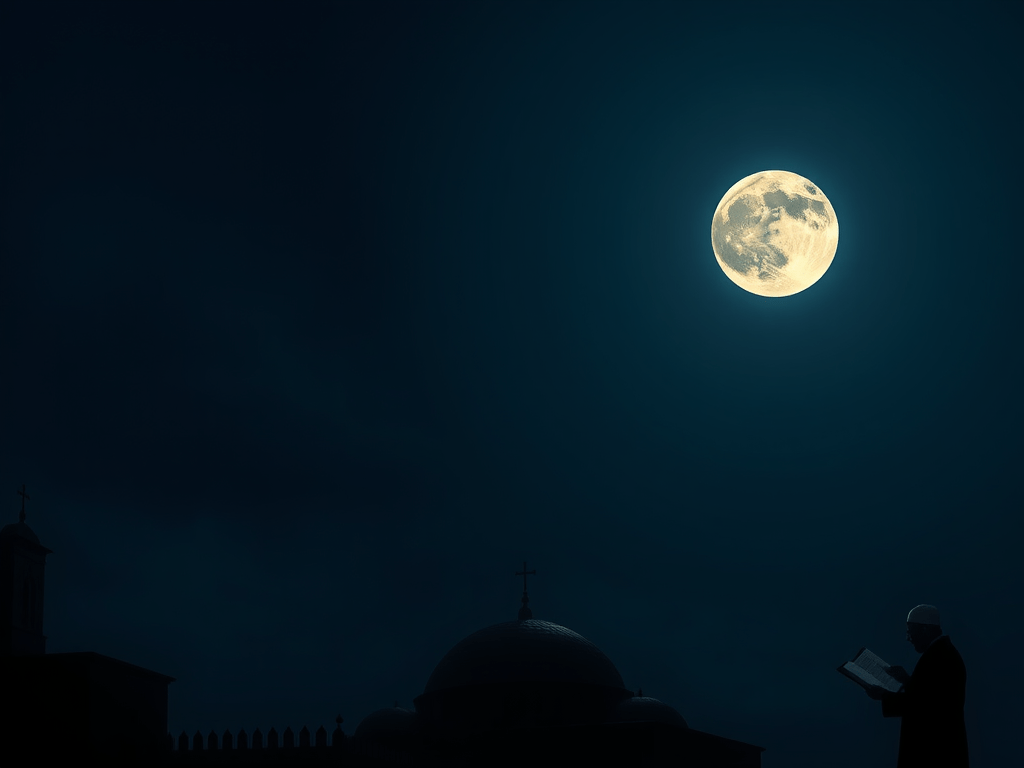
Let’s examine the surprisingly controversial minhag of reciting kiddush levana immediately after maariv following Tisha b”av.
One of the many jobs of a rabbi that often gets overlooked is his monthly creation of a luach and calendar. While technology has made this task seem simple, the truth is that many rabbanim create their monthly calendars the old-fashioned way. In fact, each year in Beis Yaakov 12th grade halacha final, a giove the same final question as extra credit. “If dawn is at 7:16am and sunset is at 6:02, whe is the earliest time one may acceoct an early Shabbos? Please show math.” While today we have myzemanim, I di think it is essential that every frum household has one member who can approximate zemanim.
Yet, for a rav, irrespective of how he arrives at their times, dates and zemanim, there is almost always some politics involved.
When I arrived at one my shuls, I increased the time of Shabbos by a few minutes. Many complained. I must state that I have never made changes to any shul minhag without first speaking to the prior rabbanim. I need not here, and again, repeat the story of the Rema and his shamash, and the dangers in leaders assuming historical reasoning and then arguing on, and changing from, that mere hypothesis.
The president approached me, “Rabbi, I think the issue some have with this is not so much that you changed the time, but that the other shuls in the area have not gone along with this, making it confusing to many who use both luachs”. I explained that my change is based on halacha -about which I can’t, nor would they want me to, compromise. That closed the conversation, as I have been blessed, always, with wonderful and understanding presidents.
However, I couldn’t resist calling him back to point out, “You know, I also shortened the zman for taanisim. Did anyone complain about that?” I am not belittling concerns and complaints -and, the truth is, I very often make errors or overlook a serious concerns or conflicts, such as legal holidays, seasonal changes, times for selichos -it is hard to keep track of it all. A classic example: “Should shachris during the weekdays of Chanukah be at a rosh chodesh’ s time, or that of a regular Monday and Thursday?”. One the one hand, Chanukah also has leining and hallel; but on the other hand, unlike rosh chodesh, there’s no mussaf; but on the other hand, hallel on Chanukah is longer, etc.
It may sound amusing, but this one enquiry-and others like it – often leads to many heated -although respectful-arguments. As I often point out in shul, “That halacha can be precise to the second is not unique, and we indeed see from these debates that we all care about just a few minutes when it comes to sleep, catching our bus, traffic, etc.”
I can spend a whole series discussing just this one area of the rabbinate. Perhaps some time, iy”H, we will. But for now, let us discuss an issue that comes up year-after-year when I make the schedule for the month of av.
In addition to zmanei krias shma, teffila, etc., the secretary will send me a list of times that need to be filled for a particular month, and a day like tisha b”av, such as the taanis’ s start and end, eichah, kinnos, shiurim, chatzos yom, etc.
But there is one space I am asked to fill that is always a concern: “Kiddush levana following Tisha B’av, not before: Time X”.
To most, this may seem innocuous. We all have memories of leaving shul after the taanis with the kiddush levana cards in hand; of pushing through our hunger and dancing afterward while tired.
But this is not so simple.
In hilchos kiddush levana (siman 426:2), after stating that one should be dressed nicely and in good spirits when performing kiddush levana, the Rema in the Shulchan Aruch, states,: “We do not perform kiddush levana before Tisha B”av or before Yom Kippur. However, one may perform this motzai yom kippur -as one is then infused with joy then. However, one may not do so after Tisha B’av or any other taanis (as one is not in the best of moods or in the best of cleanness or clothing)”
The Mishne Berrua adds that even in a year like this one when Tisha B”av falls on Thursday, we would still delay kiddush levana until motzai Shabbos, 12th of av.
So then why does it seem that this is not followed? Should I omit this recital from my shul’s luach?
The Mishneh Berrura does say that if one eats and/or drinks a little following Tisha b”av then according to many one can indeed say it. This would also be conditional ,he writes, on them wearing (real) shoes.
But, still, it doesn’t seem that many are careful to do these first.
This brings us to Toras hanistar.
A little later, in the laws of Tisha B”av, (siman 551:8) the Rema seems to contradict himself, writing, “the custom is not to perform kiddush levana until after Tisha b”av”, implying that one may do so immediately following this fast!
The Be’er Heitiv (#25) clarifies: “See siman 426:2 [however, this contradiction is explained] since the Ari”zal states that one should do kiddush levana motzai Tisha b”av since on this day moshiach will be born…”.
So that al pi kabbala there is a direct reason to perform this mitzvah at this time, while according to nigleh (reveled, basic halacha) this taanis and all others are the same: one mustn’t say kiddush levana then, with the caveat that, according to some, exchanging to normal shoes and have already eaten would then allow for it.
For the confused reader, the Chofetz Chaim adds (Shaar Hatzion, 426:9) that if one wishes to follow the basic halacha and delay his recital, and has also not eaten nor exchanged shoes, but his shul is reciting it following the taanis, he may join them if the alternative is to say it alone at a later date. Meaning, performing this mitzvah with a multitude of people (b’rom am) trumps the other concern of being in an unbecoming state for this beracha.
We should also point out that the Vilna Gaon and others disagree with the while idea of waiting to begin with. Why delay a mitzvah until after any date? Rather one should perform this mitzvah as soon as it becomes available!
The minhag is to conclude kiddush levana by singing “tovim meoros shebara elokeinu yatzarum b’daas b’vina ubahskeil -wonderful are the lumineires that Hashem created, He formed these with wisdom, insight and discernment”. This is taken from the teffila kel adon, said Shabbos morning, that dates back to the days of chazal.
Our greatest luminaires on earth are our gedolim whom we follow, and who create our calander. Shul rabbanim are but like the moon, only reflecting the light of the poskim and gedolim – our ‘sun’.
The goal of this article was to examine an area of halacha about which few may be aware, and not to cause machlokos. We will all follow whatever our rabbanim tell us, as they guide us in present-day minhag yisroel, reflected off the actions of our gedolim.
May our learning of this topic, and the acceptance of whichever minhag our shul follows, allow that this be the year when ben Dovid reveal the ultimate light upon the world.
Post Tisha B’av Kiddush Levana
 Shul Chronicles
Leave a comment