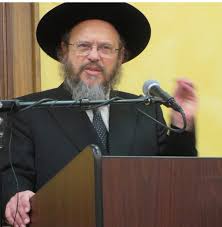
A Gadol of Destiny
History & Personal Reflections
Published in Ami Magazine the week of Rav Ausband’s petira, Elul 5784//Sep. 2024
Rabbi Moshe Taub
“…Binu Shenos Dor V’Dor…” (Devarim 32:7)
Writing in the June 1974 issue of the Jewish Observer, the rosh yeshiva of Telshe in Cleveland, Rav Mordechai Gifter zt”l, shared the heart-wrenching events of July 15th 1941 (20th of tammuz). Unbelievably, just thirty-three years prior:
“…When the Nazi’s beat the Telsher Rav upon the head with hammer blows and taunted him: ‘Where is your Gd, Herr Rabbiner?’, the Telsher Rav replied, ‘He is not only my Gd, He is your Gd; and the world will yet see this’…At the time when the Nazis took the Telshe community to their intended slaughter at a lake nearby, The Telsher Rav said a derasha…When he could no longer stand on his feet, not having enough strength to carry even a gemara, he directed his young daughter (his sons were gone, [hy’d!] to take out the gemara Sanhedrin, to open to the topic of Kiddush Hashem [daf 74], and to begin reading…”
The ‘Telsher Rav’ to whom Rav Gifter was referring was Rav Avraham Yitzchok Bloch.
A mere six years after his murder, across an ocean and a world away, his grandson, Rav Avraham Ausband was born. Rav Bloch was yet another zaideh in our long galus who never held his einikle, just as Rav Ausband was yet another einikle in our long galus who was never warmed by the sweet embrace of his zaideh.
To this, Rav Ausband himself once expressed, writing in a separate article in the Jewish Observer:
“My family was completely decimated. I was never privileged to meet either of my grandfathers”
‘The View of a Child of Survivors’
J.O., July, 1995
Yet, in lieu of a fleeting physical embrace, Rav Ausband became spiritually and eternally fused with his revered zaideh, becoming the embodiment of both the life and the mission of his holy namesake.
A Lithuanian Massacre
Before the clouds of World War Two darkened Europe , Telshe was fast becoming one of the great fortresses of Torah in Europe, with the city celebrating the opening of their revolutionary Telshe mechina for boys, and its Yavneh High School for girls.
In 1929 Rav Yosef Leib Bloch, Rav Avraham Yitzchok’s father, passed away, leaving behind three sons (and two sons-in-laws – Rav Eliyahu Meir Bloch and Rav Chaim Mordechai Katz – who would later together establish the American Telshe yeshiva).
Ultimately, it was his middle son, Rav Avraham Yitzchak Bloch, who would took the mantle from his revered father, taking charge of both the rabbanus of the city and the leadership of its famed yeshiva.
Although only in his late 30’s at the time, he was already recognized – in Telshe and around the Torah world – as a leader-among-men. This became even more apparent to all when he soon was asked to join the esteemed moetzes gedolei hatorah.
But then…
…Alas…
…First, the Soviets entered the city and closed the yeshiva down.
This first invasion was enough to cause many to flee, leaving the yeshiva with only one-hundred remaining students. Yet, even during this precarious time, the dedicated rebbeim somehow found a way meet and give shiurim with groups of bochurim at secret times and locations around the city.
But then…
…Alas…
…In time, the Nazi’s paramilitary unit, the Einsatzgruppen, ym”sh, entered town. They chose the 20th of tammuz as the date they would murder all the town’s Jewish males, including the entire yeshiva, its hanhala, and their rosh yeshiva, Rav Avraham Yitzchok Bloch. On the 7th of elul the women of Telshe were massacred. Hashem Yinkim Domum!
Lita, Ohio//Lita, Illinois//Lita, New York
Three of the young rav’s daughters survived (Rav Avraham Yitzchak Bloch’s daughters).
One of those daughters, Rebbetzin Chaya Ausband, would soon marry Rav Eizik Ausband z’l and settle in Cleveland.
Both Rav Eizik and his Rebbetzin had ‘rebuilding’ in their heart and spirit -she would open and lead the famed Yavne School for Girls, while Rav Eizik would go on to become the rosh yeshiva in Telshe, Cleveland. Rav Eizik was niftar twelve years ago, and rebbitzen Chaya Ausband was nifterah just four years ago, at the age of ninety-six years (for more on her life and lessons, click to see this post)
It was to this Telsher yichus that Rav Avraham Ausband was born. It was in such a home where he was raised, and, it was toward this pedigree of sacrifice for the continence and legacy of Torah for which he lived.
Soon, Telshe in Cleveland, and then in Chicago, would become citadels of Torah in America. It was then when a young Rav Avraham Ausband led the founding of a new branch of Telshe, ultimately settling in Riverdale, New York.
His new yeshiva officially commenced on the first day of elul zeman, 1984.
As Rav Willig pointed out, Rav Ausband led the yeshiva until, exactly forty years later -to the day.
His life’s mission -and that of his holy zeidah – completed as one unit.
Personal Reflections
Long before I had the opportunity to work for him, Rav Ausband had a profound presence in my life.
My first memory of Telshe-Riverdale is of sitting in the car as my older brother, Rav Shmuel Taub, was being dropped off for elul zeman. I could not have been older than ten-years-old, and while I can’t explain now why, but that brief moment left an indelible imprint on me. Perhaps it was the envy from knowing I would never reach my two older brothers’ level of hasmada nor be able to attend such an illustrious yeshiva.
Several weeks after dropping him off, he returned home for bein hazemanim. As we sat in the sukkah, my brother regaled us with tales of his rosh yeshiva, Rav Ausband. He would share his brilliant insights, unique wit, and profound clarity.
Five years later, my sister Naomi married Efraim Halpert, who was also from the early talmidim of Telshe-Riverdale. The newly married couple would spend their first Rosh Hashanah with Rav Ausband, a yom tov my sister till recounts years later.
Moving ahead in time to ten years after dropping my brother off for that elul: I was now twenty-years old and felt the common anxiety that often comes with the onset of adulthood; the new intensity of emotions, the comparing oneself to others, and the uncertainty of one’s future, which path to choose – the usual chalishas hadaas young adults face from time-to-time.
When I shared these strong feelings with this same brother, he quickly pulled out an Alei Shor (Rav Wolbe) and learned a specific section with me. I was blown away by how poetically it encapsulated what I was feeling and how brilliantly it aided me in refocusing my energies.
“Wow, this really hits the spot! How did you know exactly what to learn with me?!” I exclaimed.
My brother shared his secret: “I just did what Rav Ausband did”. He explained that when he was my age – and also struggling with the same common youthful anxieties-he turned to Rav Ausband who immediately directed him to this same sefer and page.
Fast forward through my own marriage, my time in Lakewood, then Buffalo.
I had recently moved to Queens when I received a call from Rav Uri Fox, the afternoon menahel in Telshe-Riverdale. I remembered Rav Fox fondly from my days in Yeshiva Gedolah of Passaic.
“To what do I owe this honor?” I asked.
Rav Ausband, he explained, was in the midst of re-working his secular studies program for the younger high school boys, where in addition to the standard Regent classes, he wished to, when applicable, attach chochmas haboreh, life preparedness, and yedios Hatorah to this program. Rav Tennebaum from Queens was already teaching a masterful class on the medieval period through the lens of the early rishonim, and after seeing my summer history series, Rav Fox wondered if I would come in once or twice a week to teach American history through the prism of the yidden of early America.
I readably agreed, proudly sharing with my wife, “It took twenty years, but I finally got accepted in Telshe-Riverdale!”.
Soon, I had the honor of assuming Rav Fox’s position, as he took another job closer to his home.
I would now be working directly with the rosh yeshiva.
Rav Ausband was a true shepherd, never allowing a hire unless he met the teacher himself. If the teacher was a rav, he wisely needed to be confident that he would know his place in the yeshiva, if he was young, he needed to know if could control the classroom, etc.
Once, Rav Ausband called me into his office. He was very excited, as Artscroll would send the yeshiva their new sefarim, he had an advance copy of ‘Introduction to the Talmud’. In it, they explicate the history of the tannaim and amoriam as well as their yeshivos and the way of life in their times. “I want you to look at this, maybe you can find material that could aid these young bachurim in their future learning”.
When I found a gentle talmud chacham to lead just such a class, I brought him to meet with the rosh yeshiva. Something seemed off to me, but I couldn’t put my finger on it. I was always so nervous in front of the rosh yeshiva that I was unable to properly focus, trying instead -and in vain -to think what he may be thinking. When the prospective teacher walked out, the rosh yeshiva turned to me and said, “R’ Moshe, did you notice?” I was not sure to what he was referring. “His shoelaces were untied, his socks didn’t match and his shirt was filthy.” Oh well, I thought, this is a bad sign for this job prospect’. But the rosh yeshiva had another thought in mind. After a pause he said, “Such a good reputation, such a fine resume, something else must be going on. I wonder if everything is ok in his personal life to come to a job interview like that…”.
Meeting with all new hires meant he had to initially meet with me as well.
Being interviewed for a menahel job is one thing, but to interviewed for it by a senior rosh yeshiva was nothing short of frightening -especially a gadol who was my older brother’s rebbe. The rosh yeshiva opened the door to his office with his known simchadikah shmeichel, that he must have known put everyone at ease.
It was a profound and lengthy conversation -penetrating questions one minute, and light humor the next. He asked me about my shul, who I speak to with serios shailos, about my family, and of course about my father shlit”a, brother, and brother-in-law. Although by that time he had three generations of talmidim, he knew not just the names of each, but those of their children, what they were doing, etc.
While his advice and thoughts shared are private, there is one part of our exchange that I frequently share.
Near the end of that interview, he asked, “When is the last time you spoke to your rosh yeshiva?” I stammered a bit. “Well, Rav Dovid Soloveitchik is in eretz yisroel, and Rav Meir Stern is so busy, I never want to bother him”.
For the first time I saw a look of severe displeasure come across his face.
I quickly interjected his thinking by trying to list the chashuvim I am in touch with due to my rabbanus, but he wasn’t having it.
“So, you are saying that you’re a yid without a rosh yeshiva? Is that what you’re telling me?”
Another long pause, and then, as if to himself, he said, “How can someone think they are a ben Torah and not have a rosh yeshiva in his life, for every major decision?”
To this day, if I wish to explain or if I am asked “What is a ben Torah?”, I respond, “The first step is to be a yid with a rosh yeshiva”.
His Perfect Words
He always had the perfect words for every moment. His derashos were tailer made for whichever audience he was speaking.
I would tell people from the more modern veldt who happen to work near the yeshiva to stop in for a mincha. “You will be surprised at the welcome the rosh yeshiva would give you”. And, if they ever met the rosh yeshiva, they were never disappointed.
Here is such an example.
I shared in Ami a few months ago how, how at the start of this current war, my amazing neighbor, Yakir Wachstock, started Boots for Israel, and has since raised millions of dollars buying and shipping boots to the millium – down to shoe sizes and unit orders. Together with my shul, volunteers pack and ship almost daily through El Al, and then someone meets the duffle bags in Ben Gurion Airport to arrange their deliveries to various bases.
Yakir is away almost every Shabbos fundraising for this cause, and a few months ago he was in Riverdale for Shabbos.
Rav Mordechai Willig, the rav of the Young Israel and rosh yeshiva at Yeshiva University, invited Yakir for lunch. Yakir explained that after his appeal at the Young Israel, he has to then stop at the Chabad and other shuls, and that Rav Willig should start the seudah without him.
Rav Willig explained that his apartment building requires someone to let him in, so instead Yakir should go around through the back, and enter his apartment from the porch area.
Now, Rav Willig and Rav Ausband lived in the same apartment building, on the same floor. They had a deep, forty-year close relationship, and also worked together to build the frum Riverdale community.
So, at about 2pm, Yakir went around the back and walked toward the sound of beautiful zemiros.
“This must be the apartment”, he thought, and stepped inside.
What he didn’t realize is that he had not entered Rav Willig’s apartment, but the rosh yeshva’s!
Yakir was greeted by one of the rosh yeshiva’s sons. The ‘out-to-lunch-out-for-lunch’ Yakir, looked at him, thinking he was another guest, and said, “I’m so sorry I’m late! I’m just coming back from Chabad and, between them and the Young Israel, baruch Hashem, we got the IDF lots of boots!”.
Now if this happened to me, I would kindly have told him, “Sir, that sounds very nice, but I don’t have the slightest idea what you are talking about or why you are here”.
Instead, the rosh yeshiva’s son responded by saying, “We are just happy you made it”. Seating the oblivious Yakir down by the meal, the son explained to the rosh yeshiva, “Our guest finally arrived”.
The rosh yeshiva welcomed him, as if he was expected.
Yakir later shared with me, “They made it so natural that I didn’t have an inkling that I was in the wrong place”.
Soon, Yakir asked, “Where is Rav Willig?”.
Now the rosh yeshiva chapped what had happened, and happily brought Yakir next door.
Rav Willig commented to Yakir, “What a gadol the rosh yeshiva is”. Yakir was perplexed, “What rosh yeshiva?”
Rav Willig explained, “That was Rav Ausband who brought you over here. Have you heard of him? He is the rosh yeshiva of Telshe Riverdale”.
Now Yakir was embarrassed. “Of course I’ve heard of him! My rav speaks about him all the time!”
Rav Willig then said, “Come, let me take you back to get a proper shalom”.
And so, Yakir returned to the rosh yeshiva’s apartment. He asked about the Boots program and about our community -getting more unfiltered answers than he got from me in our first meeting!- and he could not have been sweeter.
The rosh yeshiva wasn’t being affectatious, rather he felt this way for every neshama, and they would feel it in return.
I once heard that the word ‘sever’ in in ‘sever panim yafos’ comes from the root of sevara-logic. When the rosh yeshiva smiled at people it had an impact because it wasn’t a show, it was real, he had a sevarah behind it!
This skill was not just in private, he was also a legendary public orator.
Once, after one of his celebrated yeshiva dinner speeches, I quipped to him, “Rosh Yeshiva, I have to ‘steal’ some of that amazing sechorah for my own derashos”. He laughed and responded, “Steal?! Chas v’shalom! Take it, it is all yours!”
I did, but in his name.
At the start of Covid, right before all the yeshivos closed, I called the rosh yeshiva to let him know that I was very sick with the virus and would be unable to attend to my job. Through the haze of my raging fever, I concluded the phone call by saying, “In the blink of an eye Hashem flipped the world on its head! What is His message?!”
He responded, “THAT is the message! He is charge. End. Of. Story!”!
A talmud once came upon very hard times, when the phone rang. It was the rosh yeshiva.
“I was not in the mood for divrei chizuk” this talmid shared with me at the levaya.
“But the rosh yeshiva didn’t offer that, nor did he even ask me how I was doing – as he likely knew the answer.
“He didn’t tell me a vort, as he likely sensed it wasn’t the time.
“Instead, he asked one thing, ‘Tell me right now how much money you need to pay your bills this month and I will be sending it out tomorrow’. That was his call!”
That is love.
That is a rosh yeshiva.
When I was leaving the levaya, I saw my brother, who drove in from Lakewood.
He shared the following memory:
He once drove the rosh yeshiva home from a very painful levaya of a young and close friend of my brother, and talmid of the rosh yeshiva. Seeing the forlorn on my brother’s face, the rosh yeshiva said, “You can’t return to your home -to your family – like this. A yid doesn’t leave a levaya and head straight back to his family. No! A yid gets a coffee and a cheese danish first! Once you pull over to get yourself some geshmake nash, then we can schmooze about the amkus of what we just took part in”.
Another friend shared how he when in high school in Telshe Cleveland, he bumped into the rosh yeshiva who was there visiting his parents.
“I was walking down the path toward the beis midrash and Rav Ausband asked if he could walk with me. Looking back, he probably understood all the infighting that happens when boys live together in a dorm. He asked me a question. “In this week’s parsha we are told how the brothers despised Yosef due to his perceived special treatment from Yaakov. The very next pasuk tells us how Yosef told his brothers that he had a dream, and this caused the brothers to hate him even more’.
Asked the rosh yeshiva to this fifteen-year-old he never met: “But Yosef didn’t yet tell them his dream yet! How could they already hate him more? Maybe it was a positive dream. It is only the next pasuk where Yosef shares the details of the dream, ‘And he told them the dream…’. So, nu, how do we explain this?”
My friend shared the rosh yeshiva’s amazing answer:
“When one decides to hate someone, the object of that hate could do no right. ‘Oh he had dream! What a horrible person!’ It didn’t matter what the dream was about anymore. ‘He likes vanilla and not chocolate? Figures!’ This is the poison of fighting. However, it works the other way as well: when one loves someone, the object of that love could do no wrong!”
A grandson in the 9th grade in Riverdale shared with me how he was once on vacation in a rented home, and swimming in a pool with a cousin.
They were having a race:
“I lost the first race from the start, seeing my cousin pull away by mid-pool. When I finally got to the other side -long after my cousin – my grandfather noted my frustration, and shared, ‘I’m going to tell you something; a lesson for life: If you are always checking in on yennem (the other guy), you will almost always then come-up second. Only when you focus on yourself – your own strengths and efforts – will you have a chance to meet success. Now, go and challenge him to race you again and have what I told you in mind.’
“And so, I did. This time I didn’t look up during the race, nor did I even think about my competitor. I won…by a wide margin!
“I will never forget the proud smile on my zaidy’s face, shepping nachas that his lesson was utilized”
One final story of his perfect words:
Rav Willig shared in his hesped how he was there when the rosh yeshiva buried his daughter after her horrible and painful passing. What words could anyone say in that moment in the cemetery?
Here is what Rav Willig shared that the rosh yeshiva said:
There is a halacha that one must have kavana during ashrei when saying the pasuk ‘poseach es yadecha u’masbia l’chol chai ratzon’ (Shulchan Aruch, siman 51). But from now on we [the family and he] must have kavana by the next pasuk as well, “tzadik hashem b’chol derachauv v’chosid b’chol maasuv – Hashem is righteous in all of His ways and pious in all of His deeds”.
Wow!
His son, Rav Eliyahu Ausband, is a pikeach and a brilliant talmud chacham who, as the new rosh yeshiva, will continue to lead his father’s and his talmidim together with all the rebbeim and the mashgiach, shlit”a. I must mention as well Rav Nosson Joseph -a pillar of Telshe Riverdale- who loyally carried-out the shlichus of the rosh yeshiva zt”l, and now, lhbch”lch, will do this same avodas hakodesh for the rosh yeshiva, Rav Eliyahu, shlit”a.
May the rebbitzen, the children, and the entire mishpacha find true nechama.
May Hashem give Rav Eliyahu Ausband the Heavenly koach needed so as to continue the legacy of his father, grandfather, and great-grandfather, ad bias goel.

Leave a Reply