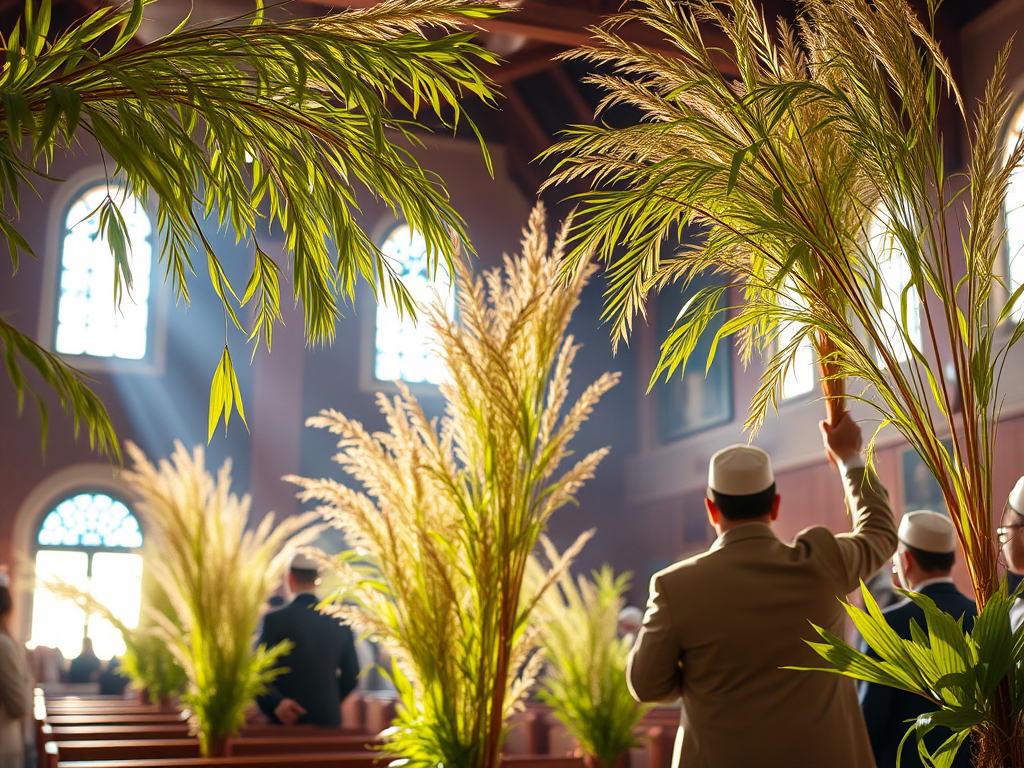
Recently I joined my family for Shabbos in Orlando. It was a unique experience. One of my neighbors in Queens, a member who lives a few doors from me, was in the makeshift shul Friday night. When he told me the address of his vacation home, we both realized he was-yet again-just a few doors down from us.
I seem unable to get away from my members!
Over the past several years, a subsection of housing in Orlando has become prime real estate for frum families on vacation. ChampionsGate, Reunion and other sections of this housing unit have become very popular among bnei Torah. Each home is built to accommodate large families and comes with a private pool, game room, etc. These can be rented for days, weeks or even months at a time. One family in Queens simply moved there at the start of the pandemic -as their kids were anyway in yeshiva online, and the father had to work from ‘home’. They stayed for over a year. It has now become popular for generations of families to rent the largest of homes together and head there together for Pesach.
The local Chofetz Chaim community along with Chabad has a system down to a science. They rent out houses of their own in the areas where other frum families will be staying. These houses are to act as hubs for minyanim, etc.
In fact, the Shabbos I was there it was announced that there would even be an avos u’banim, which was overflowing. Fathers and sons from across the north-east, almost all of whom strangers to eachother, all had in common in that they were away and wished to learn Torah with their sons.
For me, it doesn’t matter where I go, as long as I don’t have to speak. It’s nice to be away, anonymous and just be one of a crowd.
I heard of one rav from Toronto who was staying in another area of this housing development that same Shabbos. When he walked into shul Friday night, he found half his shul from Toronto there!
Our rented house was more than a half a mile away, and I wouldn’t have made it back in time for maariv if I had gone home to eat. So, I ate shalosh seudos before mincha (something one should do only rarely), and then planned on staying in the minyan-house until maariv. Following mincha, with about fifteen minutes to shekia, a group of bochurim walked in. I heard them talking with the few others there. “Ah, that’s an interesting shailah” I overheard one say.
“It’s a good thing we have a rav here who we could ask,” said another. It was then that I looked up to see who that rav was, only to see them staring right back at me.
The shailah they had was indeed interesting. I was at first apprehensive to pasken, as I didn’t have any sefarim and was not one-hundred percent sure if I was correct. Rabbanim can get nervous too, you know!
Here was the question, a subject that is quite fascinating and comes up frequently, especially on vacation:
These boys had gone to an infirm man’s home to help make a minyan. He couldn’t walk to shul. However, there was no sefer Torah there with which to lein. So, as soon as their small minchah was over, they ran to the makeshift shul to hear their missed leining. Alas, by the time they arrived minchah was over. May they now take the Torah out and lein on their own?
It should first be pointed out that if one is a choleh, it is better to have a minyan b’tzibur than to hear kria (shu’t Minchas Yitzchak 7:6), so this minyan for the choleh was indeed the correct thing to do.
But what should these boys do now?
To start with, leining by mincha is an interesting halacha. It was one of the ten takanos created by Ezra (Bava Kama 82a), added to Moshe rabeinu’s already existing decree to lein tri-weekly. Ezra added it for the benefit of the ‘yoshviekeronos’ -those that don’t come to shul during the week, and even on Shabbos are only found out of their homes in the streets and wasting their time (Rosh, ShaarHatzion,siman 135). In fact, because of this, the MagenAvraham posits that the requirement for the average male to hear leining by Shabbos mincha is a weaker obligation, as most do not fall under the term yoshviekeronos (siman 143:8). Because of this, some poskim rule that these boys were not at all even obligated to run to shul to try to make-up their missed leining by another mincha (shu’tVayivarech Dovid 1:27, p. 145, bottom of first column)!
But now, that they are here for this purpose, and we already finished, what should be done?
One may think that there is no issue here for me to reply strictly. Just have them take out a Torah and lein, minyan or not. After all, what’s the harm? However, many poskim urge us not to read from a sefer Torah unless its either at the Moshe/Ezra moments (with a minyan) or to prepare for such an occasion (with exception of accepted minhagim, like seferdevarim on Hashana Rabbah).
Even in the days of chazal, we would write chumashim etc. from which to learn (see, e.g. gittin 60a, and, shu’tMishnehHalachos 5:33)
In addition, there is the question of if aliyos should be made. Rav Chaim Soloveitchik points out that perhaps it is not enough to simply have a minyan in the room, rather, one would need a majority of that same minyan made up by people who also didn’t yet hear leining (stencil, Chidushei al Shas, Mishor ed., p. 600 #11).
The Chasam Sofer was once travelling for important klal work on a Monday. It was only mincha time when they reached a shul, at which point they leined the morning leining then (shu’t Goren Dovid #5)/! However, this and other sources that do discuss this issue focus, by-and-large, of making up their missed kriah by mincha, mussaf or some other time of structured teffila.
However, in fact, many poskim have the opposite concern. In that one should not lein by another davening slot. Rav Moshe Shternbuch discusses a similar case to the Chasam Sofer’s and explains that such leining is done beforemincha begins, so that no one confuses this with a regular time of leining (see shu’t Teshuvos V’Hanhagos 1:145 with Shaar Hatzion #5 to siman 135 where the Chofetz Chaim rules the same).
I know of one wonderful shul that on Simchas Torah they not only duchen by shacharis (which many do), but they also go straight to mussaf, only leining after. This seems problematic, for we do not purposefully manipulate the place of leining (b’deived this would be allowed, say if they had no Torah by shacharis, see shu’t Teshuvah M’ahavah #243).
Back to our case, for all of the above reasons, even b’dieved, the Ashel Avraham does not allow a new leining take place for these boys. Even though there are six of them who did not hear leining (and another four in the room).
However, many others allow it (ibid. #28, Maharil) especially when the reason they missed leining was due to a mitzvah.
In the end, I told them to lein, and make a chatzi kaddish after (another debate).
And then? And then I got out of there as fast as I could so that I could research if I was correct!
I always tell young rabbanim that the halachos of leining, aliyos and kadima (who has first right), are among the most important to know. As when they arise there is often limited time to reply.
The source for reciting Parshas Hamann the Tuesday of Parshas Beshalach
January, 2022
Rabbi Moshe Taub
This post discusses parshas mann bo and its significance.
The Segulah of ParshasHaMann
This week -like many readers -I have received countless messages, all regarding the same theme. One message stated:
“…[T]his is an opportunity to improve your parnassah…Tuesday of Parshas Beshalach is the special day of segulah taught to us by Reb Menachem Mendel of Rimanov zt”l by reading Parshas Hamon!”
Talk about a get-rich-quick program!
It is known that Rav Menachem Mendel would, incredibly, speak every Shabbos on the theme of parshashaMann (see the sefer Menechem Tzion, by his student Rav Yechezkel Pennet). Some point out how this rebbe’s three names contain the letters for mann – Menachem, Mendel, Rimanov.
However, surprising as it may seem, my friend Rav Moshe Freidman of Toronto pointed out that in all of the many kesavim of R. Mendel Riminover zt“l –frequently all about the mann – there is not one mention of the segula of mann on Tuesday before beshalach.
He writes in an email:
“The very first source of this minhag is in the Sefer Yalkut Menchechem Chodosh, published in 1991. It states there that Rav S.W. Weinberger zt“l heard from the Stropkover rebbezt“l in the name ofReb Menachem Mendel of Rimanovzt“l regarding this segula. After the publication of the Sefer, this Segulah spread like wildfire. All the weekly Torah pamphlets & every frum internet site and app reminded us not to forget to say parshas hamann on Tuesday of Beshalach.”
But it gets even stranger:
“At a later date, Rav Weinberger’s kesavim were found in which he writes that he heard from the Stropkover rebbe how Reb Menachem Mendel of Rimanovsaid the parsha on the mann twice and once with targumevery day, and had in mind that his parnasa will come from shomayim.The rebbe claimed that by having this kavanah while reciting the parsha you are assured not to everlack in this area.
“Rav Weinberg then wrote that it was on Tuesday before beshalach בשלח when he met the Stropkover rebbe.The confusion came about from this one line. That is simply the day he heard this, the rebbe never said that there is a special day to say it!”
See also shu”t Migal Nueh (siman 1) where he goes through this history.
It must be stated, however, that the significance of reciting this parsha is not unique only to this ‘source’, or to the 18th century.
In fact, its recital is brought in the Shulchan Aruch, in the very first siman! There it states that it’s a good thing to say parshas hamann each morning (Orach Chaim, siman 1). The Teshbeitz amazingly adds that he will be a guarantor that should one do so they will see parnasa (‘sh’lo yismaatu mizonosuv…v’ani oreiv’).
Interestingly, many siddurim -even my edition of the Artscroll -omit this from the morning section. Likely, this is based on two reasons:
For one, the concept of its recital -daily or otherwise – is not found anywhere in shas.
Secondly, various pesukim and the midrash draw our focus to the negative nature and temperament to the complaints and methods of bnieyisroel in this story, giving cause to omit its special recital (Aruch Hashulchan siman 1:23, 24, with Shmos Rabbah 25:4).
Interestingly, some (see Tashbeitz and Perisha) do quote from a Yerushalmi that teaches us the value of saying this parsha daily. However, this gemara cannot be found (and may be among the missing kodshim).
But our discovery doesn’t end here. The reader may be thinking, “There may not be a source, but there can’t be any harm”. Even the first concern raised by the Aruch Hashulchan may only be true when said daily, but not when recited but once a year!
“Should someone recite a pasuk as an incantation for a wound, or so that a child should stop crying, or he places tefillin next to a child so that he will sleep, not only is he in violation of the [prohibition against] forbidden incantations, but he is a denier of the Torah, for he makes the Torah into a healer of bodies when it is there to mend souls… However, a healthy person may recite pesukim or Tehillim to protect against future sufferings and prevent them from arising” (hilchosovdeikochavim, 11:12).
Yet, for millennia, klal yisroel has comforted herslef with the words of Dovid HaMelech – and used them for salavation!?!?
Rav Moshe Sternbuch posits that the answer to our Tehillimminhag must be that when we recite Tehillim for someone who is ill, we are asking Hashem to heal that person in the zechus of our Torah study, not because of the sheer power of the pesukim (Shu”t Teshuvos V’hanhagos 1:121).
Similarly, the TzitzEliezer (17:30) writes that one may learn Torah or daven for the benefit of his soul, even if he also wishes to heal a physical condition.
The last line in the Tzitz Eliezer may speak the most to the segulah under discussion here, where it seems this segula is based upon an error.
“Hanach lahen l’Yisrael, im ein nev’iim heim, bnei nevi’im heim—leave bnei Yisrael as they are, for if they are not prophets, then they are at least the children of prophets.”
Indeed, Rav Tzadok often wrote about the power of certainminhagim whose source is a mystery. In that sometimes, these are the most powerful.
This ideal can be further illustrated through the amazing words of Rav Moshe Feinstein. The follwing was his written response to something that wa who was bothered by the many requests made to him for berachos, and even more perplexed that they often seemed to have worked!
“…As is written in Bava Basra 116a, ‘Expounds Rav Pinchas Ben Chama, Anyone who has a sick person in their house should go to a scholar (chacham) and he will beseech Gd on their behalf’…And also what people request from me (Rav Moshe Feinstein), to pray for them or to give them berachos, is due to the fact that I am seen by many as a chacham.
“Now, it never helps when I tell them that they are mistaken; as I have yet to reach the level of chachamah. On the contrary (when I tell them this) they think this is coming from my modesty.
“….Therefore, even though I do not see myself as a chacham, even relative to our own times, nevertheless since the sick (and all those who seek-out my blessings) ascribe to me the imprimatur ‘chacham’, they are then following the rule of Rav Pinchas Ben Chama (to go to a chacham) as best he could.
“It is then their zechus in following (in their mind) the spirit or law of this gemara that is behind the merit that Hashem should accept my teffilos and berachos”
Perhaps, then, it is the same with many of these segulos. The engine of their efficacy is predicated upon the premise-true or not-that one is performing an act of mesorah. Just so long as that action does not interfere with halacha.
Nevertheless, it is vital that one who seeks to say the parshashamann as a segulah only do so either to learn those pesukim (perhaps with Rashi) and not as some ‘magic potion‘.
Or, they can read it so that the story awakens their emunah in Hashem’s hashgacha.
Anything short of this, one enters a serious question of halacha.
There is, however, a chazal that does in fact share a secret segulahfor parnassa (niddah 70). They teach that should someone wish to become wealthy they should do the following three things.
I often say in these pages that rabbanim get asked questions on a myriad of topics. Of course, many of these questions require greater poskim, lamdanim and baalei machashava (at least in my case). But this challenges me to research varied subjects and learn about things I would otherwise not know. I tell younger rabbanim that while they should always know their own limits and be ready to call poskim, they should, at the same time, take advantage of that situation by first reviewing in depth that sugya before placing that call. This will not only give one greater insight into how the gadol rules but will -over time -improve one’s own level of expertise in many areas.
Questions relating to devarimshelnistar (the hidden) are often asked. There are a very limited people one could call to help guide the balla buss who had asked it. It is not as if I could pick up the phone each time and speak to Rav Chaim. When these questions arise, I first share any halachic warnings (as we wrote here regarding the segula of parshas hamann). After which, I tell them, “I will get back to you if I can find a source as to the efficacy of X.
Over the past several years, one question has arisen again and again. In fact, it has now reached the point that it often is performed without asking, as it seems to have entered into the fabric of frum life.
I refer to the ‘Forty X of Y…” segula. In other words, this could be forty days of sayingX, or, forty women performing the action of hafrashaschalla, or forty days of going to the kosel.
This segula has become highly popularized.
This week we will discuss what significance, if any, forty has. Next week, iy’H, we will discuss a few of the particular segulos, like saying nishmas for forty days.
There is a midrash that is often quoted in support for such segulos. “Some teffilos are answered after forty days, as can be learnt from Moshe” (Devarim Rabbah 2:17; see yarchon Ohr Yisroel, kislev 5762, p.187ff, by Rav Levi Freund).
However, there are two issues with this being the lone source. For one, it only explains forty days and does not bring support to the concept of this working for a specific number of participants. Secondly, this midrash goes on to list many other time-periods for teffila: “…and some could be answered after twenty days, from Daniel…three days, from Yona…one day, from Eliyahu…and some teffilos can be answered at the moment one begins to daven, from Dovid…and some even before the teffilah is even said, from Yeshayahu (65:24)…”.
Nevertheless, this chazal does indeed indicate a period of forty days as being the longest set of teffila.
In fact, that very point is raised by another chazal which states in the name of Rav Eliezer that a teffila should be no longer than forty days “…as it is written (Devarim 9:18) ‘And I fell down before Hashem as at first, forty days and forty nights.’ (Sifri, 105; see also MechiltaD’Rebbe Yishmoel 15:25)
Can we additionally find that this number has unique purchase for holy acts other than teffila? The Zohar (introduction) how Rav Chiya fasted for forty days before meeting Rav Shimon bar Yochai. This seemingly indicates that this time-period is a potential segula for other mitzvah actions.
What about forty as a time-period, but not as days? The Zohar
writes, “the bnei yisroel completed their journey after forty years, forty years before techias hameisim…,and the rain (by Noach) was for forty days and nights…” (toldos).
Back to teffilah for forty days, in pekudei he discusses how each teffila is gathered every forty days and held for forty days by a special entity.
While the above sources may offer support, it is unconvincing as this segula’s origin.
I would, therefore, suggest two alternative sources for how this became a popular segula.
-Chazal teach how the formation of a fetus takes place by day forty (Berachos 60a). Chazal then state that once this time-period passes it is forbidden to daven for a specific gender of baby. This is codified in the Shulchan Aruch (orachchaim, siman 230:1). While one can still daven for a healthy baby, etc., one can longer daven for something that is already a reality. In fact, chazal tell us that when Leah davened regarding Dina and Yosef, this was before firty days had passed! Here, we have a very clear and known source for placing the time-period of forty days on a (specific) teffila.
– This may be a little deep, but the number forty has deep significance. the Maharal often wrote of chomer and tzurah, matter and its form. Often numbers that are almost at their whole point have matter but no form. An example: there are thirty-nine melachos of Shabbos, because they represent the physical, a world which cannot reach the completeness of its mission, its form, without being imbued with kedusha. Tisha B’av is on the 9th of av because it represents a world with matter but lacking its whole, its form. There are forty-nine days of physical counting (matter) so as to reach the form of Shavuos on day fifty. Etc.
Knowing this, it then makes sense that from Elul, there are thirty-nine days, culminating with Yom Kippur as the fortieth; Forty weeks of pregnancy; forty seah (amount of water) to make a mikveh, etc. (see further Jewish Wisdom in Numbers, Artscroll). So too, when wishes to to tsake their hopes and turn them into a form, they choose…forty. Be it days, actions, places or people.
Both the halacha above, and these numerous references to forty in hashkafa are well known. I find it likely that this was our first introduction to a time-limit of forty days, and the importance to change that this number represents. Once known, we then expanded on this knowledge with other the sources above,
Nevertheless, when Rav Elyashiv was asked about the segula of going to the kosel for forty days straight, he is purported to have answered, “There is no such concept; rather any single time one goes there, their teffila will be accepted” (Dvar Hashem, Zu Halacha, inyanei kosel hamaaravi, #11). On the other hand, Rav Elyashiv is also quoted as explaining what to do on Tisha B’av for one in the midst of a forty-day cycle of reciting shir hashirim (MivaksheiTorah, 5768). Rav Yaakov Yosroel Fisher was also reportedly in favor of it.
Whether we can find a direct source to any of these segulos, the fact remains that many report great yeshuos from them.
Chazal tell us that when Moshiach arrives he will rule for forty years (Sanhedrin 99a), using that time -and number -to take the matter fo this physical world and bring it to its ultimate form.
In some respects, a rav and our holy Hatzalah members are a like a fireman. They can be involved in another matter -even an important one -and yet must always be at the ready to drop whatever they may have been doing and go into emergency mode. They will then stop everything to aid it whatever sudden issue arose, l’pitom. With just one phone call, they must be ready to go into overdrive and do all in their power to help in the new urgency.
Sudden events -the ‘unexcepted’ tragedy – are from the most painful incidents of our galus exitance; events of which the reader should always be protected from and never bear witness.
Sadly, I have experienced these in both my personal and professional life. My wife’s younger brother, Nesanel, when home from yeshiva,erev pesach, was killed by a man driving erratically, escaping police arrest in Toronto. Professionally, in 2009, Continental flight 3407 from Newark to Buffalo unexpectedly descended and crashed into a home in Buffalo, killing everyone -and some yidden –on board. As a rabbi in town, I was tasked with going to the site, and then being shuttled to the grieving center setup for their families. Because my hope is that no reader ever experiences such events themselves, allow me to share what will likely come as no surprise: the numbness seen in such instances is not just impossible to describe but unbearable to witness. Just because someone is a ‘man-of-the-cloth’, or has PhD, does not mean that they know the perfect words to say. Of course, there are no perfect words to say in such instances. Indeed, shev v’al taaseh adif, to sit and listen and be quiet, is perhaps one’s only option.
I once read story about the great Mir Yeshiva roshyeshiva, Rav Chaim Shmulevitz (‘Rav Chaim Shmulevitz’, CIS). People would come from far-and-wide to gain access to this gadol. While many would come to him for assistance in a shiur they were preparing -as his knowledge of lomdus and iyun were second to none -many others came for advice on serious prblems. His students noticed that often Rav Chaim would begin to sob as visitors would describe the pain they were going through. When they finished speaking, and the rosh yeshiva crying, he would get up and embrace them. They would then see the vistor leave with what appeared to be new-found vitality.
“Rosh yeshiva, why do so many of these suffering people even bother to travel all the way to see you? The rosh yeshiva does not typically offer any specific advice; indeed the rosh yeshiva barely speaks at all!”
Rav Chaim explained that people in dire straits are not always looking for specific solutions -as often there aren’t any -rather they are looking to unburden themselves. They want to know that they are not alone in their pain; they want to be assured that there exists others who feel for them. Even by simply crying along with someone one can thereby take a little bit of their agony away. This alone is a great help, and one for which it is worth travelling.
Year ago, my sister Naomi was on a bus leaving Camp Sternberg for a trip. Something happened beyond anyone’s control, and an accident ensued. Yehudit (Judy) Shwekey, her friend that summer, and a pure neshama, was niftara. My sister always spoke about how the camp’s rav, Rabbi Grossman z’l, dealt with that sudden event. “I can’t recall everything he said, but I do remember his love, concern and sensitivity”, she recently shared.
This past motzai Shabbos Camp Sternberg, the Five Towns and the Jewish world was struck with another horrible and sudden tragedy. On the way home from their camp Shabbos reunion, a mother (Miriam Meltser) and her camper daughter along with three camper friends were stuck by a truck being driven by an intoxicated driver.
Miriam needs and should have a refuah shleima soon. Sadly, one of the campers was niftara.
Her name was Liel Namdar.
I did not have the zechus of being her rav, but I did know her, although just a little. She went to elementary Bnos Malka Elementary School in Queens and was a classmate and friend of one of my daughters.
When I finished my shiur Sunday morning and didn’t hear from my wife and kids, I knew something was up; as we always speak at that time. Hearing the news, I rushed home, but found my mouth empty of words to say. Liel was the type of girl about which no one had a bad word to say. Frum and tznius, kind and generous, she was someone to look-up toward.
Later that evening, I looked at my daughter’s yearbook. There was the page with Liel, with her life ahead of her. I recall well how each girl had to come up with their own chazal with which to describe themselves or their outlook.
I shuddered when I saw what Liel wrote.
Paraphrasing from the midrash, she wrote under her picture, “yesh zakein, v’ein lo yomim; yesh yomim, v’ein lo zakein (Yalkut Shomoni, Bereishis 24). This means, there are those who aged but who didn’t live; and yet there are those who lived even though they may not reach old age.
What eighth grader chooses such a pasuk? A deep one. A special one.
Arriving to Shevach High School in Queens to teach my 12th grade halacha classes Monday morning, the menahales warned the teachers that some of the students may have known Liel and may have a hard time concentrating. This was true.
I shared with them everything written above, but added the following. One is not being selfish if in addition to their grief, especially those who are still young, respond to this event with a tinge of fear. Sudden tragedy has the ability to stunt and paralyze us. “What is to say I will not be hurt if I go out? Maybe I should fear going to the next event…”
I shared with them, and will end this column with what I told them, and communicated with my daughter.
In the teffilah of modim we make a statement of “…al chayeinu hamesurim b’yadecha, v’al neshmaseinu hapikudas luch…our lives which are in Your hands, and our souls that are in Your trust…”. Now, we can understand if this statement is made in the portion of gevurah, Hashem’s greatness, at the start of shemonehesreh, but what is a declaration of death being in Hashem’s hands doing in modim, when we are to be grateful and thanking Hashem?! Do we not tremble when we reflect on this same theme in unesaneh tokef on the yomim noriam?
I explained that such sudden events can mistakenly cause some to believe in the pure randomness of the world. This in turn can cause some become stifled from moving forward. The mere fact that we believe in a mashgiach b’olomo – that Hashem is not just a Creator, but an Oversee-er is the greatest cause to give thanks. It reminds us that not only behind every sudden tragedy is great, if not secret, reasoning, but that we never have to worry or become stifled. Rather, this remind us that we can and must move forward with confidence that in the grand scheme of things there is no reason to be scared, as there is no such thing as randomness. And, the only thing we can control, the only matter about which we have dominion is the mitzvos that we do.
May the memory of Liel, and her special qualities, be a continued source of inspiration to all who knew her. And, may Hashem bring nechama to those whose suffering is beyond comprehension -her dear and special family.
A exploration of magic in Halacha, and how Houdini and Arthur Conan Doyle played a significant role.
Written by Rabbi Moshe Taub for Ami Magazine December, 2021
Having recently constructed new book shelves, my sefarim, yarchonim (Torah journals), notes etc. were scattered for some time around my house and various offices.
Recently I took the time to gather them together to place them on my new shelves. In that process, I came across sefarim I thought were long lost. I also rediscovered English books I had forgotten that I owned.
One of these was a book published in 1948. It was purchased from the Cornell University Library by an unknown person.
The title of this tome is ‘The Unfailing Light’. That it is an autobiography is not what makes it unique, rather what does is that it one written by a rav about his life in rabbanus.
Rabbi Bernard (Dov Ber) Drachman was one of the first American Orthodox rabbis to both be born a in America. Born in 1861, he was raised in Jersey City. It was a disappointment to many of his reform teachers and their leaders when this smart and energetic young man returned from studying in Europe with a semicha and declaring himself Orthodox.
He would later go on to become the president of the Orthodox Union – which he actually assisted in forming, with the direct purpose of slowing the tide of Reform -he was a supporter of Rav Yaakov Yosef, and even translated some of Rav Hirsch’s works, specificly parts of ‘The Nineteen Letters’ (this was stunning, as some of Rabbi Drachman’s own ‘Orthodox’ teachers were named by Rav Hirsch as dangerous to our mesorah). He would even become a finalist to serve as the Chief Rabbi of Great Britain, losing in 1913 to Rav Yosef Tzvi Hertz (d. 1946; today best known for his translated-to-English ‘Hertz Chumash’).
Over Sukkos, I wrote a feature on the history of mechitzah in America -where the first synagogue without one first occurred. There we recounted, briefly, Rav Eliezer Silver’s famous testimony in the case of the Cleveland Jewish Center. He asserted the central role of halacha in general and mechitzah in particular. But he was not the lone voice.
The JTA reported at the time (November 4th, 1927) “…So far the testimony of Dr. B. Drachman, Rabbi Leo Jung, Rabbi M. S. Margolies, Rabbi Eliezar Silver of Springfield, Rabbi J. L. Selzer of the Union of Orthodox Rabbis, Rabbi Herbert S. Goldstein of the Union of Orthodox Congregations and Mr. Gedaliah Bublick, editor of the Orthodox “Jewish Daily News” has been taken. The witnesses are asked to answer to 33 questions which pertain to the charges brought by the Orthodox committee against Rabbi Goldman. Among the charges are that Rabbi Goldman had denied the Sinaitic origin of the Torah and the Decalogue, that he had permitted men and women to sit together in the synagogue…”
What I did not know at the time of that writing is that this was not the first time Rabbi Drachman fought such a Torah battle. After serving Oheb Shalom of Newark for two years, in the spring of 1887 Rabbi Drachman was hired by Congregation Beth Israel Bikkur Cholim to serve as their rav. Rabbi Drachman was engaged to be married, and very much needed this parnasah. But soon the winds of change swayed the fragile among his flock, and those susceptible to cultural swings soon demanded that their shul too shall demean the mechitzah to a religious artifact. Although he fought against it, ultimately it was up for a vote which mechitzah did not win (p 200).
Now married, and with a family he would need to support, what was he to do? The first Shabbos after the vote he arrived in shul as if nothing happened. Likely the congregants believed that, like them, he too quickly adapted to change thereby compromising his morals.
After leining, when the Torah was put away, it was time for the rav to speak. Many articles recount what happened next with simplicity, but his autobiography demonstrates how he had to still defeat the yetzer hara in his ear. He wondered to himself not if he should acquiesce but rather if he should choose a less dramatic venue and method to be mocheh (protest).
“Perhaps I should switch to an innocuous sermon” he thought to himself (p. 202). In the end, he gave his planned remarks. He was also helped by the fact his father-in-law, Mr. Weil, stopped by his home before davening to express his pride in what his new son-in-law was about to do.
And so, to the shock of the audience this typically soft spoken man saw his voice steadily rise in passion as he discussed halacha, mesorah and the future of the children in the attendance. “I spoke with a fire and force quite unusual for me…but my feelings on the subject were so deeply stirred that once I began to speak I put my whole sould into my words”.
He concluded his drasha with the following words, “Since they had acted in direct opposition to Biblical passages and Talmudic dicta…I no longer consider[ed] the rabbinical post at this congregation worthy one, and that, with the conclusion of the present service, I would cease to be their spiritual leader”.
Perhaps the greatest surprise in reading him tell the story of his life is that he almost became an essential part to my background and that of both of my parents. In 1925 Rabbi Drachman was invited to become the rav of Toronto. Although tempted by the offer, he did not accept this position because his wife had just died (p.393). Toronto already had a great gaon -Rav Graubart-but perhaps the need for a new rav came when the Rav Graubart announced his departure for St. Loise (he would soon after return to his position in Toronto). Rav Graubart’s life and geonis will have to wait for another article (see HaPardes, November 1937 p.5ff for an article about his life).
There is so much more discuss about Rabbi Drachman’s life – including working with Rav Hillel Klein to found the Vaad L’mishmeres Shabbos (Rabbi Klein was married to the granddaughter of Rav Hirsh) and his being the rabbi of one of the most famous Americans of his day…Houdini!
Indeed, it is this last point that I want to focus on, as it relates to a serious shailah I just received. We will iy’H discuss what that current issue in the next chapter.
II.
Above, we introduced the reader to the fascinating life and career of Rabbi Bernard (Dov Ber) Brachman.
Rabbi Drachman dedicates a chapter of this book describing the sad state of affairs when it came to the observance of Shabbos, along with his efforts to repair it. He opens this chapter by expressing his surprise that here in America when we were finally granted a constitutional right that protects religious liberty in galus is also when so many turned away from yiddeshkeit. Of course, this is an old conundrum.
While he writes with great passion in defense of Shabbos, he also describes with delicate sensitivity the non-observant and the challenges they faced that may have led to this unholy breach.
Together with his brother, Gustave, Rabbi Drachman worked with politicians to change New York’s laws so that the shomrei Shabbos would be better fiscally protected. He also helped found an organization helping to educate Jewish Americans about the vitality of shemiras Shabbos. He was very successful in both of these endeavors.
Humbly, he does not mention in his book that he was elected the president of this early American vaad l’shmiras Shabbos organization, and it was left to the editors to add this fact in a footnote (p. 229). When I saw this, I was reminded of the great quote often attributed to Sir Winston Churchill that should inspire all those involved in tzarchei tzibbur b’emunah –“It is amazing what can be accomplished if one does not care who gets the credit”.
A more humorous portion of his story is his recounting of his and other early rabbanim’s relationship with chazanim. One of the chazanim tenured at Ohab Zedek was none other than the famed Yoselle Rosenblatt. The senior rav at the time was Rabbi Phillip Klein, grandson in-law of Rav Hirsch. Rabbi Klein and Rabbi Drachman worked well together, so when the shul requested an English speaking rav to work together with Rabbi Klein, Rabbi Drachman was the obvios choice (p.278). Rabbi Drachman would switch off each Shabbos between his main shuk -Zichron Ephraim -and Ohab Zedek each week. In any event, the latter had a rotation of chazanim, no one of which impressed Rabbi Drachman. Although an appreciator of music, he would describe some chazanim by their “sometimes joyous, sometimes pathetic rendition of the prayers”. Yet, because many of these members did not have a sophisticated understating of yiddishkeit, often chazanus was their only way to feel close to Hashem. IN fact, Rabbi Drachman reports that when Rabbi Klein would give his Shabbos Hagadol derasha -which was chock-full of lomdus and erudition – “…to the ordinary layman [in attendance] they were absolutely unintelligible”. He goes on to explain that therefore “To have a chazzan for Shabbos was the highest delight of the old-time Jew…Listening to those melodious outpourings, he forgot all about the hard realities of the unkind present and felt himself transplanted to a holy realm, in the company of the saints and sages of Israel’s past”.
As for Rosenblatt, Rabbi Drachman records that the annual income to the shul that this one chazan would bring in annually was $25,000, which corrected for inflation would equal about a quarter of a million dollars each year for the shul!
However, as anyone familiar with rabbanus is aware, rabbis and chazanim were often like oil and water. After recounting the large funds that just Yoselle Rosenblatt brought in to the shul, he immediately then writes, “In the matter of chazanus I did not see eye to eye with my congregants”. Before explaining his reasoning, he first wants the reader to be aware that he too loves music. He spends significant space recounting yiddeshkeit’s important connection to music. He then goes on to explain how too often the chazan’s role in the shul becomes exaggerated. Davening loses its religious function and becomes more of a concert. While he admits, “Even in the case of Joseph Rosenblatt, who was a sincerely devout Jew and strictly observant in the Law -which not all chazzanim are -his repute was not due to his [very real] conscientious piety and religious loyalty, but purely his musical ability.
Rabbi Drachman’s concern was specific for his time, when people would only come to shul for the concert, rarely daven themselves, and most certainly did not stay for the derasha.
He goes on to express his frustration in the constant repeating of words that some chazanim utilize. He recounts, “On a certain Shabbos, a chazzan –not Joseph Rosenblatt -was conducting the service.” It was rosh chodesh, and they were saying a piyyut that referenced the idea that we can’t bring the day’s korbonos because Titus destroyed the beishamikdosh. When the chazan got to the words of that rasha “…he repeated them no less than eight times, each time in a different tone of lamentation and threnody”.
When after a davening a member asked the rav how he enjoyed the chazan, he replied, “He is worse than Titus!” “How can you say that” asked the befuddled congregant?” “Very simple” replied Rabbi Drachman, “Titus harasha destroyed Jerusalem but he did it only once, but this chazan destroyed the Holy City and the Temple eight times!”
Perhaps the most fascinating element of this autobiography is his description of his deep relationship with arguably the most person on earth at that time -Harry Houdini. It is hard today to understand just how celebrated this man was across the globe.
Ironically, or perhaps by design, there is a lot of mystery surrounding Houdini’s background. While we know his real last name was Weiss, there is some debate if his father was trully a rav. In addition, many say his first name was just simply Eric/Erich. According to Rabbi Drachman, his father was a rav, and his Houdini’s real Jewish first name was Yaakov (p. 337). Rabbi Drachman even shares how Houdini and his tw siblings went to Rabbi Drachman’s shul’s cheder,which was held inside Congregation Zichron Ephraim!
The Jewish life of Houdini, his relationship with his rav, as well as some more on Rabbi Drachman will all be discussed in the next chapter, when we conclude the story of his life and rabbanus.
III.
Why would Sir Arthur Conan Doyle -famed creator of Sherlock Holmes– quote a hesped from a rav, and do so with the express purpose of the world reading it?
The above question is intriguing, based on real history, and one of the oddest sentences I’ve ever put to paper.
We ended the last section with a selection from his published (1948) autobiography, where he makes mention of his close relationship with Harry Houdini, who was, arguably, at one time the most famous man on earth. We discovered that Houdini’s first name was Yaakov -and not simply Eric(h), as all historians believe, and how as a young child, he and his brother and sister attended the Hebrew School housed in Rabbi Drachman’s shul. We will now pick up from there.
Houdini’s father is described by Rabbi Drachman as a rabbi, although refers to him as ‘Dr.’. I have indeed heard this fact before, and often repeated, “Did you know that Houdini was not just Jewish, but that his father was a rav?!” ‘Rav’ may be a strong term. Meir Samuel Weiss was a part of a lesser-known movement in Budapest called ‘Neolog’, a close cousin to modern-day conservative Judaism, although even this is a broad-brush description. An older woman in my shul who grew up in pre-war Hungary remembered her father not allowing her to step foot in those shuls. The full story of the Neolog’s, and how even Hungary’s Ksav Sofer once tried to approach them, will have to wait for another time, perhaps. Regardless, Rabbi M. S. Weiss was certainly learned.
Houdini’s greatest escape may have been at the age of three, when his father fled the poverty suffered in Hungary. R. Weiss would soon become the first rabbi in Appleton, Wisconsin. Sadly, he was let go after a just a few years.
Penniless and without skills, the Weiss’s would find themselves in New York where both father and son Eric(h) would support the family through working at the R.Richter and Sons tie factory.
It was at around this time when Rabbi Drachman began to study with and oversee a young Yaakov/Eric(h)’s, initially preparing him for his barmitzvah.
Although Houdini would soon, R’l, leave yiddeshkeit, he retained his relationship with Rabbi Drachman, even during the peak of his fame. Rabbi Drachman would have Houdini to his home for seudos and sought to keep Houdini connected to the shul of his youth as much as possible.
Rabbi Drachman shares an amazing story of how his shul wished to raise funds so as to pay off their mortgage. He called Houdini when he had already “become a world-renowned and wealthy man”. After meeting with Houdini, he agreed to donate five-hundred dollars -which would be the equivalent of about fifteen-thousand dollars today. But Houdini had one condition (the following quote is taken directly from the book):
“I will gladly assist your synagogue. I will give five-hundred dollars toward your fund. But I want you to do me a favor too”. Rabbi Drachman wondered what the request may be for. Houdini continued, “You remember that set of Maimonides [the Rambam’s Yad Hachazaka] you bought of [from] my father? I would like to keep it in his memory”.
Within twenty-four hours of return the set of Rambam, the shul had the check from Houdini. Rabbi Drachman then records, “I considered it an extraordinary act of filial devotion on the part of Harry Houdini that, although his Hebrew attainments were extremely weak, and could not [himself] read the code of Maimonides, he desired to keep it out of respect for his father” (p, 338-339).
Later in his book, Rabbi Drachman discusses the death of Houdini and he being the rabbi who ran the levaya (p. 417). This recounting brings us back to how we opened this column, as it is here that Rabbi Drachman mentions how Doyle used his hesped in one of his books.
To get the basic background, Houdini spent his life disputing the occult, and explaining that all magic is but trickery and sleight-of-hand. In this, his view, lahavdil, matched the words of the Rambam who states that such matters are “emptiness and vanity which attracted the feebleminded” (yad, avodah zara 11:16; cf. Biur Hagra to siman 179 s.v. af al pi)).
In this point in history, the world was obsessed with the accult and black magic, ad it was Houdini who almost single handedly taught the world that these were all fakers, actors and charlatans. He thereby changed how the world approached magic shows, and while many poskim still forbid them, some poskim were far more lenient, now that world became aware that this is simply a human skill that can be practiced and learned by anyone (Rav Moshe, Chazon Ish, Klausenberger rebbe, etc.; next week many sources will be shared).
But not everyone was ready to let go of their ‘beliefs’. Many even believed that Houdini himself -although trying to disprove sorcery -was himself a sorcerer, and his outward cynicism was but a red-herring, a ruse, so that no one would catch on.
One of these true believers was Sir Arthur Conan Doyle who, while writing about great detectives was a horrible one himself. After the death of Houdini, he published a bestselling book, a collection of essays, titled ‘The Edge of the Unknown’.
There he writes, “At that burial [of Houdini] some curious and suggestive words were used by the presiding rabbi, Barnard Drachman. He said: ‘Houdini possessed a wondrous power that he never understood, and which he never revealed to anyone in life.’ Such an expression coming at so solemn a moment from one who may have been in a special position to know must show that my speculations are not extravagant or fantastic when I deal with the real source of those powers. The rabbi’s speech is to be taken with Houdini’s own remark, when he said: ‘There are some of my feats which my own wife does not know the secret of.’…”
Rabbi Drachman was aghast that his hesped was used by some as proof that their unsophisticated worldview was correct. He explains that he meant those words in “their narrowest and simplest sense”. Simply, that Houdini was talented, and had the ability to capture attention, etc.
But the story doesn’t end there. As we will see in the next chapter, Houdini, his relationship with Rabbi Drachman, and the returned Rambam has an impact on psak halacha till today.
INSERT -ONE ARTCILE OF HIS ARRIVAL, AND ANOTHER OF HIS DEPARTURE:
Friday, March 23, 1883, edition of The Courier-Journal. Aside for describing his upcoming class on Eishes Chayil, note how it also inconceivably asserts Dr. Weiss as being “one of the most learned Rabbis in the United States”
The Appleton Post from Thursday, August 10
IV.
One of Houdini’s life missions was to prove that magicians have no special powers. He travelled the word seeking to disprove the acts of psychics, shamans and other artists of the ‘occult’. The reader should note that until this undertaking, most audiences earnestly believed that magicians had special powers. The magicians themselves not only did nothing to dispel this thinking but would advertise as being the real deal! (See the book ‘Learned Pigs’ by R. Jay where he describes how these acts were presented and were viewed by audiences throughout history).
Therefore, not wishing to admit being bamboozled, many attacked Houdini’s mission. We even made mention how Sir Author Conan Doyle sought to use Rav Drachman’s hesped for Houdini to prove that even Houdini’s rav was aware of his ‘secret powers’.
But there was one story that is steeped in irony, that will then lead us to our shailah -Houdini’s Rambam.
After Houdini agreed to donate five-hundred dollars to Rabbi Drachman’s shul -a huge sum in those days – he had laid-down one condition (what follows is verbatim from his autobiography).
“You remember that set of Maimonides [the Rambam’s Yad Hachazaka] you bought of [from] my father? I would like to keep it in his memory”.
Rabbi Drachman then records, “I considered it an extraordinary act of filial devotion on the part of Harry Houdini that, although his Hebrew attainments were extremely weak, and could not [himself] read the code of Maimonides, he desired to keep it out of respect for his father” (‘The Unfailing Light’, p. 338-339).
Little did Houdini know that the Rambam may have held the strictest view when it came to the practice of magic. In line with this new 20th century movement, after describing all matters of the occult -from witchcraft, incantations, talking to the dead, magic, etc. -the Rambam concludes with the following words (Yad, avodah zara, 11:16):
“All the above matters are falsehood and lies…. It is not fitting for the Jews who are wise sages to be drawn into such emptiness…Whoever believes in [occult arts] of this nature and, in his heart, thinks that they are true and words of wisdom yet are forbidden by the Torah, is foolish and feebleminded…The masters of wisdom and those of perfect knowledge know with clear proof that all these crafts which the Torah forbade are not reflections of wisdom, but rather, emptiness and vanity which attracted the feebleminded and caused them to abandon all the paths of truth. For these reasons, when the Torah warned against all these empty matters, it advised (Devarim 18:13) ‘Be of perfect faith with God, your Lord.’”
After speaking to magicians -both frum and non-Jewish -in preparation for this article, it is clear that today any magician who even hints at having any ‘special powers’ is mamash excommunicated from their community. In other words – Houdini had great success in his mission.
In fact, any magician today who claims to have true powers will be ostracized from his peers. James Randi, a legend in the magic world, spent the better part of the 20th and beginning of the 21st centuries debunking such claims, and spreading the mission of magicians as being “Honest Liers”.
Does this in any way effect halacha today? Does the fact that the audience is keenly aware, that it is fake, change its halachic status? Can we assume that they all have such an awareness?
Many camps, Bais Yaakovs, Shuls, etc. hire (frum) magicians from time-to-time. Should their rabbanim put an end to it?
Some may opine that, it would appear, according to the Rambam who mentions specifically the prohibition of ‘achizas aneyim’- which seemingly means stam illusions -Houdini’s influence on the world is then of no matter. For, Rambam appears to hold that magic has always been fake, and therefore that is precisely what the Torah prohibited! (For explanations as to how Rambam could hold a view that seems counter to many chazals, see Vilna Gaon in his Hagoas HaGra to Shulchan Aruch, yoreh deah, siman 179; shu’t Rashba 413; shu’t Radvaz 5:63; see below shu’t Igros Moshe for a novel reading of Rambam; see also the yarchan ‘Talpiot’, Tammuz 5709)
However, many others – such as the Ramban to Devarim ibid., Nemukei Yosef to Sanhedrin 16b, Rav Yehudah HaLevi in Kuzari 1:79, Maharal in Gur Aryeh to Bereishis 25 and Shemos 8, Ramchal in Derech Hashem 3:3, et al. – differ from Rambam and discuss the concept and the force behind real magic (still forbidden to practice!), as well as why it was created, and if this tradition is still known today.
The famed R’ Menashe ben Yisroel – about whom we spent much time discussing in our summer history series – writes that while the real forbidden magic about which the Torah speaks is no longer fully extant, it may still be found in pockets of India (Nishmas Chaim, p.186 in Hebrewbooks edition). Rav Shach is famously quoted as relaying a mesorah from the Chofetz Chaim that remnants of this forbidden tradition are found today mostly in Africa, somewhat in India, and a little among Native Americans.
Some would assume that this debate among rishonim -and lahavdil the mission of Houdini – is at the heart of how to view sleight of hand today, where the magicians wants the audience to know it is not real.
Before sharing the views of the major chadisheh and litvehshe poskim, it is fascinating to point out how some linguists trace the word ‘magic’ to a gemara in Sota 22a. There the gemara speaks of someone who issues halachic rulings without understanding the background. One view there states that such a person is like a ‘magush’; meaning a magician who says incantations without knowing their meaning (see ‘A Jewish Guide To The Mysterious’-with haskomos from gedolim -p. 291 note 3).
A more known connection to yiddeshkeit may have as its first source Rabbi Aryeh Kaplan’s hakadama to Sefer Yetzira (p. xvi). The gemara famously shares how Rava created a golem. The expression used is rava bara gavra (Sanhedrin 65b). He goes on to suggest that the term ‘Abracadabra’ comes from the Aramaic term ‘abrey k’adabrei -I will create as I speak’.
A few years ago, a sefer was published with haskamos from many leading poskim – like Rav Shlomo Miller – and written by Rav Rephoel Szmeria of Lakewood. In it, the author explicates the views of the rishonim regarding any alternative medical therapy and if violates any number of halachos. He wonderfully elucidates the above Rambam and how it applies to many things around us that science may have a hard time explaining. I highly recommend this sefer, titled ‘Alternative Medicine in Halacha’, Feldheim, especially the latter (Hebrew) section of this sefer. Indeed, I often call the mechaber when issues that relate to his focus come up in my shul or work.
So, how do we rule? Can one’s shul hire a magician for Avos U’Banim?
Of course, the rav of each shul will have to decide.
For instance, the Radvaz, (Metzudas Dovid, #61, first column) states “It is difficult for me to comprehend that the Torah prohibits mere trickery and sleight-of-hand”. Rav Moshe Feinstein, who after an innovative approach to the Rambam, demonstrates from the speed of Naftali, the strength of Shimshon and other natural-but-rare skills found in tanach that natural talent- no matter how baffling- would always be allowed. He says, however, that he would seek to avoid answering a direct shailah relating to magic (Igros Moshe, y’d 4:13). The previous Klausenberger rebbe was similarly inclined to be lenient, but wished to keep it theoretical (Divrei Yatziv 1:57; see also Sefer Hachinuch 250) and lhbch’lch Rav Moshe Shternbuch felt that so long as the magician makes it clear that it is all illusion and sleight-of-hand it is allowed, although regarding certain illusions stringency may be warrented (Teshuvos V’Hanhagos 1:455).
However, many other poskim follow the words of Rav Avraham Danzig (d. 1820) who disallowed even a badchan who performs tricks for a chosson and kalla (Chochmas Adam 89:6). Although, even regarding this strict view, some differentiate depending on what type of magic is being performed (Btzel HaChochma, 4:13 end of os vav)
Everyone should of course follow the psak of their own rav.
Let us end with the words of the Nefesh Hachaim (3:12; see A Jewish Guide, ibid. p. 313), that we should approach our lives with temimus, and put our faith only in Hashem.
I wish to thank Shlomo Levinger-a wonderful young magician -who helped in answering some technical questions about his profession as I prepared this monograph.
I am allergic to peanuts. Indeed, when I was growing up my allergy was so unheard of that many teachers thought I was making it up. I share this bit of personal information so that the reader does not find what I will write next to be coming from a place of insensitivity.
In the late 1990’s, congress had the idea of developing nationalized testing for school-age children. A committee of veteran educators and a prominent publishing house were brought together to create such workbooks. The goal was to make any material interesting, to use vital information to tell a story. But the censors always seemed to find a reason to disallow material.
One example: for younger grades, they chose to teach about the clash of civilizations in the New World through the story of peanuts. Peanuts were first cultivated by Natives of South America and were then brought to Europe. The booklet taught how this legume would soon become vital in the Slave Trade, and, in a twist of irony, would give the black inventor of many additional uses for peanuts much acclaim, etc.
The reader can guess why this was rejected: “…A fourth grade student who was allergic to peanuts might get distracted if he or she encountered a test question that did not acknowledge the dangers of peanuts”.
Even if true, who, pray tell, will teach kids the skill of avoiding the temptation of distraction?!
What started twenty years ago has spread and increased. In 1998 the government funded a book titled Quit It! geared to teachers. There it was suggested that through the third grade the following exercise should be considered before a game of ‘tag’ by recess:
“Before going outside to play, talk about how students feel when playing a game of Tag. Do they like being chased? Do they like doing the chasing? How does it feel to get tagged out?”
Today, in many school districts across the country, the game of Dodgeball has been banned(Boston Globe, march 29, 2001). One director of Phys-Ed in his district said that we should “fire immediately” any coach who allows Dodgeball (it’s a good thing they never heard of machanaim!).
Of course, I am not dismissing the need for sensitivity and originality in our chinuch. Rav Yaakov Weinberg, the late roshyeshiva of Ner Yisroel once spoke at an Agudah Convention about his distaste for Color War, as it divides a whole camp, or yeshiva, for an extended period of time, risking turning them against each other.
There are reasons to take a fresh look at everything, but there also must be limits.
I bring up this subject due to an ‘experience’ I recently had.
In the midst of a busy yom tov season, a rav can forget that he has a family. My wife sometimes even has a friend text me her own shailos just so I don’t push it off and will indeed get back to her right away (see Yevamus 65b)!
One morning, as I was leaving a shiva house, my wife called and said, “Where are you? He is waiting for you at the door. He looks so cute in his new knapsack!”
It was my son’s first day of first grade, and in the hubbub of yom tov preparation it had completely slipped my mind. I rushed home, picked him up, and before we knew it, we were on our way to his first day where he will be sitting behind a desk.
We have kn’h four girls, and our youngest is our only son, so as I looked at him through the rearview mirror, I could not help but to flash-back to my time in first grade (or ‘Grade One’, as we called it in Canada).
Suddenly, I was right back in the classroom, I could even smell my tuna sandwich leaking through the paper bag, and the aroma of the stained copies off the old ‘ditto’ (mimeograph) machine.
One can learn a lot about a person by discovering their earliest memories. Childhood Amnesia is a real concept, finding that most adults have no memories before the age of about three, and many more retain little before the age of ten. This is an area of increasing study.
I went to Eitz Chaim of Toronto. It was an amazing chinuch, filled with talented rebbeim and michanchim. The reader is very familiar with the staff of my youth -even if they do not realize it. The popular Marvelous Middos Machine series was a creation – together with R’ Abie Rottenberg – of the rebbeim, their friends, and many of my classmates (alas, I couldn’t carry a tune, so one won’t find me in the liner notes).
My first grade rebbe was Rabbi Dovid Moseson. He was gentle, kind and most importantly, sincere.
He had already taught first grade in Toronto for many decades at the point. He was an old-time Williamsberg-er, having leant in Torah V’Daas in its early days.
But that morning, just weeks ago, only one memory came forth. I do not know why this is the one my brain had collected for its hard drive. Indeed, when calling old classmates this week to hear their memories, each shared something different (I did not remember that he was a talented artist who would draw for frum publications, and, compose an artist’s rendering of each week’s parsha for the class).
That one and only memory I had was the following:
We were sitting in the classroom with the lights off. Rebbe had put on a record (remember those?!). It was a story, acted out. There was the chosid, the town rav and the nearby rebbe. I can still hear the sound effects of the baal agalah galloping-away in my ear.
Rebbe’s head was down, but he was clearly listening to every word of that story/album. One of the characters said, “…but he passed away many years ago…”.
Suddenly, we all heard the scratch of the needle being pulled away, and rebbe quickly turned on the lights.
“Kinderlach”, he began ever so gently, “We will get back to the story in a minute”. Long pause. “Did you all hear the words he just said? Does anyone hear know what that means, to ‘pass away’?
I remember still thinking then that I did not know what that term meant.
Ever so gently, tenderly, he explained to us the concept of death, olam habah and techias hameisim. As first graders, we were certainly all aware of the concept, but now we were getting an ‘official’ explanation to this scary mystery. I still recall a wave of relief falling over me and the shedding of fear from deep within me.
I do not know if schools would allow rebbeim to talk about such topics today, but that would be a shame, if placed in the right hands. Children are far more resilient than we often give them credit for, and indeed sometimes desire frank explanations (again, if done by a proper mechanech).
There is also another lesson in chinuch we should take from this. We often put on tapes or music to quiet our children. How often has Schwekey or Mordechai Shapiro babysat our children? We may use these tools to shut off the noise around the house, but we did not shut down our children’s’ minds. They are processing everything they hear and see.
Sometimes we have to stop the record -of the MP3 -and explain what they just heard, especially when it’s a difficult topic.
We just may create a hashkafa and a memory that will last forever.
The Special Inspector General for Afghanistan Reconstruction, or SIGAR, was formalized under the Bush administration. Its mission is self-explanatory.
Leading into our current yom tov season, when the blunder in Afghanistan began to unfold, SIGAR published a one-hundred-and-forty page document titled ‘What We Need to Learn: Lessons from Twenty Years of Afghanistan Reconstruction’.
It is an intense and eye-opening read, and opens with these introductory remarks:
“‘What We Need to Learn: Lessons from Twenty Years of Afghanistan Reconstruction’ is the 11th lessons learned report issued by the Special Inspector General for Afghanistan Reconstruction…”
What an amazing quote, their 11th ‘Lessons Learned’ Report?!
I told my kehilla that this is the perfect introduction to the yom tov season, as depending on our age, this will be our own ‘Xth Lessons Learned Report’.
I was not referring only to the yimeihadin and our need to always assess our standing, but the yimeisimcha of sukkos as well.
Things change, causing many changes and reevaluations, be it in theatre of battle, or even. lahavdil, our actual calendar.
In this column I will demonstrate the many unique qualities of this coming year.
A member commented to me that we ‘never’ have Sukkos in September. This is a misconception. Sukkos occurring at all in September happens about fifty percent of years. To have it fall like this completely in this month actually happens about thirty percent of years (34.4% to be exact).
Many have suggested that this year is unique in that it is both a Shemitta year and a leap year. This is an understamble concern, as we would be extending a difficult year for farmers. Indeed Rashi makes this same point when the gemara teaches us that we may not create a shemitta during a leap year (Sanhedrin 12).
So how come we see this phenomenon somewhat regularly? We last saw this type of leap/shemitta year in 2008, and we will iyH see it again in 2043. Rav Heber of Baltimore, in his sefer Shaarei Zemanim (siman 9) explains (see also shu’t Seridei Eish 1:39) that rule of not extended a shemitta year by adding an extra adar is when the desire to do so is due to communal concerns – such as giving time to fix roads before the annual Pesach pilgrimage. However, for the other reason leap years are mandated, we can and must do so, even during shemitta. The Torah teaches us that Pesach must be in the spring. One of the goals of a leap year is to keep each yom tov in its proper season. This concern trumps the Shemitta concern.
We see this concern this year beginning to creep up now –as elul zman began mid-August. In order to fix this
Growing time-gap, a leap year is now critical.
But this year has been a unique calendar yom tov season too, especially for a rav.
Whenever there is a year when erev Pesach will be falling out on Shabbos, that year’s Rosh Hashana will be falling out on a Tuesday, and Sukkos Monday night. This happened only twelve times in the 20th century, and will happen twelve times in the 21’st (2199 being its last). So don’t fret just because this year’s chol hamoed schedule is not made for long trips; it happens rarely.
Leading into this yom tov season, this came to mind as I read the pizmon ‘im avoneinu’ and all ofthe ‘seventh day’ selichos – as they to are only recited about twelve times a century!
It being an earlier yom tov season also allowed for Shabbos shuva to fall on September 11th, the 20th anniversary of that fateful day, thereby creating an opening to give over a derasha that seaks directly to our vulnerability and the fleeting nature of hai almah.
A member approached me after the derasha with an amazing thought. I had mentioned the question regarding the term ‘ashamnu m’kol am-we are more guilty than any nation’. How could this be? I asked. Not ‘than some nations’, but ‘all’?!
Many answers have been proposed. Rav Levi Yitzchok suggested that perhaps our translation of this phrase is askew. Instead of translating it ‘worse than all nations’, this phrase can also be read as follows: “ashamnu?M’kolam! –are we guilty? If so this is due to the influence of and pressures from the other nations’.
Rav Sorotzkin suggests this phrase should be perhaps rendered as a question, “Are we worse, more guilty, than the other nations?’
This balabuss however had a different approach. Klalyisroel is given this gift of elul, selichos, teffilos Rosh Hashana, aseres yimei teshuva, the ninth of tishrei, Yom Kippur, Sukkos, Hoshanah Rabbah and Shemini Atzeres. All of these days are designed to allow us space to revaluate our relationship with Hashem and with each other. But with this gift comes responsibility. If we waste these days, if we retreat and disregard the influence of these days than we become culpable; maybe even more so than all other nations.
Perhaps this is why we chose the pizmon ‘im avoneinu’ to be said only during this type of year. Precisely because we have an extra day of selichos, an extra day to become close to Hashem, our responsibility is that much greater, and so we beseech Him over-and-over again in this pizmon, “Do not rebuke us in Your anger…’
Interestingly, this is not the earliest that Sukkos could fall out. In 1994 the yomtov season began two days earlier (September 5th). This will happen again in 2089 and 2146. After that, the next time this will happen again for another….seventy-five thousand years!
Because of the early nature this year –and the days on which the yom tovim fall –rabbanim had but a day-and-a- half to prepare Shabbos shuva, and shuls such as ours that sell daled minnim had to begin this work early in the summer.
As it relates to Sukkos, this year is anomalous for a different reason –its anomaly is that its normal! What do I mean?
Each day of Sukkos we have hoshanos. Every reader is familiar with the chart in each siddur explaining how each day’s hoshanos may change depending on which days Sukkos falls out.
The Machatitz Hashekel states (siman 662:4) “The reason for this order I have not found, save for in the words of the Levush…”.
He goes on to give us the reasons for some of this ordering:
The day before Hoshana Rabbah should always be AdonHamoshia. This is because it references rain, and rain on Sukkos is a siman kelela, so we save it to the end.
The first day of chol hamoed should always be E’Erach Shuey. This is because it references our prayer and fasting, i.e. Yom Kippur. While we should really beginyom tov with its recital –as the Rokeach and others indeed argue – however due its acting as a formal prayer and because the first day of chol hamoed is the same day of the week Yom Kippur falls, we save it for then. And, of curse, the first day of Sukkos is always to be Lmaan Amituch.
However, there is a hiccup. On the Shabbos of Sukkos the hoshanah is always to be Oim Netzorah.
This means that if Shabbos is on the first day –when Lmaan Amituch should be said – or on the first day of chol hamoed –when E’Erach Shuey should be said –Oim Netzorah would push them to another day.
Because of this, each year the standard order needs to be modified every year….accet this year!
This is the one calendar year Sukkos (out of four options) where all the hashonos stay in place! This can only happen when Shabbos does not take place on the day Yom Kippur fell (thereby moving E’Erach Shuey) or if Shabbos falls out the day before erev Hoshana Rabbah (thereby totally removing the hoshana for rain), or if Shabbos is the first day of Sukkos (thereby pushing aside the typical first hoshanos of L’maan Amituch).
In the midst of this anomalous year, and after all the strangeness, horror, and tragedy of the past twenty months, it is nce to have something stay unchanged.
May the only change to come next be the arrival of moshiachtzikainu!
Every year at this time I receive two common, albeit conflicting, questions. The first goes something like this:
“Rabbi, this particular yom tov season is so exhausting. Of course we thankful for all the amazing mitzvos with which Hashem gifted us, but are two days of yom tov still necessary?”
The second, usually asked by younger members, is as follows:
“Rabbi, should not Yom Kippur have two days our of doubt, like any other biblical day?”
So many mitzvos come down to the two factors of space and time.
Zman itself may share its root with zimun, order. Without time there is no order, and without order there is no halacha.
For this reason did the Syrian-Greeks wish to ban the keeping of Rosh Chodesh. Without our calendar our system collapses.
Kedusha can also exist inside a vacuum of space. Sometimes we create it (a shul, a beismidrash) and sometimes it is imbued so from above (the macheneh shechina, the beishamikdosh, not to mention the heady topic of tzimtzum). Indeed the word for space –makom – is often used as a term of endearment for Hashem, as it is He, and His Torah that imbues a space with its holiness (See Meshech Chochma to Moshe’s smashing of the luchos for a fundamental discussion of this point).
Sometimes these two values of space/time can merge, such as by a shemitah year, like we just entered into. On the one hand it comes about but once every seven years; and on the other hand it exits only within very specific boundaries.
However where the time-space dichotomy is most mystifying, most vexing to common halachik practice is Yom Tov Sheni Shel Golyos.
There is no greater example of a seemingly purely zman-based mitzvah than our yomim tovim – zman simchaseinu, zman cheiruseinu, etc. -and yet, which days are kept hinges upon the makom, the space, of the individual.
Let us start at the beginning…
II.
Yom Tov, the Calendar, and Chazal
The gemara (Shabbos 75a) teaches us that when the Torah exclaims that our nation’s wisdom will be apparent to the nations of the world (Devarim 4:6) it was referring to the art of calendaring, which in its classic and most basic form is a system of witnesses testifying to beis din regarding a new moon.
Rav Yitzchak Hutner (Sefer Zichronos, pp. 164-165) wonders what is so special about the calendar that it demonstrates our wisdom; are we not simply following a simple system of witnesses? Furthermore, Rav Hutner wonders, why this was also our first mitzvah (Bo, 12:2 the mitzvah of sanctifying the month i.e. our calendar system)? Certainly we must have always had some form of time-keeping method before this! Would it not therefore have been more symbolic to introduce us to the Torah with something more novel?
Before sharing his stunning answer, let’s propose the following. What if we never sanctified the months one year during the time of the beis hamkidosh; would yom tov happen with-or-without us? The Raaved (Toras Kohanim, Emor) is of the opinion that the moadim will spontaneously exist on their respective dates even if we do not sanctify and/or declare the months. The opinion of the Ritvah however is that the chachamim were actually given full power, in that if they do not declare it, even the moados cannot take place (Chulin 101b, s.v. eleh)!
In fact the shu’t Avnei Nezer (301:6) suggests that when chazal teach (Sanhedrin 10b) that should no witnesses come then shomayim sanctifies the month, it only means that Hashem, as it were, gives His stamp of approval on beis din’s own declaration.
Rav Hutner, based on this profound power given to us, explains that it is that very novelty that Hashem chose with which to introduce us to His Torah. As if to say, look at the power with which I am entrusting My nation!
The Gemara (Chulin ibid.) tells us how during a time of persecution the sages of eretz yisroel sent word that Yom Kippur would be postponed until Shabbos –not its true Torah date –thereby fooling the Romans as to why we were in shul. Based on this, the Gemara teaches that whereas the day of the week Shabbos falls Shabbos has been already set in motion since creation, Yom Kippur (and all the yomim tovim, presumably) is dictated by beis din. (See also Klei Chemda, Bo)
The Pnei Yehoshua (Beitza 5a) shows how chazal’s ability to control the calendar was even used to support even a minhag (such as aravos).
In Rosh Hashana 30 we are taught how Rav Yochanan changed the calendar system to preserve the daily shir. There, the Pnei Yehoshua comments just how much power the chachamim had when it came to the calendar.
Concepts such as lo a’d’u rosh, etc. are tools uniquely in man’s domain so as to create zman as chazal and mesorah see fit.
The present Second Day of yom tov is not, then, merely a necessary annoyance, rather it is a beautiful affirmation of the power Hashem gave over to His nation.
More, the present yom tovsheni is not even the first of its kind. We already find in the days of the beis hamikdosh that many would keep two days of Rosh Hashanah, and even those in Yerushalaim would, at the very least, keep the first night out of doubt (as to how they acted that night, see Meiri to Beitza 5a; Rashi and Ritva to Rosh Hashana; Rav Zevin, Moadim B’Halacha p. 26 s.v. b’rishonah; Chazon Ish, oh’c 141:6).
In fact, we already in tanachwe find a two-day Rosh Hashanah! (Nechemia 8:13. See also Beitza 6a)
Nor was this was not limited just to Rosh Hashanah. Already in the early days of our settlement in eretz yisroel it was difficult to get the word out to all Jews if the last month was 29 or 30 days, and those living far from the declaration would have no choice but to keep two days.
Some even suggest that the concept of Jews who lived far from beis din’s declaration observing two days on each yom tov is a halacha Moshe m’sinai! (Rav Hain Gaon; See Chasam Sofer, Beitza 4b)
We continue to see the power chazal had over the calendar some time later when Rav Yochanan ben Zakei created a system just for Rosh Hashanah (Rosh Hashana 30) whereby, under cetain conditions, two days of Rosh Hashana would be kept even in Yerushalaim.
We see from all the above that irrespective of whychazal instituted yom tov sheni (see below), our second day is by no means unique when one looks through the prism of our long history.
III.
New Calendar System
The Rambam and Rambam have a fundamental debate. (See Sefer Hamitzvos, aseh, 153; Yad, Kiddush hachodesh, chapters 5 and 6; Peirush Hamishnayos, Rosh Hashanah 2:6).
According to Rambam the standard way to establish the month is through eyewitness accounts of the new moon. Nevertheless, there is a halacha Moshe m’sinai that if the sanhedrin is no longer active, and hence no witnesses are testifying, then a beis din may establish the months based on calculation alone. (See Kisvei Rav Chaim, 46; Brisker Rav in Chidushei Hagriz, kuntros Kiddush hachodesh, p. 10)
Ramban disagrees with Rambam, and argues that our present system is not an ongoing sanctification; rather it was a system ordained and sanctified from the days of Hillel, which took place in the year 4119/359 (year based on shu’t Rav Hai Gaon). Hillel, seeing the end of the era of true semuchim, had the semuchim in his day empower each of our past, present and future months with the needed kedusha.
Moreover, we even find many rishonim (Rav Sadia Gaon; shu’t Ri Migashsiman 146; Rabbeinu Channel) who suggest that sanctification through calculation was a tool that was always in use. Rabeinu B’chayay (Shmos 12:2) even wonders how the yidden would even have been able to sanctify the months through eyewitness accounts in the midbar, as the anneinei hakavod were blocking their sight! (See Chazon Ish, oh’c, siman 140:3; Netziv to Sifrei, Bahaloschah; Chazon Yechezkal, et al. who all question and seek to explain this view. See also Otzar Iyunim to Mesivta Rosh Hashanah pp. 50-56)
IV.
Two Days…Still?
As seen thus far, a two-day yom tov was not a novelty. However, once Hillel established his calendar it would seem that its need vanished. For now we know when roshchodesh falls.
The Gemara (Beitza 4b) explains that because this has been the minhag in chutz l’aratz (see above) and because the calendar is so complex that havoc or decrees can cause us to forget even the system we have now (the Syrian/Greeks tried!), we must continue in what we had been doing –keeping two days of yom tov outside of eretz yisroel. Some rishonim apply it ineretz yisroel too, in the cities where the sheluchei beis din would not historically reach. See Mikroei Kodesh, pesach vol. 2, siman 57.)
Halacha has to survive long trials of galus. How many people does the reader know who can figure out even Hillel’s calendar should all communications suddenly cease?
V.
Yom Kippur
As for Yom Kippur, historically some would fast for two days, and the sefarim, including the Mishnah Berrura, discuss these halachos. This does not mean that the Chofetz Chaim condoned such behavior, rather that he was recording more ancient discussions on the subject. Indeed he writes (siman 624:17) that since even in the days of the beis hamikdosh they did not fast two days out of doubt there is no minhag to emulate here! This is based on a chazal where those fasting two days yom kippur were reprimanded (Yerushalmi, Challa, 1:1). Already in the days of the Bach we find him and others saying that they have never heard of anyone taking on this stringency.
Others suggest that fasting two days would mitigate the mitzvah to dafkaeat the day before yom kippur!
May we soon merit the words of the Chasam Sofer (to Beitza 4), that when moshiach comes there will still be a second day of yom tov, but instead of being called yom tov sheni shel golyos (second day of exile) it will be called yom tov sheni shel geuloseinu (the second day of our redemption)!
He Was the Source for Many of the Modern Pesakim on Aveilus and Beyond
January, 2020
“Rabbi, you still did not get back to me regarding my shailah”.
It was true, I hadn’t.
Weeks earlier this member asked an off-the-beaten-path question. After the milchama, her grandparents discovered that their own parents as well as their siblings and their families were wiped out, hy’d.
There are no kevarim or known yartziets, yet her surviving grandparents chose a certain date on the calendar to mark their passing as a zikaron. On this date someone in the family will light a nerneshama, say kaddish and even daven for the amud if available.
This has been kept in the family for several decades now, and through many new generations.
Nowadays, its her son-in-law in eretzyisroel who commemorates the date with kaddish. He is four generations removed from the niftarim.
“Rabbi, I am just curious…While it is by no means a burden, how long should our family continue to do this? Should my daughters’ children continue, and their children, ad bias goel? Perhaps it more b’kovidik to end it officially, rather than have it un-purposefully wither and over time become forgotten”
Now of course this is not a pressing matter, rather an interesting curiosity.
Her question opens up many imponderables.
The importance of choosing some date for a yartziet in such cases is mentioned in early sources (see, e.g. Magen Avraham 568:20).
However, just how to go about choosing such a date is more complicated, and the poskim discuss various fascinating methods.
Some write that if the year of their passing is known, then one should choose the last day of the year (due to one’s chezaka of being alive, see Igeress Hakodesh to the Lubavtzher rebbe, Rav Yosef Yitzchak Schneirson, chelek 9).
Others suggest the fifth of teves to be chosen as, should one have the custom to fast on a yartziet, it will be short taanis (M’oreiOhr quoted in Moed Kol Chai 2:21).
Rav Felder z’l, the av beis din of Toronto (Pri Yeshurin p. 246) says that since chazal already stated (Sanhedrin 47b) that Hashem completes the years of the righteous, and we know that those killed by the Nazi’s y’s are considered kedoshim, then we should simply choose their birthday(s) as a likelihood of their day of death!
[On this idea that all Jews killed at the hands of the Nazis’ have the status of ‘kedoshim’, there are a myriad of teshuvos and kesavim, see Hidden in Thunder, volume 2, pages 439-475]
Rav Shterrbuch (shu’t Teshuvos V’Hanhagos, 2:588) suggests selecting Yom Kippur; still others suggest using the date of one’s discovery of their death as the yartziet (see, e.g. Pachad Yitzchak, erech ‘taanis’), and Rav Yechezkal Abramsky suggests that, whichever month one chooses, it is best to pick the fifteenth day of the month of the day of the molad (SeferZikaron Rav Abramsky, p. 238, and shu’t Be’er Moshe 8:112).
But what about her question –for how long, or how many doros –should such a date be a remembrance?
I told her that I just do not have an answer.
You see, for all my years in rabbanus, whenever any interesting issue came up relating to death, aveilus, bikkurcholim and all other interrelated topics, there was a recognized expert whom I could call:
Rav Aaron Levine.
Sadly, he was niftar last week after a long battle.
So the reader understands how important he was to rabbanim, every single wonderful source brought above is taken from his sefer on yartziet –a two-volume magnum opus titled Kol Bo LaYartzeit (volume 1, p. 153160).
Whenever I wrote in these pages on topics relating to his expertise I would first confirm sources and receive guidance from him.
His sefarim and research in these matters were recognized throughout the Torah world.
When his son Rav Yitzchok Levine –the current CFO of Lakewood yeshiva, BMG –was a bachur he went to Rav Shlomo Zalman Aurbach for a beracha.
When asked about his family, he spoke about his maternal grandfather, Rav Moshe Nussbaum, an important askan and Torah builder.
“But what is your last name”
“Levine”
“Rav Aaron Levine is your father?”
“Yes”
“Well where is chelekbeis of sefer Zichron Meir?!” the great posek asked.
Zichron Meir is a much admired sefer on the laws of aveilus. It was published many years ago as ‘chelek aleph’, but due to his many sefarim being written in the interim, the second part was never completed.
Rabbanim have gained so much from his life’s work, even if they do not know his sefarim, virtually every modern likut –English or Hebrew –culls from his material. Aside for American gedolim, his sefarim received glowing haskamos from Rav Shach and other eretz yisroel gedolim.
But he also wrote books for the public.
Many years ago he was asked to speak about ‘Jewish Grief and Counseling’ before a Jewish but not frum group. Before his turn to speak to the audience, a man got up and said something about grief and faith that I will not even quote here.
Rav Levine was shocked and disgusted by this, and realized the need for another work geared also toward the more secular Jew setting down the proper hashkafos for suffering and mourning, ‘To Comfort the Bereaved: A Guide for Mourners and Those Who Visit Them’ was thus born. I recommend it often to anyone going through a crises of faith after a tragic loss, l’a.
He could reach such people not only because he had the proper hadracha, but because he and his Rebbitzen Chani Levine suffered from their own grief, as I shall soon explain.
At the age of 12, he arrived to Toronto from England, and by the late 1950’s would find his way to Telshe, Cleveland.
American bochurim in those days were not like today. Entry fahers were not as intense, to say the least. One boy arriving in yeshiva at that time was asked by Rav Mottel Katz one question to gain entry: Was Noach a tzadik or a rasha?
The boy responded honesty: “I don’t know”.
“Exactly right!” cried out Rav Mottel. “We don’t know, and Rashi gives both views. Welcome to Telshe!”
After spending time in Ner Yisroel, Baltimore, Rav Levine would go into chinuch, soon serving as the menahal in Ner Yisroel, Toronto, and then Eitz Chaim.
Before those posts, he began in Savanah, Georgia, in the late 1960’s early 1970’s, where he served as a principal.
My parents were living there at that same time, also to spread Torah, and our families remained close ever since.
The Levine’s would then move to Deal, N.J. where he continued in chinuch.
It was there when horrible tragedy struck. Their second son, Efraim, was niftar on his second birthday.
Years later, growing up in Toronto, their son Chaim was a close friend. His full name is Chaim Efraim, named for his brother he never met.
In the hakdama (introduction) to his first sefer on these topics he explains that while sitting shiva he realized the need for sefarim and books on these topics, to guide people in the proper halachos and outlook.
Thereby, Rav Levine turned his son’s short life into Torah that will live on forever.
There is much more to say about Rav Levine, his Rebbitzen and his family. But in addition to the bounty of Torah and psak he left behind (much still to be published iy’h), let me conclude with a story about who he was as a person and a michanech.
While serving as menahel in Ner Yisroel, there was a series of thefts in the dorm. It got so bad that the hanhala was considering bringing in the police to put an end to it.
Rav Levine interceded and asked if he can try to discover who the ganaf was before such drastic measured need to be taken.
He decided he will meet with each and every boy of the large yeshiva, starting from the ninth grade through the beismidrash, a time consuming task.
One by one, he would sit down each boy in his office. “This is very serious. If you tell me know it was you it will never leave this room. But if not, well, its about to get very serious, with police, etc. And then I will have no control…”.
The idea worked, and the bachur who was doing the geneiva admitted his guilt to Rav Levine.
Yet, amazingly, Rav Levine didn’t stop the one-on-one integration. Rav Levine continued to meet with every boy from each and every grade, giving them the same third-degree. He did this so that no one would ever figure out who the guilty boy was. And indeed, no one ever did find out, baruch Hashem.
May Rav Levine’s middos, emes, and Torah be a meilitz yashor for his Rebbitzen, children and all of klal yisroel.
(Following this article’s publication, Rav Aaron’s son, Rav Shneur Levine of Waterbury, shared with me a private correspondence that Rav Avraham Ausband sent him during shiva. I can share that as a younger bochur in Telshe, Rav Ausband looked up to Rav Aaron Levine)
Rav Yaakov Teitelbaum (d. 1968), the beloved mara d’asra of Kahal Adas Yereim for twenty years, held his shul’s grand annual seudah on, of all days, Tu BiShvat.
Rabbi Paysach Krohn, who grew up in this shul and under the tutelage of Rav Teitelbum, recently shared with me:
“This [seudah] was his ‘State of the Union. Even the counselors at Camp Agudah -where Rav Teitelbaum served as the rav in the summers-shlepped all the way to Queens on Tu BiShvat to hear this important drashah.”
The date chosen for this “State of the Union” address might have seemed odd to some, but I have a theory about why he chose it. Allow me to give some quick background first.
Rav Teitelbaum was a tremendous talmid chacham.
Rav Heschel Greenberg, who has served as a rav and shaliach in Buffalo for the past 45 years, shared his has fond memories of Rav Yaakov coming often to Crown Heights from Queens to farher the Lubavitch bachurim. This was a major event, and a stressful one, for the bachurim.
In fact, when I recently spoke to Rav Yosef Teitelbaum, one of Rav Yaakov’s sons, he shared how the Lubavitcher Rebbe chose his father to test the boys because he wanted an outsider – an unbiased participant- to best, and honestly, gauge how the bachurim were doing in learning.
Many readers may be more familiar with Rav Yaakov Teitelbaum’s other son, Rav Eli Teitelbaum (d. 2008), an early developer of technology l’maanhaTorah (among his many projects was Dial-A-Daf; today his organization is still active as ‘Torah Communications’).
Their father, Rav Yaakov, was born in 1897 in Husyatin, Galicia. When World War I broke out, he was only seventeen. His family, along with many others, fled to Vienna, where he became a student of the illustrious posek Rav Meir Arik (d. 1925), from whom he received semichah.
Rav Yaakov published a sefer titled Kol Yaakov. It was in this sefer where I discovered a story that may explain his enchantment with Tu BiShvat.
He shares a story that he heard from his rebbe, Rav Arik.
We are aware that communal custom was sacrosanct throughout Europe. For example, the great tzaddik and gaon Rav Nosson Adler was famously put in cherem when, whilst in Frankfurt, he adopted a nusachsephardsiddur, sephardi pronunciation, and other sundry anomalous practices.
Rav Arik shared how something similar occurred to the Baal Shem Tov.
When the Baal Shem Tov was about twenty years old, he moved to the city of Brody, where he became a melamed.
Before refrigeration, as well as our ease of shipping, fresh fruit on which to make a shehecheyanu during the winter was rare.
The Baal Shem Tov was unable to attain any such ‘new’ fruit.
At that time, the kloiz of Brody, headed by the gaon Rav Chaim Rappaport, heard rumors about this new melamed, how he was teaching unique concepts and, generally, who had his own way of doing things.
Rav Rappaport demanded that the melamed come to the beis din of Brody to explain his actions.
The day the Baal Shem Tov was supposed to meet with the beis din was…Tu BiShvat.
Rav Rappaport’s brother-in-law, the esteemed Rav Zev Volf Kitzem, came upon the Baal Shem Tov on his way to the beis din and watched as he took a circuitous route through a snowy forest.
He decided to follow him.
He watched as the young Baal Shem Tov stopped by a barren tree and cried out words from the Yom Kippur davening:
“V’yeida kal pa’ul ki Atah pe’alto, v’yavin kal yatzur ki Atah yetzarto—All of Your offshoots know that You are their Maker, and all of Your creations know that You are their Creator.”
Suddenly, and to Rav Kitzem’s astonishment, dates appeared on the tree, as if out of nowhere!
The Baal Shem Tov, he observed, was giddy with joy. He watched as he made a shehecheyanu with great intent.
(The question of whether birchasha’eitz or shehecheyanu should be recited first is a serous debate in halachah, and one must speak to his rav about what to do – See Be’er Heitev 225:6; Pri Megadim, #7; Magen Avraham, 225:9;shu”t Kesav Sofer, ohch, siman 25;shu”t Avnei Nezer, 250:6.)
(The question of if ‘miracle’ items have the same status as the item they are intending to imitate is deep, yet it is a subject well beyond our brief sharing of this story. This question touches upon issues such as the beracha on mann, or un-kosher intent on it, as well as the view that klal yisroel had ‘miracle’ grain in the desert, etc. See Shalal Rav, Chanukah in the name of the Brisker Rav [regarding if miracle oil would even satisfy the menorah’smitzvah requirement], and see as well as Rav Yosef Engle’s notes, as collected recently in Asifas Yosef, sefer shemos)
As soon as the Baal Shem Tov was out of sight, Rav Kitzem gathered some of these ‘miracle’ dates in his basket and ran to the beis din so that he could offer clear proof that the young melamed was a person of remarkable holiness and should be left alone.
As he breathlessly entered the beis din, they were already in the midst of interviewing the melamed, the Baal Shem Tov. Rav Volf Kitzem interjected, “You won’t believe this! This man should be left alone as he is a real baal mofes—a miracle worker!”
He opened his basket to show the members of the beis din the miraculous fruits that had appeared on the tree; but alas, all that he found inside was snow!
The Baal Shem Tov turned to him and said, “One should not try to gain victory in a beis din through miracles. Even in shomayim they do not desire such an outcome. There are other ways to triumph.”1
I shared with Rav Yosef Teitelbaum, Rav Yaakov’s son, my hypothesis for why his father had chosen Tu BiShvat for the shul’s main dinner each year—that he wanted to celebrate his rebbe’s story about how the Baal Shem Tov was matzliach on this day.
Rav Yosef considered it but was not entirely convinced.
“Perhaps,” he responded. “But there is another explanation. In my father’s sefer, in his drashah for the 1951 Tu BiShvat shul event, he spoke about the significance of this date. He mentioned that twenty years earlier, on February 2, 1931 (15 Shevat 5691), the very first Siyum HaShas for the Daf Yomi took place. My father may have felt that Tu BiShvat was special due to this more recent event.”
That Tu BiShvat, some 89 years ago, was indeed special. The major venue for the Siyum HaShas was the newly opened Yeshiva Chachmei Lublin, and Rav Meir Shapiro opened the siyum by having his yeshivah choir sing his newly composed (and now famous) song “Kad Yasvin Yisrael.” (There is still some debate who composed this niggun and its lyrics, and if it predated this event)
In America, there were smaller celebrations that took place in Philadelphia and Baltimore.
Either explanation for Rav Yaakov Teitelbaum’s minhag is fascinating!
Let us hope that this Tu Bishvat we can see the realization of both of these theories: a growth in the klal’s learning, and, our own vindication in the beis din shel maaleh.
The story is told how the Baal HaTanya was on a boat and, in his desire to recite kiddush levanah, requested the captain to row toward its visibility. The captain refused this request, however the ship, as if becoming animated, began to head on its own in the needed direction, only stopping when in perfect view of the moon. The captain and his shipmates were in awe of the miracle they had just witnessed. They were therefore shocked when the Baal HaTanya requested they row/sail just a bit more. “Why? Hasn’t Gd already brought you to a most pristine area at which to witness the moon!” The Baal HaTanya explained that Gd desires human effort, rather than mitzvos fulfilled through nissim (miracles). [Heard in the drasha from the shliach at Chabad of Diana Beach, near Hollywood, Florida, parshas Bo, 5786] ↩︎