
Tag: Chometz

  • Grocery Stores & Jewish-Owned Chometz

    Grocery Stores & Jewish-Owned Chometz

    How Long Must We Wait Before Shopping In Such Stores & The ‘Myth’ Of Lag B’omer

           March, 2023

    I. Jew & Gentile

            I was once certifying a commissary in Western New York when, while explaining some of the rules, the owner’s son became visibly upset and verbally intolerant. “This is all because we are Gentiles, right? I am sure if I put on one of your little hats you wouldn’t make my mom jump through all these hoops!”

         His mother was mortified and began to apologize profusely.

        While the Chazon Ish would tell talmidim that “Ah yid enfort nit’ (a Jew shouldn’t respond to such comments), in this case, for several reasons, I felt compelled to retort, albeit without sharpness or riposte.

         While his lack of respect was a red flag, it is indeed understandable that to an outsider the world of kashrus can appear capricious, fickle, and erratic.

          A grape-based company once shared with me that they used to be fully certified until noticing a potato chip company down the block was being charged a fraction of their kashrus price, and then described how their rabbi didn’t demand being there for production, whereas by their grape product the rabbi was there daily, and for hours. They thought they discovered an injustice when, in reality, it simply seemed that no one explained the exceptionality of kosher grape production and their unique status in halacha.

         With this in mind, I turned to the son in our first story and shared that while it is undeniable that being a Gentile can affect kashrus (e.g. bishul akum, etc.), a Jewish owned facility can also introduce complications, and indeed, at times, be far more complex than if he were Gentile.

           When my vaad first certified a local supermarket bakery, the one item they didn’t know how to make – and instead ship-in ready-made –  was challah. To avoid consumer confusion, they wanted this product repackaged with our logo, so I called its rav hamachshir for authorization, and sent a mashigiach to Paramus, New Jersey for a pro-forma visit. (It is standard practice to visit even a reliable hashgacha’s facility should one’s imprimatur be added).

        Upon this customary inspection, the mashgiach -today a kashrus veteran -called me up in a panic.

        “I met the owner!” he anxiously began.

           “So?”

       “So?! His name David Moskowitz [name has been changed]! He is a Jew; not (yet) frum!”

       Can the reader now guess the urgent concern?

     Hafrashas challah!

    (This halachic complexity not only exists regarding such factories, but also local pizza shops, bakeries, etc. as well. How this is dealt with is quite fascinating, and perhaps a good subject to explore another time)

    II. Chometz Liquor and Stores

           But by far the greatest headache that is unique to a Jewish owned food business is chometz.

           Several years ago, this issue became a public and international colloquy when it was discovered/made public that many liquor manufactures were owned by Jews.

            I had the zechus to be at the meeting with various kashrus experts where Rav Belsky and lbch”ch Rav Shmuel Kamenetzky spoke about how to best guide the tzibbur regarding this concern. Rav Shlomo Miller would later also address this same group with a shiur on the topic.

             Already well before that liquor tumult, the average consumer was generally aware and anxious vis-à-vis these issues. Many grocery stores chains or their individual franchises may be owned by a Jew, making purchasing such chometz which was owned by them over Pesach forbidden.

           This halacha is titled ‘chometz sh’over al hapesach’.

           How long must one wait to purchase such items?

            When I was around ten, I distinctly recall hearing the date ‘lag b’omer’ as a cutoff period for tis concern; meaning from that day on such stores become permissible. I mention my age, because not only did I then accept this date as Torah m’sinai but believed that on that date such chometz actually becomes permissible.

          Neither of these suppositions were accurate, and after some recent (unscientific!) polling, it appears that there are many who still follow this. Others informed me that they recall Shavuos as the termination, and still others heard ‘six weeks’.

      III. The Halacha

            Chazal teach that chometz owned by a Jew over Pesach – even for but a small portion of the chag, and even just acharon shel Pesach (Shulchan Aruch HaRav 448:1) -is forbidden (Pesachim 28a-29a). This is a k’nass/fine, for which nullification before Pesach alone doesn’t resolve.

          There is no expiration date to such foods’ forbidden status, staying assur forever, and one may not even derive benefit from such items (e.g., to buy/sell or use it as pet food; although this may sometimes be affected regarding certain non-biblical chometz, see Shulchan Aruch, 447:12 with Magen Avraham).

           This subject is exceedingly multifaceted, with untold potential cases, and permutations. The enquiring reader is encouraged to peruse an astounding itemized list of real-world cases along with their sources in poskim in the seferHalacha Shel Pesach’ (vol. 1, p. 248-251, HaRav Avraham Mordechai Feldman of Yerushalaim).

      IV. Bypasses?

              Do cutoff dates exit, at which such stored may be patronized?

          Simply, the only way such stores may be patronized right after yom tov is if they sold their chometz, and this frequently done by major and respected vaadim.

            But how this is possible?! How can we ‘sell’ chometz and then observe them doing business with it? Doesn’t this negate any transaction?!

              When I sold my and many other rabbanim’s chometz this year to Rep. James Gennaro (NYC’s 24th District), he surprised us all when he declared “I have been buying chometz for years, and I have one rule: I do not purchase chometz from a non-religious person if he will be selling it over Pesach. I once drove by a liquor store over Pesach and saw he was open. I walked in and said, “Hey! I bought this inventory! What are you doing?!”.

             All the rabbanim had a laugh, but he was also very serious.

            What is, then, the allowance? Rav Moshe Feinstein (Igros Moshe, orach chaim, 1:149 and 2:91) and many other litvish and chassidehse poskim (e.g. the Sanzer rav and the Lubavitcher rebbe) explain how while other lesser issues are indeed involved, the initial sale is unaffected by such later actions (see Piskei Teshuvos, vol. 5 new edition, p. 185, note 153 for additional sources).

                Without such a sale, the consumer would have to discover which stores/companies are owned by Jews (conglomerates and large corporations with Jewish owners/partners/investors – is a subject beyond our scope). This is indeed a difficult task, which is why it is best left for local rabbanim to simply check into their most local stores. However, national vaadim do offer aid by sending out more general information, such as national unfranchised chains where Jews are not owners, such as all CVS and Walgreens.

        V. Lag B’Omer Cut-Off?

             Because such chometz is indefinitely forbidden, any cutoff would be due to an awareness that the current inventory is not the same as what was there over Pesach. To assume this, one would only need to know that fifty percent of the chometz inventory has been exchanged (Igros Moshe, 4:96).

             Is there a way to determine a set date for this?

             My brother-in-law, R’ Efraim Halpert, shared that one national hashagacha this year did give lag b’omer as that presumed date.

             But such dates are pragmatic and may change year-to-year and even city-to-city. For example, it’s possible that as people eat healthier, stores do not sell as much cereal from year-to-year.

              Chazal discuss this very issue in the Tosefta, giving specific cutoff dates for such chometz depending on the type of store, location, etc. (Pesachim 2:1).

             In Toronto, circa 1985, Rav Gedalya Felder (d. 1991) suggested that three-four weeks should find enough turn-over therby allowing one to purchase their chometz (Yesodei Yeshurin, vol.6, p. 330-331).     

            I would posit that this popular sefer among rabbanim birthed the rounded and easy-to-recall ‘lag b’omer’ cutoff (see Rav Shlomo Zalman Aurbach’s letter to him, published in the beginning of this volume, anticipating its printing).

              There is a much simpler way to avoid all of this, both before and after lag b’omer: simply support your local frum stores!

             Alas, that is a whole other subject and whole other article!
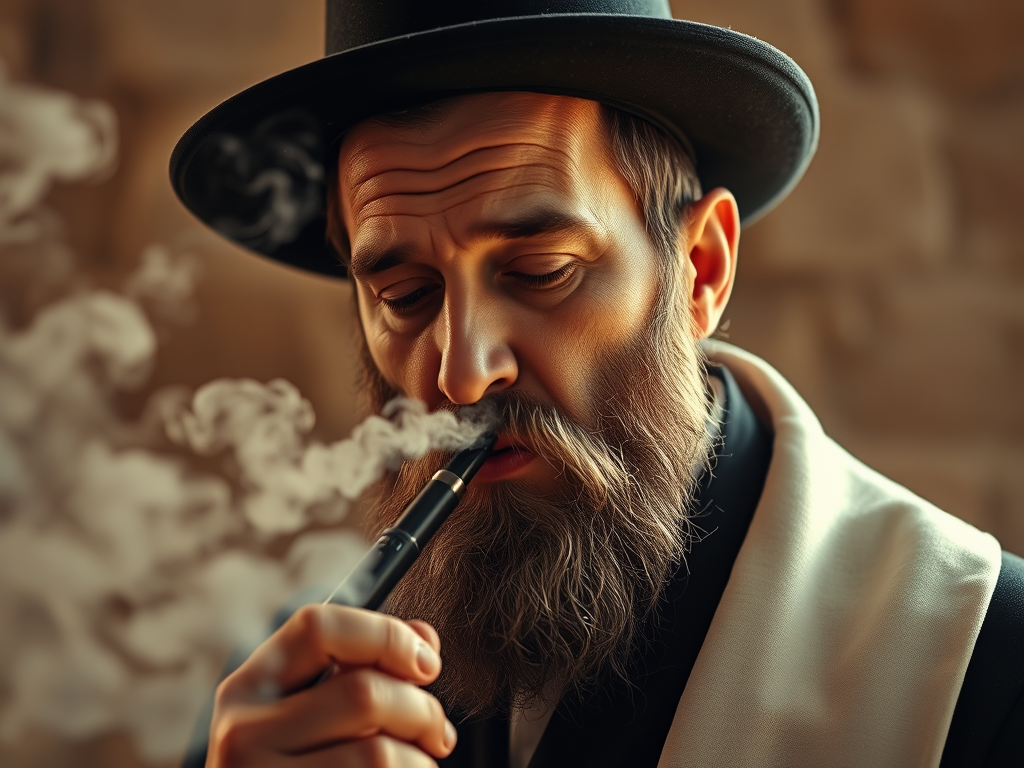
      1. Hypnosis, Halacha… and the Kashrus of Vape Flavors

        Hypnosis, Halacha… and the Kashrus of Vape Flavors

        March, 2023

            One of the incidental advantages of receiving shailos is that provides a unique perch from which new trends can be tracked. Even simply learning shailos v’teshuvos grants one a window to history, where one will discover even the most trivial cultural changes, such as which ingredients were used for cholent/hamin in different eras!

              On this note, and leaving aside one’s personal views, it is no secret that vaping nicotine has become very popular in the last decade. It goes without saying that only when such products are used to quit a more dangers dependency – such as smoking – can it be deemed in a positive light.

              The upsurge of this habit among the frum is much larger than most are aware, as I see from the sheer number of shailos I receive on this one subject. It started slowly several years ago. My vaad would produce one of the ingredients that goes into these products, so I was quickly made aware of their growing popularity, receiving calls from literally all over the world.

              Once they had my number, I would then receive calls about other aspects of these products. Years earlier, I had done research on nicotine gum as well, speaking to Rav Dovid Feinstein and others about various concerns. Slowly, I was becoming the ‘Nicotinner’ rebbe!

            Do vape flavors need a hashgacha? Is this considered eating? These are not even to mention a myriad of issues relating to Pesach.

             Years ago, I wrote a feature in Ami on titled ‘Smoking in Halacha’, and shared the following:

        “The Pri Chodash warns not to light a cigarette from a candle made from cheilev (forbidden fats)… It would seem from this (see shu”t Yechaveh Daas 2:17 at length) that according to him smoking may fall under the rubric of halachic eating/drinking!

        “However, the Shaar HaMelech (hilchos meacholos assuros, ch. 13) discusses cigarettes flavored with non-kosher wine and is more lenient (still recommending being strict). Rav Ovodia Yosef (ibid.) deduces that he argues on the the Pri Chodash, positing that while a bodily pleasure, it does not fall under the banner of eating. For this reason, shu”t Mateh Yehudah (#210) explains why there isn’t a birchas hanehenin (blessings before one has pleasure/food) before this act. A similar line of reasoning is given why there is no beracha achrona on it (Cf. Magen Avraham and Chazon Ish, oh’c 25 relating to birchas harayach; see also Chayay Adam 127:3).”

        Many achronim discuss chametz flavoring and other problematic additives in inhaled products and if forbidden to ‘ingest’ on Pesach (see, e.g. Mishneh Berrura 467:33 with Dirshu ed. sources #38, and siman 442:21).

                 Keeping the above severities in mind, and the reader’s subjective distaste for such habits, I received a fascinating phone call a few weeks before yom tov. This person explained that he had boruch Hashem quit smoking cigarettes well-over ten years ago. He accomplished this, he explained, through vaping. He then shared that he wished to now quit this habit too. Before allowing him to get to his shailah, I interrupted and asked, “But why quit during this stressful time? Maybe wait till after yom tov.”

        His response was telling. “There are two reasons why I wish to stop now. For one, if I can quit during this strenuous period then kal v’chomer I would stay away even after”.

             Smart, I guess.

        “But there is a second reason, and, in fact, this is the main reason I wish to stop dafka now. You see, every Shabbos, by the time we get to shalosh seudas, I am anxious for Shabbos to end so I can return to my habit. Worse, I am now dreading the upcoming three-day yom tov without my vape. How can a yid anticipate Shabbos’ ending? How can a yid despair an impending three days of kedushah?!”

        He then shared his shailah: “Many studies have shown how difficult it is to quit this product. Unlike cigarettes, this can be always be done, and almost anywhere. There is no lasting smell, no need to get up, put on a jacket and go outside, etc.

        “I’ve done my research, and my friends who have successfully quit used a hypnotist. Is there any shailah with using such a method?”

        As stated, a fascinating shailah! In fact, when Rav Moshe Feinstein was first asked about this (in 1964), he first spoke with Rav Yosef Eliyahu Henkin (d.1973) -arguably the posek hador, certainly in America, before Rav Moshe – before issuing his psak.

        The skeptical reader should be aware that we are not talking about party tricks, i.e. the ‘hypnotist’ hired for camps and the like. While he will use some real methods, such acts’ perceived effectiveness is often due to a mixture of social pressure, suggestion, and manipulation. However, medical hypnosis is a scientific method (although, admittedly, a still hotly debated one). Charles Krauthammer, the famed political pundit, was also a doctor. He shared that as a medical resident in Boston he saw hypnosis work on patients who could not have general anesthesia! (See, Hypnosis and Clinical Pain, Psychological Bulletin, Vol 129(4), July 2003, inter alia).

        Before sharing what Rav Moshe writes, we should point out that there are a host of halachic issues that this subject may touch upon. Rav Moshe only focuses on the few central ones. The interested reader is urged to see shu”t Ham’aor (ed. Rav Meir Amsel, d.2007). There one will find a lengthy teshuvah by Rav Yehoshua Baruch Landau (d. 1989; he was a rav in Europe and then Newark, N.J.), where he examines all matters of psychotherapy from a halachic perspective. From the title one sees its breadth (translation): “A Halachic Discussion, In Specificity, Regarding Cholei HaRuach (mental health) and the New Methods of Healing; (as well as) Relating to Geirushin (divorce) and Other Matters” (ibid. 377-385). For the English reader, see R’ Moshe Halevi Spero’s ‘Handbook of Psychotherapy & Jewish Ethics’ (Feldheim, 1986), in the chapter titled ‘Toward a Halachic Perspective on Radical Forms of Psychological Manipulation and Behavioral Control’ (p.90-116).

        For our purposes, we will on quote from Rav Moshe Feinstein (shu”t Igros Moshe, yoreh deah, 3:44).

        “After speaking to people who have some knowledge (of this practice), and Rav Henkin, we do not see any forbidden matter here. Since this is a natural ability, it does not fall under the prohibition of kishuf (magic), and can help those depressed and the like…”

        Rav Moshe does however warn one to only go to a trustworthy hypnotist, preferably a frum person. This is because he feared what type of suggestion would be placed in the patient. Rav Moshe proves from a Yerushalmi (see Tosphos to Bava Kama 4a s.v. kivan) that although one is not responsible for action beyond his control, this is only true if he didn’t put himself initially into such a scenario (e.g. if one goes to sleep surrounded by fragile glass then he may be responsible for the damage caused by his thrashing during his sleep).

        He then writes something very interesting. He states that giving ones conscience over to another is a zilzul to one self. It reminded me of Rav Yaakov Kamanetzky once stating that he once drank on Simchas Torah as a young bachor, and the feeling of losing part of self, one’s faculties is an experience he would never repeat!

        However, Rav Moshe then states that for health, one may lower themselves (see Sanhedrin 26b).  This would be true even if there is no danger to life.

        While I was initially going to spend the next few weeks on this one subject, and alternative treatment in general, I will end it here.

        The reader is likely wondering what happened to the shoel. Well, after yom tov I called him up. His hypnotist is well-respected and came recommended from frum specialists.

        “Did it work?” I asked.

        He paused and the said, “Well…I was concerned that I was too anxious and too cynical. I really tried. When I got back to my car after the procedure, I saw my habitual paraphernalia and still wanted to use it. However, I then remembered how much I just spent on hypnosis and couldn’t bring myself to!”

           Well, whatever works!

      2. Cosmetics & Pesach Guides

        Cosmetics & Pesach Guides

        Using ‘Purell’ To Underst The Halachos Inedible Chometz

        March, 2023

        I say it almost every year—in my experience, Pesach is the least busy time for a rav.

        Unlike Shavuos, when the rav gives all-night shiurim, or Sukkos, when daled minim can wither or break and the weather can elicit sh’eilos, the days of Pesach are often silent.

        This is because by the time Pesach arrives, the house has been cleaned, the food has been purchased, the kitchen has been kashered, and the guidelines have been given out. Of course, problems will always arise, but these are rare.

        In fact, one of my favorite times of year is Erev Pesach, right after I sell the chametz. The next several hours are among the quietest on the rabbinic schedule.

        Conversely, the weeks leading up to Pesach are busier than ever. To be honest, there is a certain excitement about this; not a day goes by when I do not receive a sh’eilah I have never been asked before—and sometimes they are sh’eilos I haven’t even thought of!

        The problem, of course, is time. Glancing at my cellphone right now as I sneak away to write this column, I see that I have received seven calls and 13 texts in the past 25 minutes. My emails are backed up, my voice mailbox is out of space, and my wife, who has her own nine-to-five job, is running the house alone. Indeed, the role of the rebbetzin too often goes unseen, but without her the rabbi would not be able to help his tzibbur (a topic that deserves its own column).

        The main purpose of this column has always been to give a window into the world of rabbanus, so I will share the most popular sh’eilah I’ve received in the past few years. There is also a lesson in this sh’eilah as we go into Yom Tov.

        Most Pesach guides state or imply two significant halachic positions for the Pesach consumer.

        One is that inedible cosmetic powders, creams, soaps, shampoos, gels, and other such items are all acceptable on Pesach regardless of their ingredients (see, for example, the 2023 OU guide, p. 113; shu”t Sh’oel U’meishiv 2:148; cf. Biur Halachah, siman 326, etc., that some are machmir).

        The second position is that if these cosmetics and inedible items are in liquid form—for example, perfume, spray deodorant and hairspray—there may indeed be a problem if they contain chametz (see Mikra’ei Kodesh, 1:54, Igros Moshe, Orach Chaim 3:62, and Rav Shlomo Zalman Auerbach in Halichos Shlomo, 4:11; cf. Shaarim Metzuyanim B’halachah,112:2, which allows even these).

        It seems easy to remember—all inedible cosmetic items are permissible on Pesach, but those that are in liquid form need to be checked. If you would like to use a liquid item, you need to make sure either that it contains no alcohol, or that any alcohol listed in the ingredients is not ethyl, ethanol or denatured, as these three types may be derived from chametz.

        Based on this guideline, many people have approached me to say they are surprised that I listed Purell and other hand sanitizers as problematic on Pesach if they contain any of these kinds of alcohol.

        “Rabbi,” they tell me, “first of all, these are not exactly liquids. And secondly, other Pesach guides say they are all fine.”

        It is always hard for a rav to argue with what has been published!

        The other night after davening, I decided to explain my personal approach publicly.

        I began by reminding my listeners of a vital principle I often share with them: “Psak halachah must always be consistent.” A halachah in hilchos Yom Tov, for example, must align with certain rules in hilchos shechitah. No halachah exists in a vacuum; everything is connected. The Shulchan Aruch and the Rambam are not just organized compilations of laws; each is an integrated, dependable systems, a cohesive living organism of halachah.

        In this framework, a rule regarding inedible liquids has a taam, a logic. Knowing the exact reasoning behind a halachah or chumrah is critical in order to use it in another application.   

        I asked my audience, “Why is it that cosmetic liquids are a problem when other types of cosmetics are not? Well, it was never about liquids per se.”

        Certainly, those rabbanim and publications that disagree with me regarding hand sanitizers are well aware of the following, and may indeed deviate from my conclusion. My goal, however, is to explain this to the layman.

        Rav Moshe (ibid.) and others explained that there was a time when poor people and addicts either drank these “inedible” items, or filtered and flavored them and then drank them, in order to get the high they needed. In fact, my father-in-law saved a story printed in Toronto’s Globe and Mail in the late 1980s about a homeless man who passed out surrounded by deodorant bottles.

        Because some people consider this an edible item, the minhag developed to be strict regarding those that contain chametz.

        “The problem was the fact that they were edible, not that they were liquid,” I explained.

        What does this have to do with my view on hand sanitizers? Many do contain chametz (ethyl, ethanol or denatured alcohol), and unlike a bottle of spray deodorant, there have been countless news articles over the past decade about teenagers drinking them (e.g., NPR, April 25, 2012, and VICE, February 25, 2016).

        In my opinion, if this chumrah applies to liquid cosmetics, it would also apply to hand sanitizers. In fact, during COVID, when there was a shortage of hand sanitizers, many distilleries switched to making them.

        Here is a story that came out just last week in North Carolina:

        “A distillery business in Statesville pivoted to meet consumer needs when a hand-sanitizer shortage stressed the community three years ago, but now they’re back to making whiskey. Stores couldn’t keep hand sanitizer in stock when the pandemic hit. Southern Distilling Company took advantage of the opportunity and began using its alcohol to create hand sanitizer”(Spectrum 1 News).

        While everyone should follow the view of his own rav,we must never stop asking questions when it comes to halachah.Respectfully asking the reason for a practice is derech haTorah!

        I hope my shul continues to ask me, “Why?”

      3. Shabbos Erev Pesach

        Shabbos Erev Pesach

        A Most Complex Shabbos!

        Rabbi Moshe Taub

        Written Nissan 5885

            If the reader is overwhelmed and confounded regarding this upcoming Shabbos-erev-Pesach, he is not alone. Even the Shulchan Aruch remarks on the confusing nature of these halachos.

           To aid the reader, I will discuss the most commonly vexing issues, opening with a more-detailed discussion about the uniqueness of this year’s taanis bechorim.

        1. Taanis Advanced

           Quick Riddle: What are the two occasions where halacha would sanction an official erev Shabbos fast-day? While most would immediately, and correctly, get the first one – ‘asarah b’teves’, the additional erev Shabbos fast may prove more allusive. Some readers, noting my introduction, may be thinking, “It’s a year like this! When the 14th of nissan falls on Shabbos, we advance the fast to erev Shabbos!” However, this would be incorrect, as we actullay advance the Taanis two days, to Thursday. This confusion is only magnified when we consider the fact that when the 14th of nissan falls on a Friday, then halacha indeed does affirm an erev Shabbos taanis bechorim. This second case would be the correct answer to our ‘riddle’.

           Why the distinction? Why not have this year’s taanbis also be on a Friday?

            As mentioned in the Purim issue this year, not only may one fast on a erev Shabbos, but the Shulchan Aruch records how some ‘anshei maaseh’ (holy Jews of distinction) would make a point to fast every Friday so as to enter Shabbos in a state of hunger! However, in our generation we are advised against this practice, as fasting all day would cause exhaustion and deleterious dispositions, all leading to a low desire for delighting in the seudah, etc.

           So, while we wouldn’t, dafka, place a taanis on a Friday, should either of these two fast-days naturally arise on an erev Shabbos then we keep it in place.

            As to this year -when the taanis falls on Shabbos-while we advance it to Thursday, the Shulchan Aruch brings an opinion not to fast bechorim bechorim at all this year! This is because, as opposed to asareh b’teves which is predicated on a pasuk in zecharia, taanis bechorim is but a minhag, for which we, perhaps, say by, “Once its missed, its missed”.

               The Rema rules, however, like the first opinion.

             Nevertheless, certain leniences are intoridces this year. Some poskim allow one to rely on the view of attending a siyum wendesday night, therby allowing him to eat on Thiursday, while others allow one who can’t attend a siyum to redeem the Taanis with tzedakah. Of course, these are for cases where one is otherwise stuck, only for this year, and still one should consilt their rav.

           On the other hand, some poskim, like Rav Shternbuch,urge bechorim to make a second siyum of Friday in addition to Thuirsday’s! Other poskim, like Rav Moshe Feinstein, support this chumrah but without recommending it (4:69).

           While this chumrah may seem hard to comprehend on a taanis that is but a minhag- it actualy has strong support that begs a larger quarrion: By our one other taanis that is a minhagtaanis esther- the Rema rules that should it fall on a Shabbos we similarly advance it to the Thurday before. He then adds that if one had a bris on that Thursday, allowing him to eat, he must make up this fast the next day, erev Shabbos!
             So consider the similarities to our erev Pesach this year, where one makes/attends a siyum which allows him to eat on Thursday…should he not similarly have to make up this fast the next day, erev Shabbos?!

         Rav Karelitz quotes his uncle, the Chazon Ish, who dismisses this concern of needing to make-up taanis bechorim on Friday because this fast is but a minhag. However, can’t one retort that taanis esther is equally a minhag?!

            Nevertheless, as Rav Moshe makes clear, the minhag for a year like this is to fast/attend a siyum for Taanis bechorim only on Thursday, and without making it up, and, for whatever reason, we differentiate from a Thursday taanis esther.

        1. Bedika Beracha Memory

        Thursday night –the 13th of Nissan –the bedika will be performed with a beracha and a kol chamira at the end. There are many obvious reasons why this cannot be done on Friday night erev pesach –not the least of which being the impossibility to search with a candle.

           What is unique –and what risks creating a false memory, a concern the Shulchan Aruch will mention below –is the beracha we say on this Thursday bedikah. In a regular year one never makes a beracha when done before the 14th (say, for one going away Pesach). This year’s night of the 13th is an exception to that rule.

        1. Chometz, Where Art Thou?

           One may keep Chometz needed for the next day’s burning/eating and for Shabbos in a secure location.

        While many houses become pesachadik at this point (save for the bedika bread needed for biur the next day), there is no halachic obligation to refrain from eating Chometz until early Shabbos morning (times depend on location).

          The one main action to perform on Friday is biur chametz.

        However, we do not say the kol chamira then, rather we say it before the fifth hour on Shabbos.

        While an actual burning obvoulsy can’t be performed on Shabbos erev Pesach, why not perform it later in the day on Friday? One can technically eat chametz all day Friday, so one should be able to do the biur up until they accept Shabbos. Why limit its timing?

           The Shulchan Aruch explains that this, too, is so as to avoid creating false memories and confusion in future years.

        IV. Eggs Matzah vs. Rolls. Vs. Soaked

           We are confronted with a quagmire on Shabbos erev Pesach–on the one hand we must have lechem mishneh by each of our Shabbos meals, but on the other hand we can’t eat matzah erev Pesach (this is a halachah; not to be confused with the minhag of refraining from rosh chodesh; if this halacha already begins Friday night is beyond the scope of this short treatment).

            The poskim offer three options.

        Chametz challah, egg matzah, or soaked matzah.

           Should one’s minhag be to use chometz, I would recommend bagels or pitas as they cause less crumbs. One would make sure to serve these on towels/plastic table cover etc., and each person would eat a kezayis over those towels immediately upon washing. These towels would be discarded down the toilet, or, if there are far too many chometz crumbs to flush, one may pour designated bleach over it in the trash, or, wrap up the tablecloth and place it somewhere hidden and secure and have in mind during the kol chamira, to be dispose of properly (burning, etc.) on chol hamoed.

        Some make the hamotzi/eat the chametz in a different room, and after following the steps above, eat the rest of their kosher l’pesach meals in their dining room. If this is followed, it is best if the dining room where the rest of the meal will be eaten can be seen from this other room. It is, however, not recommended that one make the hamotzi on a porch, balcony or the backyard and then return to eat the rest of the meal.

        Rav Moshe Feinstein and many others (ashkanazim only) recommend using kosher l’pesach egg matza.

          Care should be taken that it not mix, or crubms fall, with Pesach utensils, food, etc. (although allowed for the sick and infirm on Pesach).

           According to Rav Moshe Feinstein and others, Ashkanazim must cease eating Egg Matzah before same time one must refrain from chametz. Some (e.g. Noda B’Yehudah) allow Egg Matzah to be eaten until chatzos.

           Many sefardim encourage the use of regular kosher l‘Pesach matzah used for these Shabbos meals. In order to get around the prohibition of matzah on erev Pesach, one keeps their matzos soaking (e.g. in soup, but not to the point of breaking apart).

        IV. Biur Chometz

        Before the fifth hour chamira should be said., with some reecomending to think-but-not-recite the word  ‘hefker’.

        V. Shalosh Seudos

            In order to fulfill both the morning meal and seudas Shlishis many break their early morning meal into two, provided they wait several minutes in-between.

           Because seudas shlishis is supposed to be eaten no earlier than half hour after midday (according to many), it is recommended that some fruits or other items be eaten after this time, as well.

           Others avoid splitting their morning meal into two, rather partaking of a non-washing seudas shlishis later in the day, while making sure not to spoil their appetite for the seder.

           May Hashem see His nation’s desire to fulflfil hilchos Shabbos along with hilchos Pesach and bring us a sheffa tova!