Category: History

  • Taanis Esther & Its Mysterious Origins

    The fascinating history behind this most mysterious fast, which is unlike all other Taanaisim of the Jewish year.

    February 2015

    This post explores the Taanis Esther’s meaning, reason, and history.

    Looking back at past Purim columns, I noticed a trend, in that we discuss in this column odd this time of year odd Purim minhagim. Be it the ‘Purim Rav’ (last year) or Purim gemara Parodies (several years ago). The latter is a subject that, if we wanted to, we can continue, as mesechtas ‘TRUMP’ was published last year! (Really)

    However, it struck me that the most obvious minhag of them all was ignored all this time. I am referring to the accepted practice, and now standard halacha of fasting on the 13th of Adar, the date that we call taanis esther.

    Some people may be surprised by the fact that this date of fasting is not mentioned anywhere in chazal, and that it is certainly not mentioned along with the other rabbinical fasts in the pasuk in Zecharia (8:19).

    In fact, the history of taanis esther leads to more questions than answers. And by the end of this week’s column I hope to reveal some amazing secrets about this mysterious day.

    The Rambam (5:5 hilchos taanis) is the first to codify this practice of fasting on this date:

    And in our times we follow the custom of fasting…on the thirteenth of Adar, in commemoration of the fasts that we took upon ourselves in the time of Haman, as mentioned (Esther, 9:31): “the matter of the fasts and the outcries.”

    And, as it relates to this year, he continues:

    “If the thirteenth of Adar falls on shabbos, the fast is held on Thursday, which is the eleventh of Adar…”

    The reason why we don’t fast, generally, on erev Shabbos is simply because davening on a fast-day takes longer due to selichos etc., and people need time to prepare for shabbos. Nevertheless, should someone forget this year to fast on Thursday, they would indeed need to fast on erev Shabbos (Magen Avraham with Mishneh Berrura).

    But back to our original question, what is the reason behind this fast?

    While some (see Magid Mishneh ad loc.) wish to find a source directly from chazal, the Rambam above instead brought reference directly from the megilla.

    Here is the pasuk (9:31) in full: “[Mordechai and Esther instructed the Jewish people] to observe these days of Purim on their proper dates, in the manner established for them by Mordechai the Jew and Queen Esther, just as they had accepted upon themselves and upon their descendants the observance of the fasts and their lamentations(Megillas Esther, 9:31)

    This is indeed an ambiguous pasuk. What fast do these words in the megilla allude to?

    While Rambam seems to suggest that the ‘fasts’ referenced refers to Esther’s declared days of public fasting found earlier in the megilla, and to our acceptance of the 13th of Adar each year as their memorial, most disagree with this.

    After all, they point out, were not those original fasts declared by Esther held in the month of nissan? And, were they not three days of fasts, as opposed to the one day minhag we observe today? (See however Kol Bo siman 62; Magen Avos from Meiri, siman 23 who seem to agree with Rambam that this verse is indeed a reference to our Taanis Esther).

    So, if this pasuk in the megilla was not referring to our present-day taanis esther, what what is referencing?

    Maharal (Ohr Chodosh 9:31) as well as Siddur Rashi (siman 345) therefore suggest that all that the pasuk was saying was that due to our salvations from our crying and fasting regarding the decree do we have this day of Purim to celebrate our salvation. It was not referencing a specific fast, and certainly not a fast we are to still observe!

    In a different manner, Ibn Ezra explains the pasuk to mean that just like on sad days we rightfully commemorate with fasting, on days such as Purim we celebrate with feast and drink.

    The Vilna Gaon offers a similar interpretation, in that just as the Jews then accepted Esther and Mordechai’s three day fast, so too did they accept the new day for the future of Purim in all generations.

    In any event, according to all these views that this pasuk in the megilla is not referring to our taanis esther, from where indeed does this minhag derive?

    Famously, the Mishneh Berrura brings an idea, first found in the Rosh (1:1), Rashba (2a), Rabeinu Tam and even alluded to in the Shiltos D’rav Achai (Vayakhel 67).

    They explain that we know that Moshe Rabbeinu fasted when he had to fight against Amalek. We see from here that bnei yisroel fasts before seeking to defeat an enemy, we can therefore assume that Esther, Mordechai and klal yisroel must have fasted as well on this date (see Yaaros Devash 9 for how we would have been able to fast during a war, which is forbidden).

    So according to the Chofetz Chaim and others the purpose of taanis esther is simply to commemoratewhat likelyhappened on the 13th of Adar.

    However, this explanation behind taanis esther has always vexed me greatly. For if we know a fast happened when Moshe fought Amalek, why not make a fast on that date? Why instead create one on a later historical date that only through conjecture do we assume they also fasted (tannis esther)? What is so special about this date?

    However, this year I discovered two amazing insights that may answer my question, and bring new light to what taanis esther is all about.

    The first comes from shu’t Tashbeitz (2:271)by Rav Duran (d.1444). He says something unbelievable.

    All the fasts that are rabbinicaly required throughout the year (save for Yom Kippur) that are mentioned in the aforementioned pasuk in Zacharia were first first accepted on the 13th when we vanguished our enemies in the Purim story!

    Meaning, the pasuk from the Megillah that references ‘accepting fasts’, was referring to tzom gedalia, asareh b’tevas, shiv’asar b’tamuz and tisha b’av!

    The depth of this view is explained by the Chasam Sofer (Derashos Chasam Sofer p. 96) with a mashal.

    Imagine a king exiles his son to a poor section of the kingdom. Now poor, he lives among paupers and every day the prince must not scavenge for food, steal for clothing, and hide in alleys for warmth.

    He and his new friends constantly wonder when the king will take him out of his exile.

    One day, a large shipment arrives. The guard leading this delivery gets off a horse and stands in front of the shipment reads a proclamation before the prince: “The king brought us here to build for the prince a fine home so that he no longer need live in squalor”.

    The prince hears this and begins to wail and sob.

    “Why are you sad?” ask his pauper friends, “Why, now you will finally live in comfort!”

    “You fools!” replies the prince. “Until now I thought that any day my father will bring me home to the palace. But now that he is building me a permanent home in my exile, there is no hope for his desiring my return ever!”

    This, explains the Chasam Sofer, is the meaning of the Tashbeitz’s words. When Hashem saved us from Haman, in Persia, we feared that Hashem was building us a home in our exile, making us comfortable here in galus, never to bring us back to eretz yisroel. So we decided then and there to begin fasting on the dates that recall when we were first thrown out of Yerushalim, so Hashem would hear our cry and still bring us to our real home.

    What a majestic idea! This explains why we have taanis esther –as it is the day we accepted all other fasts!

    It also explains why we did not choose the day of Moshe’s fast, for only this historical fast in the days of Esther represents all pain of bnei yisroel throughout the ages and out hope for a return.

    Perhaps this better explains the second item I discovered this year: The words of Rav Shmuel Uzida (the author of Midrash Shmuel on Avos, student of the Ari’zal). He teaches that of all months, Adar is the most set to lift up klal yisroel and have its teffilos answered (this is why we delay trials to this month). And, out of the entire month of Adar there is no day like the 13th, taanis esther when these gates are opened!

    Perhaps this is due to the fact that taanis esther is the day when we remind ourselves each year that our comforts in galus should never blind us to the ultimate comfort and home that we await!

    Have a Happy Purim!

  • “Chapter and Verse”:      Where Did The ‘Chapters’ of Tanach Come From?

    “Chapter and Verse”: Where Did The ‘Chapters’ of Tanach Come From?

    LENGTHY/DETAILED POST

    Ami Shavuos Feature, 2014

    I

    Introduction

    Many of us may recall the first time as children observing a weekly parsha that begins in the middle of a perek and wondering why this was so. Our respective rebbeim would have likely informed us that the perakim are ‘nisht fun unzerer’ –not from Jewish sources.

    We should note that the division of the parshios of the week as well is of non-Sinai origin, as many would only complete their reading of the Torah every three years or so. While our currency yearly cycle was observed by some in the days of chazal, it was only universally adopted –along with a yearly Simchas Torah –about 800 years ago. However, as opposed to the perakim, the division of weekly parshios were chosen not just by Jews but our chachamim. Cf. Ohr Zarua hilchos Shabbos siman 45, Meiri, Kiryas Sefer maamer 5 perek 1, and Tanchuma Ki Sisa 3 where views are brought suggesting that even our present-day divisions were taught from Moshe or from Ezra. For the complete history of our reading of the Torah each Shabbos and the yearly completion see “Toldos Simchas Torah’.

    Many, myself included, left it there. Sure, we continue to use the division of chapters and verse as a reference point, but that is where it ends.

    However, and as we shall see, there are blatant blunders in basic pshat – and in emunah pshuta – that one can make should one view these chapter divisions as anything accurate or m’sinai.

    While nobody disputes the strange origin of the chapter divisions found in Tanach, nevertheless some continue to see these perakim as something spiritual. They explain that once something becomes accepted and used by bnei Torah it can take on a new kedusha. (See Likutei Sichos, chelek 16 p. 229, and Oberlander quoted below)

    The Chabad chumash for instance (Gutnick, p. 1339) explains that parshas Ha’azinu begins in, and spans, the 32nd chapter of Devarim. This represents, they explain in quoting the last rebbe of Chabad, the ‘lev/‘heart’ (32=lev). Furthermore, the Torah itself , they continue, begins and ends with ‘lev/32’: the beis of ‘Berieshis ‘and the lamed of the last word of the Torah, ‘Yisroel’.

    Even in standard editions of chumash we find at the end of sefer Bereishis a listing of the number of verses in that sefer and their significance…as well as the number of perakim (50) and their significance! (On this last source, see Ayin HaSofer, ad loc)

    Stranger still is when it comes to sefer Tehillim. Our editions have 150 chapters, the gemara (see Yerushalmi, Shabbos, Kol Kisvei, Tosphos to Pesachim 117a, and Meseches Sofereim,) had 147 – corresponding to the years of Yaakov – and the Meiri (peirush on Tehillim) even had 151!

    In this monograph, and in honor of Shavous, we will delve into this complex and intriguing history and how it effects halacha and hashkafa. We will explain the divisions that came from Sinai and how over time they have become seemingly eclipsed in common usage by the ‘Chapter and Verse’ system found in all chumashim. While we simply do not have room to get deep into everything, the goal here is to give a basic primer.

    II

    Twenty-Four Sifrei Tanach

    Our mesorah is infused with the idea that there are but twenty-four sefarim comprising all Tanach, Torah, Neviim, Kesuvim.

    • The gemara (Bava Basra 14-15) lists the books of neviim and kesuvim, as well who composed each. All one has to do then is to add the chamisha chumshei Torah and we have a total of 24 sifrei Tanach.
    • The gemara (Taanis 8a) explicitly gives us this number: “Rav Adda bar Ahava reviewed his studies twenty-four times corresponding to Torah neviim and kesuvim…”
    • The numbers 12 and 24 (double 12) repeat over and over again, from the 12 months, to the 12 shevatim, the 12 hours in day or night, to 24 hours in a full day cycle, and the 24,000 who died by baal peour, and that same number in the days of Rebbe Akiva. Based on the this, the Midrash (Bamidbar Rabba 14:18), in a long discussion of the numbers relating to the nissi’ims’s gifts to the mishkan quotes that pasuk (Bamidbar 7:88) “and all the cattle for shelamim equaled 24 oxen”… and adds, “corresponding to the 24 books [of Tanach]”.
    • In Koheles Rabba, the midrash, in commenting on the pasuk (Koheles 12:12) “More than these, my child, beware…”, teaches us that Shlomo was referring to learning as sacred anything beyond “the 24 books [of Tanach]” (cf. Targum ad loc) (see also Tanchuma Vayelech 3, Shmos Rabba 41:5,. Cf. Targum to Koheles 12:12)

    The above information is critical for our discussion because it is not just the perakim that is ‘nisht fun unzerer’, but some of the divisions we find in modern sifrei Tanach as well.

    I was in 7th grade when I first visited eretz yisroel. I remember very little of the trip –or of the many tours our family took. I do, however, remember a joke one of the tour-guides made. As we were driving up a hill he said, “If you look out your window to your right will see the kever of Shmuel aleph, and to your left that of Shmuel beis.”

    As a 7th grader I though this was the funniest thing I have ever heard. However, as I got older I realized how deep this silly joke is. This is due to the fact that not only is there but one Shmuel hanavi in both books (of course!), but there is really no such thing as two books of Shmuel!

    The pasuk (II Divrei Hayamim 29:29) and the gemara (Bava Basra 14b) tell us the Shmuel wrote the sefer (singular) that bears his name.

    In fact, the pasuk referenced above from Divrei Hayaim was from ‘IIDivrei Hayamim, yet Divrei HaYamim too was initially only one sefer!

    The same goes for Melachim –now, oddly, in two parts.
    Indeed, based on our current counting of books we have far more than twenty-four sifrei Tanach!

    Strangest of all is the ‘books’ of Ezra and Nechemia. Not only is sefer Nechemia not mentioned in the listing found in Bava Basra, but in another gemara (Sukka 37a) a pasuk in Nechemia is mentioned as being from sefer Ezra (Nechamia 8:15)!!

    This is because there is no Sefer Nechemia, rather it is to be the second half of Sefer Ezra! (See Yad Yosef to Ein Yaakov, Sanhedrin 93b)

    In fact, a member of my shul (R’ Fruchter) kindly checked on his Bar Ilan search tool how many times Rashi references a pasuk in Nechemia by referencing it as if it was from Ezra. He left a list on my desk of more than ten occurrences, explaining that there were still many, many more he left off!

    (I saw a bold claim in the Artscroll Ezra [p. 59] where they suggest –to answer an unrelated question – that Rashi already saw Ezra and Nechemia as two separate books. Their proof is from a Rashi to Sanhedrin 93b. It seems to me, however, that this assertion may be based on a faulty reading of this Rashi, not to mention the countless other times Rashi implies the opposite of their conclusion.).

    So how did it come to be that today we divide the one long sefer Ezra into two books, Ezra and Nechemia?

    Further complicating matters is another gemara (Sanhadrin 93b). The gemara outright asks why Nechemia, who said much of the book of ‘Ezra’ (the original version) was not zoche to have the book named after him. The gemara explains that this is a punishment for the fact that Nechemia took too much credit for all that he accomplished.

    What comes out of this is not just a problem of splitting Ezra into two books (a problem we have with Shmuel, Melachaim, and Divrei HaYamim as well) but of splitting Ezra and then naming the second book ‘Nechemia’ when the gemara explicitly tells us not to name a book after him!!

    To this last question, Rav Reuvien Margilios (Margolios Hayam) quotes the Chida as explaining that chazal did not mean that Nechemia’s punishment was to be indefinite, as certainly, at a certain point in history, he would become absolved. This is why Hashem, later, allowed the division of ‘Ezra’ into two books and for the latter to indeed be called ‘Nechemia’.

    Interestingly, although Christians have also divided trei asar into separate books (making a total of 39 book to Tanach!), this has not entered most editions of Tanach.

    I say ‘interestingly’ because this fact carries a hint of irony, for this is one instance where new divisions would make the most sense. The gemara informs us that the twelve sefarim that make up trei asar are/were indeed separate books, and rather because of the small size of each of these sefarim (Hoshea, Yoel, Amos, Ovadia, Yona, etc.) there was a fear that if we would leave them as individual sefarim that they may become lost (Bava Basra 13b, 14b, with Marahsha who posits that this is the case with all twelve books and not just Hoshea).

    III

    How Did It Happen? Part 1

    Parsha vs. Parsha

    Both the additions of chapters as well as the separation of certain books entered into klal yisroel at about the same time.

    To understand how this happened, and when, we must start at the beginning.

    A sefer Torah is divided by ‘parshios’ (not to be confused with what we colloquially call the weekly parsha). These are breaks inside the Torah scroll that represent a new subject, event, or simply the pause that Moshe was given when he was being taught by Hashem (see Rashi to Vayikra 1:1 with Toras Kohanim).

    Even Nach (Neviim and Kesuvim) has such breaks (although, sometimes, what/where those are up for vociferous debate).

    There are two types of these breaks:

    • Pesuchos (represented in most standard printed chumashim as a letter pei)
    • Setumos (represented in most standard printed chumashim by the letter samech).

    Between these parshios, the Torah will leave a space. This space will consist of an area the size of nine letters.

    So that a ‘stumah’ refers to when a break between the end of one parsha and the start of a new one happens on the same line, but with a nine- letter space in between them, while a pesucha reffers to the end of a parsha on one line with the new parsha starting on the next (also having a break of nine letters).

    Any sefer Torah that is missing even one of these breaks is deemed pasul.

    In any event, historically, in order to reference a pasuk, a person would have to be proficient in these pesuchos and setumos.

    All of this began to change at two distinct points in Jewish history. In this section we will discuss the first step.

    Debate and Concordance

    (For a thorough review of the details of this forthcoming discussion see yarchon Sinai, 42, article by Rav Shmuel Weingarten; Sicha L’Sefer Hoshea, Rav Yehudah Eisenberg; Minhag Avoseinu B’Yadeinu, Rav Gedelia Oberlander, and Rav Finfer’s sefer mentioned below, et al.)

    It all began in the early 13th century. Although the church started to divide Tanach in this fashion for about one hundred years prior –likely begun by either Bishop S. Langton of England or Hugh of Saint-Cher of the Dominican Order –it would still take some time for it to catch on, as this was well before the printing press.

    By the late 1200’s the first translated concordance was composed, and utilized by many Jews.

    A concordance is a listing of all the words –and where to find them –in all of Tanach.

    (I remember the first time I saw an English concordance thinking that they borrowed the word ‘concordatzia’ from the Yiddish! But in fact it is the other way around; for whatever reason the Christians were the first to put such a book together)

    Already by 1330 we find our own chachamim utilizing this system, with Rav Shlomo ben Yishmoel wrote in his side-notes:

    These are the chapters of the nations –which they call ‘kapittalash’ -, each of the 24 books in their language and copied from them so that one may be able to answer their questions quickly, those [questions] which they ask [us] each and every day on matters that relate to our faith and our holy Torah…”

    In addition these reasons, many of our greatest leaders had to publicly debate priests and other Christian leaders. The only viable way to prepare for these events was to first become familiar with their new system of division so that they don’t look the part of the ‘fool’ when sources are thrown out.

    Whatever the reason for these concordances finding their way into our midst, once there, it was hard not to take advantage of their easy chapter divisions.

    Then, in 1448, the first Hebrew concordance was written by Rav Yitzchak Nasson Kalonymos.

    In fact, one may be surprised to learn that that the word ‘kappitel’ is not Yiddish nor ‘Yeshivish’, rather it is derived from the Latin word for chapters, ‘kapittalash’. Rav Shimon Krasner quotes Rav Yaakov Kamenetzky as explaining that in order to show that these chapters were not from Sinai or chazal we purposefully choose to use the non-Jewish term as a constant reminder of this fact! (Nachalas Shimon, Shmuel, chelek 1, as quoted in Oberlander p. 374).

    The dates above may explain why the Meiri, who died sometime after 1300, had a different division of Tehillim than did chazal, as mentioned in Part II above.

    (See, however, shu’t Teshuva M’Ahava siman 112 and the response of the Noda B’Yehudah where it would seem that Tosphos also had more than 147 chapters of Tehillim, as did, perhaps, chazal; see Obalander, p. 383ff for a thorough discussion of the division of Tehillim)

    Note that all of the above took place before mass-publication was even possible, so that even if many Jewish scholars utilized this new system it had yet to totally enter our nomenclature.

    That would not happen until the early 1500’s.

    Yet, before we explain how that came to be, we must draw our attention to another issue: nefarious motives or blatant errors in their new divisions.

    IV

    Manipulating The Divine

    Even before the rise of Christianity, many gentiles wished to separate themselves from the Jewish system, such as beginning their week on Mondays and ending on Sundays. For Christians too, it was anathema to follow the Jewish Sabbath, and in order to continue their Monday-Sunday week they toyed with the chapter divisions.

    How?

    Well, open up a Torah to parshas Bereishis. The Torah begins with a description of each day of creation, culminating with Shabbos.

    The next section begins (see first mishna to the 4th perek of Taanis), “Eilah toldos shomayim v’aretz” along with the story of gan eden and Adam.

    Yet, like magic, the Christians placed a new chapter (chapter 2) not before this verse, rather before Shabbos, after the sixth day, making it as if the concepts of Shabbos and Creation are less symbiotic!

    Chapters two and three of sefer Bereishis are not much better.

    In the Torah these are to be one ‘parsha’ (a setuma). Yet the Christians did something peculiar. Smack in the middle, after we are told that Adam and Chava were unclothed and not ashamed, they start a new chapter (chapter 3)! Chapter 3 then begins with the nachash (snake). Isn’t this part of the verses, story, and ‘chapter’ before?!

    Why would they do such a thing?

    The answer reflects the very nature of Catholicism and their principles, ‘Original Sin’ (hameivin yavin).

    There are other, even more painful, examples. The worst of which come from sefer Yeshayahu and Hoshea that relate directly to their beliefs regarding bnei yisroel and inyanei d’moshicha.

    For example, after Hoshea uses very harsh language to reprimand the nation (see Pesachim 87 and Ibn Ezra from Hoshea chapter 2 onward), the phophet concludes by issuing an entreaty for us to return:

    Israel, return to Hashem your Gd, for you have stumbled in your iniquity…

    This is a clear break from the prior tone. This embracing and sweet tenor continues until the end of the sefer.

    Yet Christians make this opening verse the second verse of chapter 14! They begin this chapter with Hoshea’s last, harsher tone, “Samaria will be laid to waste...”, so as to support their wild claim that Israel as we know it was already declared lost, R’l.

    In addition, some of their divisions were based on utter foolishness (see, eg., the opening to parshios Bechukosei, Mattos, etc.).

    V.How Did It Happen? Part 2

    Guttenburg & Bomberg

    Up to this point (1300-1500), while many Jewish scholars took advantage of the Christian concordance, it had yet to hit the mainstream.

    Then came the printing press.

    Between the years of 1511-1517 Gershom Soncino published a version of Tanach that followed the Torah divisions only.

    In addition, he –being a Jew –kept Shmuel, Melachim, Divrei HaYamim, Ezra, all as one book each.

    But then came along a gentile publisher, Daniel Bomberg, perhaps the most important and influential person in the history of Jewish publishing (ironically).

    Even the gemara that we use today is based on his versions.

    It was he who created the gold standard of chumash printing:

    The Mikroas Gedolos Chumash of 1517, and, more prominently, of 1525.

    The 1517 edition was riddled with errors, and had on as an editor a priest who was a born Jew. While the 1525 was much improved,it was still far from perfect.

    Regardless, imagine what a breakthrough this was!

    All of a sudden Rashi, Ibn Ezra, Ramban, Targum, etc. were available to all!

    Up until the printing press few owned such holy writings, and if they did they kept them chained to a wall so as not to be stolen, as these were all hand written.

    Although well meaning, Daniel Bomberg was also a Christian, and used the Christian chapters as well as their divisions of certain books within Nach in his publication of Mikoras Gedolos.

    In fact, Rav Yaakov ben Chaim, whose manuscripts were used for tis publication, asks forgiveness in his introduction for utilizing the chapter divisions. Yet he goes on to explain that these divisions will make it easier to reference pesukim, etc. (cf. Rav Yitzchak Hutner’s letter regarding Otzar Meforshei HaTalmud).

    The proverbial cat was now out of the bag. Due to the popularity of this work these chapters soon entered our lexicon and learning.

    The popularity of the Mikroas Gedolos was fueled by other matters as well. Until that point in time there was much debate as to the proper nikud and spelling of certain words throughout Tanach. Bomberg worked with a team of skilled rabbanim and medakdim to arrive at a more perfect text of Tanach.

    While this search for the most accurate text would go on in earnest until the 1620s – with the publications of Ohr Torah and Minchas Shei – for about one hundred years, Bomberg’s was the Tanach, the one with the most precise and accurate text.

    Immediately after Bomberg’s Mikroas Gedolos came out new sefarim on dikduk, as well new Jewish concordances and new commentaries, would be published –all following these new divisions.

    So ingrained were these chapters that by the late 1700′, when the Vilna Gaon desired to write Nach on klaf, many were at a loss as to where the proper setumos and pesuchos should be placed. Some would even claim that the idea of steumos and pesuchos in (certain parts of) Tanach were an invention of the Vilna Gaon! On March 11 1783, the Vilna Gaon’s Nach was completed, with pesuchos and setumos where he felt the mesorah demanded. Alas, the full story of the Gaon’s Nach will have to wait for another post, iy”H.

    In 1903 Rav Pesach Finfer the rav of Vilna published a sefer titled Mesoras HaTorah V’Haneviim where he bemoans the fact that we have come to accept the Christian chapter divisions. The Aderes, in his haskama, is equally perturbed.

    The Pardes Yosef (Shimini) states, rather matter of factly, that the chapters are not from Jews and that simply by chance do we utilize them.

    Bear in mind that, aside for the obvious concerns, by adopting the Christian standard we have ceased to be aware/knowledgable of our own divisions (setumos and pesuchos). This leads to horrible mistakes, for example when someone suggests an “ein mukdum u’meuchar b’Torah” incorrectly (as this principal can never be true within a parsha itself)

    To their great credit, some editions of the Koren chumash goes so far as to ignore the Christian divisions all together.

    We have certainly reached a point in our history, and our level of learning, that the aid that these chapters provide is priceless. In addition, as Jews in a world of communication, knowing how others divide our holy Torah has much value.

    However we mustn’t forget that these divisions do not represent Torah M’Siani.

    This is not to dispute some who give these chapters a spiritual power –as explained in Part I –rather, even if that is true, we must be aware of its limits, and disingenuous errors.

    While much wisdom went into these chapters, they also demonstrate, in certain places, bad reading and, worse, nefarious motives. In addition, the Twenty-Four books of Tanach must not be forgotten.

    The fact that some readers learned here for the first time that sefer Nechemia does not even trully exist on its own in our mesorah demonstrates Rav Finfer’s fears.

    However, the silence from many, if not most, of our leaders throughout the generations supports our continued usage of these divisions…so long as we know the truth.

    Puk CHazi Mah D’Ama Devar

  • Fasting For A Fallen Torah:                           Halacha, Hashkafa, & History

    Fasting For A Fallen Torah: Halacha, Hashkafa, & History

    Originally published in Ami Magazine, November 2016

    What is the source for – and severity of – Fasting for a Sefer Torah that, l”a, fell?

    When and to whom would it apply?

    I. The Event

    It was as if those fifteen seconds took place in slow motion.

    It was the Second Day of Sukkos 5779.

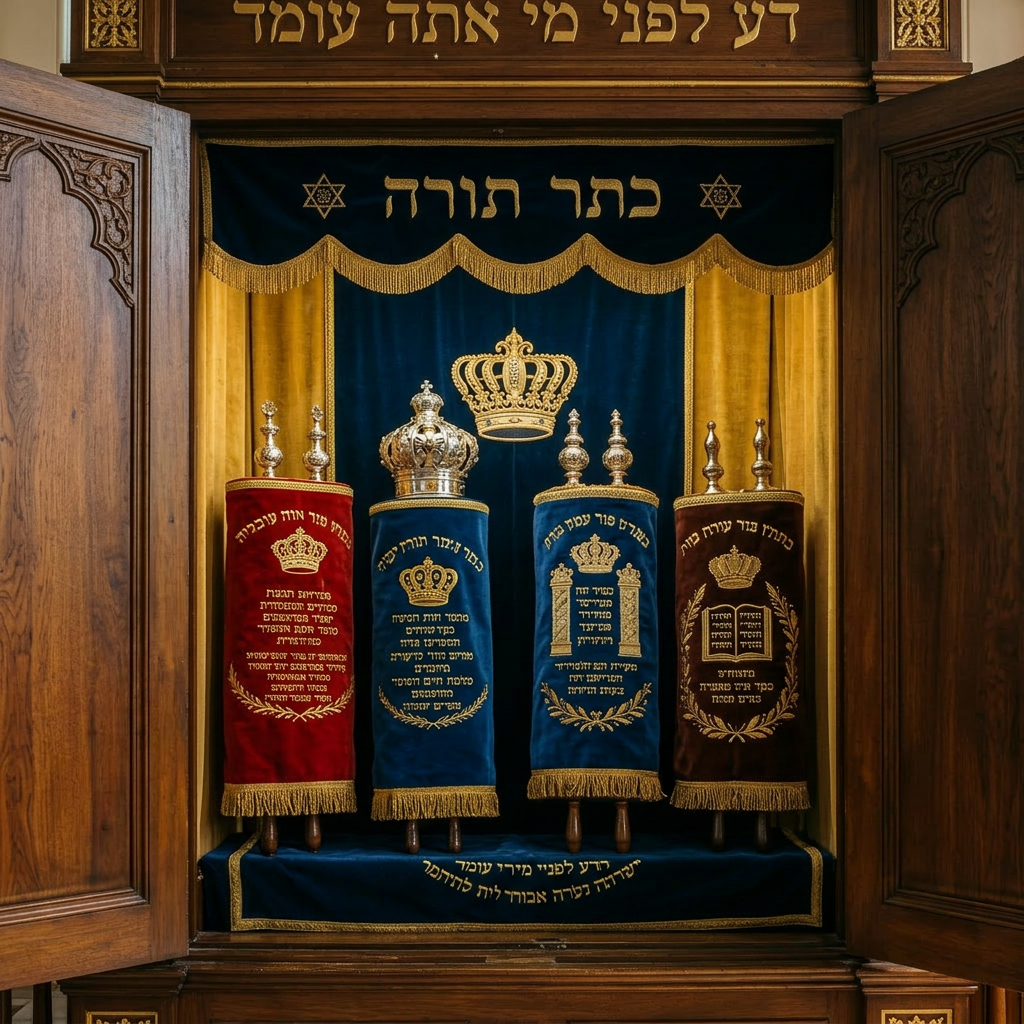
    As the gollel began to roll and tighten the atzei chaim, the eitz to the right side of the sefer suddenly become unmoored from its screw.

    Within a millisecond, the baal hagbah was heard letting out a shriek as half the sefer rolled away…unto the floor of the beis haknesses.

    The gasp heard from all present will never leave my mind. Time stood still.
    Everyone was in shock.

    There is something instinctive, almost congenital, in the reaction to such an event. Everyone knows, feels, that something must be done to atone for such an event.

    I too was shocked.

    It was the Second Day of Sukkos – zman simchaseinu – and yet all were depressed. Chazal teach that when Hashem shows us a rain on Sukkos it is a bad sign –what, then, of a sefer Torah that falls!?

    Not knowing what to do, I had some siyatta d’shmaya. Right after aleinu I stood before the podium and said the following:

    “I will give a shiur in the very near future as to what we need to do, but for now I have a suggestion. In just a few days we will be celebrating the completion of chamisha chumsha Torah on Simchas Torah. We now have another thirteen months until the next siyum. Let us each accepts upon ourselves one parsha to learn. On that same chosen parsha one will also write a Dvar Torah. This way, not only will be making a beautiful siyum next year on Simchas Torah but we will publish a sefer where our original Torah ideas for each parsha will be collected and sent out”

    Within five minutes every parsha was taken. During chol hamoed even more wished to be a part of this project.

    A tragedy was turned into an opportunity, which the shul then turned into a wonderful kiddush hashem.

    So inspired, I quoted then the pasuk in Mishlei which teaches (24:16) “For a righteous man can fall seven times and [still] rise…” Hopefully Hashem too will see our response to what happened which shall eclipse the horrible event itself.

    II. Fasting?

    Many have likely heard or read that the necessary reaction to witnessing such an event (and, according to some, even if not witnessed, but simply if one belongs to the community) is to fast.

    Some even suggest fasting for forty days!

    It may be surprising, however, to learn that there is no direct source in the Gemara, or Midrash, nor any mention in the Rambam or Shulchan Aruch to any type of fasting for a dropped Sefer Torah (the same applies to dropped Teffilin not in their encasements).

    Therefore, any such response falls into the category of minhag.

    This is then a wonderful opportunity to not only discuss the source for this particular widespread minhag, but to examine the concept of minhagim in general.

    III. What is a Minhag?

    There is an all too common misconception when it comes to what minhagim are. Many may explain that opposed to a Torah law or Rabbinical law, a minhag is defined as being untethered to those first two categories of halacha. Some may even define the term minhag as referring to any custom that a family, community or individual has that relates to Jewish life but that is source-less in our legal cannon.

    Nothing could be further from the truth.

    All minhagim must have either a self-evident Torah rationale, an real-although minority- halachic view being followed, or be based on a source from chazal (see, e.g. Shu’t Noda B’Yehudah, 2, evh’a, #79 for how we relate this to the ethical will of Rav Yehudah HaChasid; see also Tzava Rav Yehudah Hachasis, Otzar HaPoskim edition).

    This should not be interpreted to mean that we must always first discover a minhag’s source. Rather, to inform us that any well-established minhag is assumed to have deep meaning and is rooted in either tanachmesora, or divrei chazal, or, our reverence for minhag history allows to be confident that such a source does exist.

    For this reason, the Chasam Sofer writes (shu’t oh’c #51) that anyone who questions minhagei yisroel needs to have their yichus (pedigree) looked into!

    There is even a question in halacha regarding accepting a potential ger who, while willing to accept all of the Torah and toras chazal, yet who at the same time is seemingly unwilling to accept minhagim (see ‘Sefer Minhagim’, Rav Moshe Walter, p. 14).

    However, as opposed to a minhag developed to protect one from an issur (e.g. chumros relating to Pesach), the minhag to fast for a fallen sefer Torah demands we discover its source, as the poskim all strive to do.

    III. Back to a Fallen Torah

    The shailos in these cases abound –What if someone fell with the sefer Torah? What if it fell during hakafos? What if it was a child who dropped it? What if it fell b’oness (beyond one’s control)? What if one opened the aron and a sefer just fell out?

    In addition, even in a simple case, the questions are many –Should only the one who dropped it fast? Only the ones who witnessed it? What if it was a pasul sefer Torah? What if –like in our case –it was only a part of a sefer Torah? Etc. etc. etc.

    Because of these common complexities, knowing the true source for this minhag becomes more than a curiosity, rather it becomes essential in order to know how to apply the many variable cases.

    This minhag is mentioned by the Mishneh Berrura (siman 40:3) and the Magen Avraham (siman 44:5), and dates to at least before the 15th century (Shu’t Mahari Bruna, d. 1480, mentions this minhag).

    Famously, Rav Waldenberg (d. 2006) in his shu’t Tzitz Eliezar dedicated a small kuntres (monograph) just to this topic alone (beginning of chelek 5) where he brings virtually every posek and case recorded (see also Shu’t Divrei Yoel, Divrei Chaim, Har Tzvi and many other achronim who discuss this issue).

    In 1969, Rav Yechezkel Grubner, famed rav of Detroit (d. 2009), wrote to Rav Moshe Feinstein (Igros Moshe oh’c 3:3) regarding his views relating to this issue.

    It is a remarkable teshuvah (responsa).

    Rav Moshe was a unique posek (halachic decider) who did not often research other achronim (later authorities)so to have Rav Grubner send Rav Moshe the sources that many other achronim marshal to back-up this minhag is fascinating. Rav Moshe dissects each potential source and shows how it would affect the halacha of this minhag.

    What follows are the fascinating sources that Rav Grubner provides, and Rav Moshe’s response to them.

    • The Mishpitei Shmuel (Rav Shmuel Kalei, Greece, d. 1585) is the earliest to suggest a source. The gemara (Moed Kattan 26a) teaches us the halacha of rending our garments on certain occasions. One of these times is after witnessing the destruction of a sefer Torah. This is a source that proves a special reaction when it comes to a dishonorable event to a sefer Torahthereby allowing us to develop a minhag of fasting for when it falls.

    Rav Moshe seems to accept this source as the most authoritative. However, Rav Moshe points out that according to many, this gemara is referring to a dishonorable act done intentionally and in spite. Therefore, fasting for an accidental fallen Torah should not be a minhag!

    However, Rav Moshe explains that according to Rashi’s reading ad loc. –where even accidental dishonor would activate the clause of the gemara –our minhag fits perfectly.

    • The Kappos Temarim (Rav Moshe ben Chavib, d. 1696) brings a different source, where chazal teach (Sukkah 41b) that one should not daven while holding sifrei kodesh (ostensibly, lest they fall).

    Rav Moshe is initially troubled by this source. “Do we really need a source that one must be careful not to drop a Torah?!” he asks. Rather we are looking for a source that allows us to have a unique reaction to such a tragic event!

    Rav Moshe suggests that perhaps the Kappos Temarim’s proof was from the fact that such a far- fetched fear –and one not found when, say, holding a Lulav that could become pasul if dropped –is even a factor. After all, how many would daven with such kavana as to risk dropping a Torah? Perhaps then what the Kappos Temarim is demonstrating is that finding such an implausible concern by a Torah is proof to allowing us a strong response if dropped.

    Nevertheless, Rav Moshe explains why it is difficult today to rely on this being the source. He also adds, that should indeed this be the source, the application to today’s minhag would mean that only when someone is negligent (like the case of someone who started to daven while holding a Torah, which he should have realized was a risk) would there be a need to fast, but not when something happens beyond one’s control.

    • The pasuk (Devarim 27:26) states at the end of the arrurim (curses) “asher lo yakum es divrei hatorah hazos”, which chazal (Yerushalmi, Sota 7:4) understand to be referring to the gabbei who did not make sure that the actual sefer Torah was well protected from falling (!). This is how Ramban too understands this pasuk.

    Rav Moshe points out that while a beautiful source it would mean that only the person from whose hands the Torah fell would need to fast.

    • Chazal (Taanis 16a, and previous Mishnah) teach us the procedure for a communal fast. Aside for the kehilla (community) going out into the street to daven to Hashem, they are also tasked with bringing their aron with them. The gemara wonders what would be purpose of bringing out the aron, and explains “we had a kli tzenua (the Torah within the aron) in our shul and we shamed it with our aveiros”. We see here a clear correlation between fasting and our reverence for our own sifrei Torah.

    Rav Moshe points out that such a source, while wonderful, would have the application to our minhag that the entire community fast. It may even mean that even those who were not there at its falling would also need to fast.

    Although Rav Moshe concludes that fasting is the proper minhag, each case is unique and questions of who fasts and when should always be brought before a rav. In addition, many poskim today suggest giving tzedaka, or repairing the sifrei Torah in lieu of a fast (e.g. Tzitz Eliezar, Minchas Asher, Piskei Teshuvos), for a number of reasons. 

    IV. Signs and Responses

    How should a community view such an event? What type of sign, if any, should this be seen as?

    Rav Efraim Oshry (d. 2003) was the last full time rav at Beis Medresh Hagdol, the shul founded in 1852 in New York by Rav Ash.

    talmud in the Slobadka yeshiva, Rav Oshry soon rose to prominence, and was the rav of the Kovna Ghetto while it was occupied by the Nazis y’s.

    There, he received countless heart wrenching shailos that, along with his responses, he recorded and buried in the ground. After the war he retrieved these notes and published them in a volume under the name of ‘Shailos V’Teshuvos Mimamkim’ –‘Questions and Answers ‘From the Depths’’.

    In a recent article regarding this same topic of a fallen sefer Torah that many readers have shared with me (see also Rav Daniel Feldman’s Bina L’Ittim), the prolific Rabbi Ari Zivotofsky recounts the following from shu’t Mimiakim. 

    Rav Ephraim Oshry, z”tl, discusses a case in the Kovno Ghetto where the accursed Nazis slaughtered dogs and cats in the shul, and then forced Jews to tear apart sifrei Torah with which to cover the rotting carcasses. Rav Oshry ruled that those who witnessed the event should

    tear keriyah, but there is no need for anybody to fast, particularly considering the malnutrition and ill health of those in the ghetto. Rav Oshry did view the event as a call from Above for teshuvah.”

    Indeed, the Mahari Bruna (d.1480) that we quoted above mentions that a fallen sefer Torah should be seen as a clear sign from shomyaim that we need to do teshuva.

    I would add –and perhaps this can be an additional source to the ones mentioned above– that when was the very first time a dvar kodesh (holy object) fell to the ground?

    It was by the shibrei haluchos. After Moshe rabeinu witnessed the chet ha’egel (the sin of the golden calf), he smashed the first tablets to the ground. And, what was the date of that event? Shivaser b’tamuz –a fast day!

    Perhaps then, just like that event was a clear sign for us to do teshuva, so too any future event where sifrei kodesh fall should be seen in the same light.

    There are many suggestions as to why such an event is seen as a call to teshuva.

    Some suggest that the mere fact that one’s eyes witnessed such an ignoble event occur to a holy object, this alone can effect one’s neshama. Meaning, it is not so much that sins caused the event to happen in the first place, rather that the witnessing of the event itself demands teshuvah.

    This is one of the reasons why some poskim tell people with not-yet-frum relatives who wish to come for a meal on Shabbos, that even if there is an allowance for them to be invited although they may drive (a topic for another time) they mustn’t park in the driveway. Our children shall become accustomed to witnessing our embracing of all Jews, yet, and at the same time, must not see us embrace their (forbidden) actions.

    Others suggest similarly, that as opposed to thinking that this that a fallen Torah was allowed to happen in the first place as a sign, rather, the mere zilzul sefer Torah that we witnessed demands our fasting.

    An allusion to this can be found in chazal (Yerushalmi, Moed Kattan 3:7) where the death of a Talmud chacham is compared to a sefer torah. “Said Rav (after such a death), ‘I did not taste any food (i.e. I fasted) the rest of the day””

    However, many posit that our reaction is not simply a reaction to the event alone, rather the fact that Hashem allowed it to happen in the first place is indeed a sign from shomayim of our need to do teshuva.

    I would add to this, that the one time we are demanded to destroy sifrei kodesh is the by the mei sotah when a parsha of the Torah is destroyed in water. There, perhaps like here, is a time of sin and of teshuva.

    Naturally, it is this last view that most who are witness to such an event, instinctively, seem to assume as the basis. 

    V. Final Thoughts and the Title of this Book

    Immediately following the fallen sefer Torah on yom tov, many members approached me with their take on why this happened.

    “This is because of those that come late to davening” “This is due to those who I can’t get to stop talking during chazaras hashatz”

    This is because the rav allowed/disallowed X”

    The next day I mentioned some of these suggestions, and explained that they all had one thing in common –‘It was not my sin that caused this, rather the sin of the other!’

    I pointed out from chazal (Sanhedrin 20a) that one of the greatest generations was that of R’ Yehudah bar Ilay where six men would be able to share one tallis.

    Rav Elyah Lopian wonders how that would even be physically possible. He explains that it is true that when each person takes and pulls for himself then six people could not share one tallis, however, when each person tries to give some of the tallis to the other, when they pull it toward their friend, and visa versa, indeed many could share one tallis.

    In a similar vain, if instead of finding out why the sin(s) of the ‘other’ is responsible for this tragedy, and instead each person would seek to discover what they could improve in themselves then we could be confident in offering to Hashem the teshuva He is looking for.

    I wish to conclude with an amazing story that is recorded by Rav Paysach Krohn.

    Several years ago a shul was looking to purchase a new sefer Torah. After the Shabbos of the announcement for collection of funds for this endeavor, an elderly gentleman approached the rav with an envelope filled with enough cash to pay for the entire project.

    This elderly individual was not well-off and so, naturally, the rav asked for an explanation.

    The older man explained how he was a survivor from the camps.

    He was getting sick and the Nazi’s had taken away his shoes, leading to a risk to his life as he worked outside. He begged one of the officers for a pair of boots.

    Surprisingly, the Nazi agreed, and more, said he will make him a custom pair!

    The next day the Nazi presented his gift, leather boots made…from ripped sections of a sefer Torah.

    “I had no choice, it was sakanas nefashos. But with every step I took I promised Hashem that if I ever make it out alive I will pay back the kavod sefer Torah by writing a new sefer. I did survive, and every day or week or month since liberation, when possible, I would put aside a little money; a little here, a little there. Now finally I have enough to purchase the entire sefer Torah and have kapara”!

    Some times things happen beyond our control and the only remaining test is how we choose to react to it.

    Our response was the study of Torah and the support for our sifrei Torah’s upkeep.

    For these reasons I have chosen the title ‘Sefer Simchateinu’. First, the event happened on Sukkos –our time of gladness. Instead of sullying our Yom Tov joy we brought more of the light of Torah into our lives. Also, we completed this project a year later, again during zman simchaseinu.

    We should feel very proud as a community!

    For those who wish to add to these Divrei Torah, it is not too late!

    Whether it is a Parsha already ‘taken’, one left blank, or a promise unfulfilled, we will welcome any addition to this wonderful new Sefer!

    May Hashem protect the nation that protects His Torah.

    _________________________________________________________

    Understanding the Lecha Dodi Niggun Change

    The Complete History of Machine Matza — Halacha, History and Controversy